Hezbollah and Israel trade threats over southern Lebanon as border calm frays
Hezbollah's Naim Qassem declared Israel 'will not remain in Lebanon,' while Israeli Defence Minister Israel Katz said troops are free to act if threatened — a rhetorical escalation that revives the risk of open confrontation along a frontier both sides still treat as unfinished business.
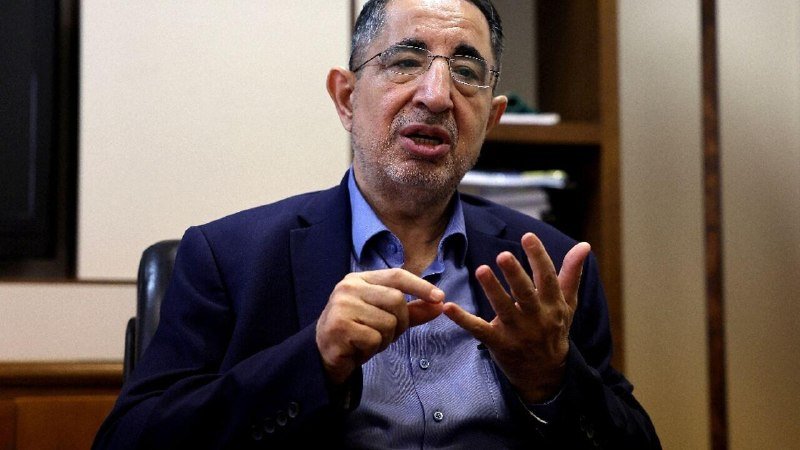
The border between Lebanon and Israel has spent most of 2026 in a brittle holding pattern, defined less by fighting than by the threat of it. That pattern cracked in plain language on 21 June 2026, when Hezbollah secretary-general Naim Qassem declared that Israel "will not remain in Lebanon" and warned that the group "would respond to any violation from the Israeli side," according to Middle East Eye's live coverage of his remarks at 17:31 UTC.
The same afternoon, in a separate statement tracked by Reuters at 16:25 UTC, Israeli Defence Minister Israel Katz told Israeli troops deployed in southern Lebanon that they were "free to take action if under threat" — language that, in effect, reaffirms the rules of engagement rather than announces a new posture, but does so at a moment when Hezbollah is signalling that the rules themselves are the dispute. The exchange, captured across Israeli, Lebanese, and Western-wire reporting, marks the most direct rhetorical collision between the two sides since the November 2024 ceasefire arrangement, and it lands on a frontier where the underlying terms of the truce have never been agreed between the parties.
What was actually said
Qassem's statement, summarised by Middle East Eye, is a single-sentence political claim — that Israel's presence in Lebanon is temporary in Hezbollah's reading — followed by a conditional threat of retaliation. It is the kind of formulation Hezbollah has used repeatedly over the past eighteen months, calibrated for an audience that includes the Lebanese Shia base, the group's residual state sponsors, and the Israeli public, but its timing on a Sunday afternoon, against the backdrop of an FPV-drone strike claimed by Hezbollah against Israeli soldiers and the circulation of an image captioned with a quote from Katz, turns routine messaging into a live warning.
Katz's instruction to his soldiers, carried by Reuters, is the mirror image: an explicit authorisation to use force in self-defence, paired with a refusal to commit to a withdrawal timeline. The combination of an Israeli minister telling troops to act if threatened and a Hezbollah leader promising to respond to "any violation" is, in operational terms, a competitive doctrine. Each side is asserting its own definition of what counts as a violation, and each is reserving to itself the unilateral right to enforce it.
A ceasefire that never quite held
The November 2024 arrangement, brokered under heavy US and French pressure, was built on three propositions: a halt to Hezbollah's rocket and drone campaign against northern Israel that had displaced tens of thousands of residents; a phased Israeli withdrawal from positions in southern Lebanon; and a deployment of the Lebanese Armed Forces, supported by UNIFIL, into the buffer zone. The first held; the second has been partial and contested; the third is, by most independent accounts, incomplete. Israeli forces remain in a series of hilltop positions and along a declared "security buffer" that Israel says is necessary to prevent cross-border attack reconstruction and that Lebanon says is itself the violation.
Into that gap, Hezbollah has rebuilt — selectively, deniably, but visibly. The FPV strike claimed on 21 June and the deliberate citation of Katz's own words as a caption is the kind of operation that doubles as a message: Hezbollah can reach Israeli soldiers, it can name the political authority that authorised their deployment, and it can do so without claiming a strategic escalation. The strike, if confirmed by independent reporting, is not a casus belli; it is a reminder that the deterrence bargain that underpinned the ceasefire is fraying at the edges.
Counterpoint: the case for restraint
The dominant reading of the past 48 hours is that the two sides are edging back toward open conflict by miscalculation. There is, however, an alternative explanation worth taking seriously. Both Qassem and Katz may be speaking to domestic audiences under internal pressure, rather than to each other. Qassem is managing a constituency that has lost senior commanders, watched the Assad regime in Syria fall, and is being asked to absorb continued Israeli overflights and ground operations. Katz is managing an Israeli public still raw from the 7 October 2023 attacks and from the experience of evacuated northern communities, and a cabinet that has not agreed on a date for completing the southern Lebanon withdrawal.
Under that reading, the rhetoric is performative — loud enough to satisfy constituencies at home, restrained enough not to foreclose the off-ramp that both governments, in private, are still presumed to want. The risk is that performative deterrence can become self-fulfilling. Statements of the kind both men made on 21 June do not need an intent to escalate in order to escalate; they only need a tactical incident, a misjudged patrol, a drone that lands five hundred metres on the wrong side of a blue line, to convert words into action.
What the structural picture shows
What is unfolding on the Lebanon-Israel frontier is best read as a competition over the terms of a ceasefire that was never politically consolidated. The November 2024 arrangement froze a battlefield; it did not resolve the dispute that produced it. Israel retains a security doctrine that treats the existence of an armed non-state actor on its border as a problem to be managed by force, and is willing to keep troops in Lebanese territory to that end. Hezbollah retains a doctrine that treats the Israeli presence on Lebanese soil as the problem to be ended by force, and is willing to claim strikes on Israeli soldiers to that end. Each side defines the other as the aggressor, and each side reserves to itself the right to fire first.
That structural symmetry is what makes the rhetoric dangerous. When the underlying conflict is reduced to a single contested point — who is in violation, and what counts as a violation — the margin for miscalculation shrinks. The institutional channels that existed in 2024 to absorb a tactical incident, from UNIFIL liaison to US-mediated back-channels, are weaker now than they were eighteen months ago, in part because the regional environment around them has changed.
Stakes and the next forty-eight hours
The immediate stakes are local and human. A return to open fighting would put southern Lebanese villages and northern Israeli towns back into the line of fire, and would do so on a frontier where civilian returns have only just begun. The medium-term stakes are regional. A breakdown in Lebanon would complicate the still-fragile arrangements around Gaza, would reopen a Syrian front that most external actors have an interest in keeping quiet, and would give Iran a reason to test the new equilibrium in Syria through proxies that have, until now, been told to lie low.
The honest assessment is that the wire reporting on 21 June supports a reading of escalation risk, not of inevitability. The FPV strike claim has not been independently verified; the rhetoric is consistent with the messaging both sides have used for months; the institutional off-ramps, while weaker, still exist. What is also true is that each of the four pieces of information now in circulation — Qassem's statement, Katz's instruction, the FPV strike claim, and the caption quoting Katz — fits a pattern in which the threshold for a return to fighting is being lowered by the day, and in which neither side has publicly accepted a definition of "violation" that the other would recognise. That is the part of the story the wire coverage has not yet resolved, and that this publication will continue to watch.
Desk note: Monexus treats the Lebanon-Israel frontier as a continuing story, not a binary escalation arc. The framing here is the wire framing: a ceasefire under stress, with both sides asserting competing definitions of the same red line. We have not adopted either side's preferred vocabulary for the dispute — "occupation" on one side, "security buffer" on the other — and we have reported the FPV strike claim with the sourcing caveats the evidence requires.
Wire provenance
This editorial synthesis draws on the following public wire/social posts:
- http://reut.rs/4fTmU9X
- https://t.me/s/osintlive
- https://t.me/s/wfwitness