Hezbollah rejects negotiations, bets on the resistance track as Israeli withdrawal odds slide
On 21 June 2026, Hezbollah publicly dismissed the US- and Israel-mediated negotiation track as a path to surrender, even as a prediction market priced an Israeli pullout at just 14% by month-end.
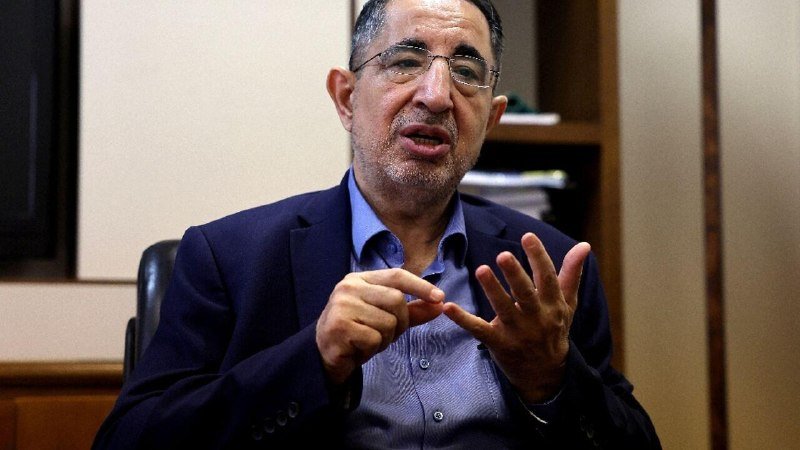
On 21 June 2026 at 14:35 UTC, Al Alam Arabic's Telegram channel carried an urgent statement from Hezbollah rejecting the ongoing US- and Israeli-mediated negotiation track on Lebanon. The movement accused the talks of being built on a "wrong and suspicious starting point" designed to deliver "acquiescence and surrender." Three minutes later, a follow-up statement framed the negotiations themselves as the problem: an "obstructive function" standing in the way of confronting "the enemy's project, the efforts of the resistance field, and the great sacrifices" [alalamarabic Telegram, 21 June 2026, 14:35 and 14:38 UTC]. The phrasing is calibrated for a domestic Lebanese audience that has watched its south and east come under repeated Israeli bombardment since late 2023, and for an external audience still digesting the November 2024 ceasefire and its uneven implementation.
Hezbollah is publicly gambling that the resistance track — armed posture, allied pressure, and a refusal to legitimise the talks — is the only credible response to an Israeli and American posture the movement now describes as actively designed to "increase the risks to Lebanon, its stability, independence and sovereignty" [alalamarabic Telegram, 21 June 2026, 14:38 UTC]. That bet is hard to square with the diplomatic reality on the ground, and even harder to square with the odds.
What Hezbollah is actually saying
Read the two statements together and the argument is consistent. The first message is procedural: the negotiation's premises are illegitimate, so anything that emerges from it is illegitimate. The second is strategic: the talks actively obstruct the alternative path — armed confrontation, the "resistance field," the sacrifices Hezbollah insists its base has already paid for. The combined effect is to delegitimise the diplomatic track before any of its substantive terms are even on the table. The intended audience is not Washington, Beirut, or Tel Aviv. It is the Shia political base in south Lebanon, the Bekaa, and the southern suburbs of Beirut, where any perception that the movement has traded armed posture for paper concessions is politically fatal.
The framing also has a useful external function. By pre-labelling the negotiations as a surrender track, Hezbollah narrows the space in which any Lebanese partner — even a Hezbollah-aligned one — can be seen to make concessions without being read as a collaborator.
What the negotiation track is, on the evidence
The thread context does not name a specific negotiation, mediator, or document. What it does give us is Hezbollah's characterisation of that track as US- and Israeli-influenced, and the explicit claim that its purpose is to deliver acquiescence rather than a settlement. The November 2024 ceasefire framework, brokered under US and French pressure and the effective Israeli deterrence of the war, is the most likely referent: implementation has been patchy, Israeli strikes inside Lebanon have continued at intervals, and the border's residual disputes have not been formally closed out.
The fact that Hezbollah is taking this line publicly, on 21 June 2026, suggests it has concluded that whatever is on offer is worse than the cost of staying outside the room.
What the market thinks
The single quantitative input we have is a Polymarket contract posted on 20 June 2026 at 14:14 UTC pricing the probability that Israel withdraws from Lebanon by the end of the following month at 14% [polymarket.com, 20 June 2026]. That is a market telling its participants, in effect, that the diplomatic track is not on the verge of producing a pullout, and that the status quo of intermittent Israeli presence and intermittent Hezbollah pressure will hold for at least another month. A prediction market is not a poll and not a forecast — it is a price, and the price currently reflects scepticism. Hezbollah's public posture is consistent with that scepticism on the Israeli withdrawal question, but it diverges sharply on the question of whether the negotiation track is worth engaging at all.
Stakes and what to watch
The near-term stakes are concrete. If the negotiation track continues without Hezbollah participation, the movement risks being blamed, in Lebanese public opinion, for any failure of implementation — especially if the price of an Israeli pullout is being negotiated in rooms Hezbollah refuses to enter. If the track is abandoned, the alternative is the resumption of direct kinetic pressure, with the south Lebanese civilian population absorbing the cost first. The Polymarket-implied 14% probability is the bet that the diplomatic track does not produce an Israeli withdrawal by the end of next month. Hezbollah's 21 June statements are the bet that the diplomatic track is itself the wrong venue. These two bets can both be true, and probably are.
What remains genuinely uncertain is whether any Lebanese state actor, acting independently of Hezbollah, can deliver concessions Israel would accept, or whether the track is in fact a holding exercise while the underlying military balance of the border continues to be tested in lower-intensity engagements. The sources do not specify. They tell us that one powerful Lebanese faction has decided, at least for now, that the room it has been offered is the wrong room.
This publication frames the negotiation track as Hezbollah describes it, on Hezbollah's own terms, and pairs that framing with the only quantitative input the wire provides: a prediction-market price that runs in the opposite direction.
Wire provenance
This editorial synthesis draws on the following public wire/social posts:
- https://t.me/alalamarabic
- https://t.me/alalamarabic
- https://t.me/alalamarabic