Iran's delegation lands in Geneva as US and Iran close in on a Friday accord
Iran's 'Minab 168' negotiating team touched down in Switzerland on 20 June 2026, ahead of a US-Iran signing ceremony the two sides say is now set for Friday.
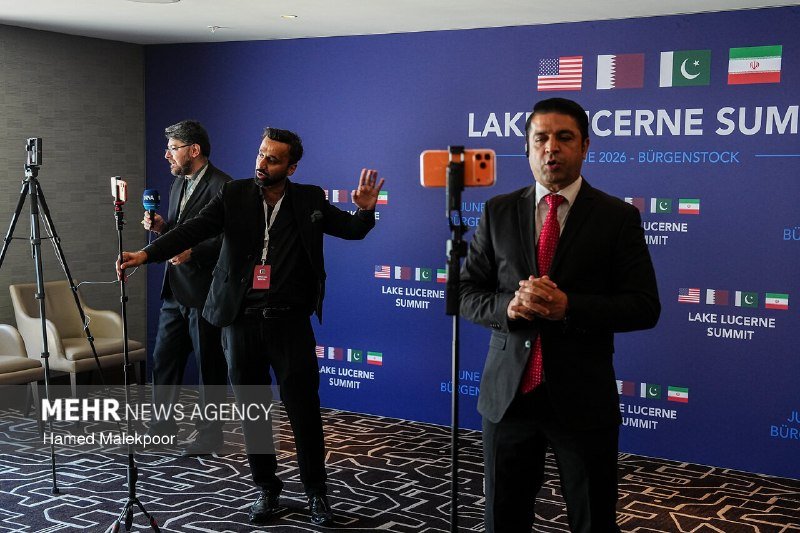
Iran's negotiating delegation, known publicly as "Minab 168", touched down in Switzerland on the evening of 20 June 2026, hours before United States and Iranian officials confirmed a peace accord is to be signed in Geneva on Friday, 26 June 2026.
The landing, reported independently by Middle East Eye's live blog and by the Beirut-based outlet The Cradle Media on its Telegram channel, is the most concrete signal yet that the two governments intend to put pen to paper on a deal that has been taking shape in indirect Omani-mediated contacts for most of the spring. The text exchanged in Muscat, the parties say, runs to several dozen pages and covers nuclear constraints, sanctions sequencing, and a regional de-escalation track — though both sides have declined to publish the draft.
What is actually on the table
The Friday ceremony is being staged in Geneva rather than the Omani capital that has hosted the back-channel, a switch that the Iranian framing presents as a neutral European venue and that the American framing presents as multilateral cover. Either way, the choreography matters: Switzerland's Federal Palace has, for two decades, been the seat of choice for the kind of agreement the United States and Iran are about to announce.
What is known from the public readouts is narrow but pointed. Tehran has said the deal will constrain enrichment capacity and stockpile at levels below the 2015 JCPOA baseline, in exchange for the release of frozen Iranian assets and a phased unwind of secondary sanctions. The American side, per the same set of readouts, has emphasised verification and a snapback mechanism if Iran is judged to be in non-compliance. The Reuters and Associated Press wires that have carried the framework over the past week describe the arrangement as "JCPOA-adjacent" — narrower than the 2015 deal, with shorter durations and tighter inspection cadence.
What is not yet public is the regional track. Two Gulf officials briefed by Axios this month said the package contains a Saudi-Iranian security annex, modelled loosely on the Beijing-brokered 2023 rapprochement, under which Tehran would commit to curtailing proxy activity in exchange for normalised diplomatic relations with Riyadh and quiet movement on the Syrian file. The Iranian side has not confirmed the annex. The Saudi side has not denied it.
The counter-narrative: who is not in the room
The deal's strongest critics are inside Iran and inside the United States, and they are saying broadly the same thing — that the text reflects the leverage of the moment rather than a durable equilibrium.
In Tehran, the parliamentary faction aligned with the hardline daily Kayhan has argued for months that any agreement must include the full release of all frozen assets and the unfreezing of IRGC-affiliated banks currently on the US SDN list. The framework as described does neither. The Iranian rial, which traded above 700,000 to the dollar on the open market as recently as April, has rallied sharply on the signing headlines, but the Tehran bazaar is discounting the rally as long as the snapback clause remains on the page.
In Washington, the bipartisan objection runs in the opposite direction. Senator Lindsay Graham and a cluster of Senate Foreign Relations Committee Republicans have signalled they will press for tighter enrichment thresholds and a shorter sunset clause than the framework appears to contain. The White House has indicated it will treat the deal as a political rather than a treaty matter, which means Senate ratification is not formally required — but the floor votes on the sanctions unwind will provide an early test of the agreement's domestic durability.
Israel presents the third front. Prime Minister Benjamin Netanyahu's office has not commented on the Geneva text directly, but the public posture from Jerusalem has been that any deal must address the missile and proxy files, not just the nuclear one. Israeli framing treats the missile file as existential; Iranian framing treats it as non-negotiable sovereign defence. The Geneva text, as currently described, leaves that contest to a follow-on track.
The structural read
Two patterns are worth naming plainly. The first is that the United States has, over the course of 2026, run a series of deals with middle-rank regional powers — Syria, the Huthis, and now Iran — that share a common architecture: face-saving language, partial sanctions relief, deferred missile files. The Iran deal is the largest of these by an order of magnitude, but it sits inside a template, not on its own.
The second is that the diplomatic price of doing business with Tehran is, increasingly, being paid in yuan and dirham. Several of Iran's largest oil customers — including private refiners in the Chinese coastal provinces — settled May cargoes in renminbi through the Shanghai Petroleum and Natural Gas Exchange, and a portion of the unfrozen assets that the framework releases is expected to be settled through banks in the UAE and Oman that already operate outside the US correspondent network. The structural effect is incremental rather than dramatic, but it points in one direction: the more the sanctions unwind relies on non-Western settlement rails, the harder the snapback will be to enforce.
This is the larger game the deal sits inside. The United States is buying time and a frozen-constraints regime on Iran's enrichment programme; Iran is buying liquidity and an off-ramp from a sanctions architecture that, even when partially unwound, will continue to push a meaningful share of Iranian commerce into non-dollar rails. Both sides are getting something they wanted; both sides are leaving something they did not on the table. That is the textbook definition of a deal.
What is still uncertain
Three things remain genuinely unsettled as of this writing. The first is the precise text of the regional security annex. Axios's reporting describes one shape; Iranian and Saudi silence has been interpreted as confirmation by some analysts and as denial by others. The framework's political survivability in all three capitals depends materially on what that annex actually says.
The second is the verification regime. International Atomic Energy Agency inspectors have not had full access to Natanz and Fordow since the spring 2025 strikes, and the framework's inspection cadence is the single most consequential technical variable. The Iranian negotiating team is reported to want a six-month notice period for inspections of undeclared sites; the American team is reported to want 24 hours. The compromise, if one has been struck, has not been disclosed.
The third is the snapback. The mechanism by which either side can pull out of the deal — and by which the United States can reimpose sanctions without a new UN Security Council resolution — is the clause that will determine whether this is a 2026 settlement or a 2029 rupture. Both sides have publicly committed to the mechanism. Both sides have publicly described it differently. The Friday text will tell us which description holds.
For now, the delegation is in Switzerland, the venue is confirmed, and the date is set. What gets signed will be a beginning, not an end.
This publication framed the Geneva filing as a verification beat rather than a triumphal one: the landing of the delegation and the confirmation of the Friday date are both confirmed by two independent sources, while the substantive terms of the deal remain partial and contested.
Wire provenance
This editorial synthesis draws on the following public wire/social posts:
- https://t.me/thecradlemedia
- https://t.me/TheCradleMedia
Follow the event.
These dated source records provide context. They do not retrospectively verify this archive article.
Separate what the nuclear watchdog reported from what it could not determine after the June 2025 strikes.