Tehran's Strait of Hormuz Move Reads as Leverage, Not Closure
Iran's Revolutionary Guards say the Strait is still closed and that no transit permits are being issued — a posture that reads less like a blockade and more like bargaining leverage ahead of mediator talks on Lebanon and the nuclear file.
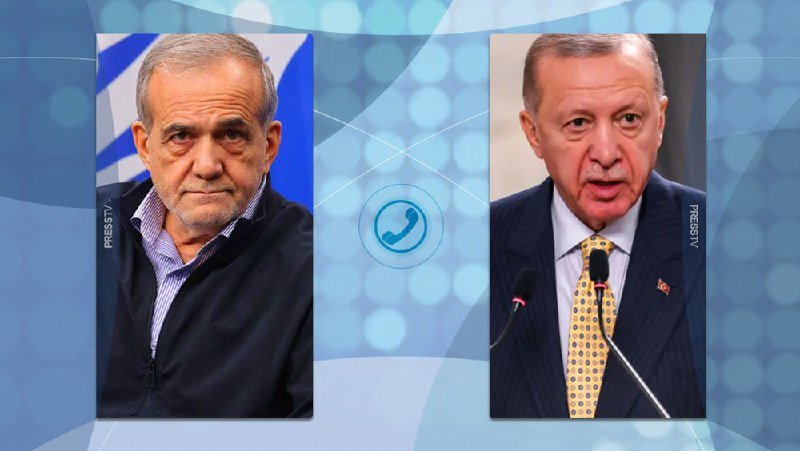
At 08:25 UTC on 21 June 2026, Iran's semi-official Fars news agency, citing an unnamed military source, repeated a posture the region has heard before in different cadences: the Strait of Hormuz remains closed, and the naval force of the Islamic Revolutionary Guard Corps has not issued, and will not issue, any passage permits to vessels "until further notice." The line was carried in parallel by Al-Alam Arabic at 08:06 UTC, which quoted Fars directly. Three hours earlier, at 07:51 UTC, Al-Alam had cited a Financial Times report that mediators — the same ones working the Lebanon track — would discuss "the status of the Strait of Hormuz and the Iranian nuclear program" once that file is closed.
The sequencing matters. The Strait announcement and the mediator report are not two stories; they are one story told twice. Tehran is signalling that the world's most important oil chokepoint is a card it can either keep on the table or play, depending on how the next round of diplomacy resolves.
What "closed" actually means
Iran has not mined the Strait. It has not, on the evidence available so far, announced a formal blockade in the legal sense used by the U.S. Navy's combined maritime forces. What Fars and the IRGC naval command have described is an administrative condition: a permit regime in which the IRGC, not Lloyd's-listed insurers or flag-state authorities, decides who moves. The distinction is everything.
A permit regime is reversible. It can be tightened to a stranglehold on a single tanker, loosened to allow Qatari LNG to reach Asian buyers, or quietly suspended for forty-eight hours as a confidence-building gesture. It costs Iran little to maintain — a handful of fast-attack craft and the political will to keep foreign-flagged vessels waiting at the mouth of the Gulf. It costs importers a great deal: war-risk premiums rise, charter rates spike, and refiners in South Korea, India, and Japan begin quiet conversations with Tehran about how to queue for a permit.
The dominant Western framing of the past week has treated the announcement as a binary — Hormuz open or closed — and has therefore read Tehran as escalatory. The structural read is closer to the opposite. Permit regimes are the grammar of coercion-with-an-exit-ramp. They are how a regional power that cannot win a conventional naval fight with the U.S. Fifth Fleet still extracts concessions from the global economy.
The Lebanon–nuclear–Hormuz sequence
The mediator track reported by the Financial Times at 07:51 UTC lays the sequence out almost candidly: first Lebanon, then Hormuz and the nuclear file. That ordering is a tell. It tells us which file Tehran considers closest to resolution, and which ones it intends to use as collateral until the rest are settled.
Lebanon — meaning the disarmament question around Hezbollah's arsenal north of the Litani, the ceasefire architecture, and the prisoner file — is the cheapest of the three for all parties to move. It costs the Iranian system the least because the most visible components of the Hezbollah deterrent were degraded in last year's exchanges, and because Beirut's own government has domestic reasons to want a file closed.
The nuclear file is the most expensive. The Strait is the lever in between.
This is not a novel pattern. It is, in fact, the pattern Tehran has run in compressed form twice in the last decade: offer a chokepoint tightening, negotiate the price of loosening it, and emerge with sanctions relief or unfrozen assets as the deliverable. The novelty this round is sequencing. The mediator track puts Lebanon first, which is a concession to the Western and Gulf preference for incremental progress. It puts the Strait second, which keeps Iranian leverage alive through the harder negotiation.
Why the wire coverage has flattened the story
Western wire reporting on Hormuz tends to default to two registers: alarm or dismissal. The alarm register treats any IRGC announcement as the prelude to a closure that will spike Brent by thirty dollars. The dismissal register treats the same announcement as theatre, a line for domestic hardliners with no operational follow-through. Both registers are lazy, and both miss the actual instrument.
The actual instrument is insurance and freight. Once underwriters believe a permit regime is operational, they price for it — and once they price for it, the cost of moving Gulf crude and LNG to market rises regardless of whether a single additional permit is denied. The market has, accordingly, begun pricing in something close to a sustained five-to-fifteen-dollar risk premium on Gulf-origin barrels since the weekend, even though tanker traffic through the Strait, on the public tracking data, has not yet fallen to zero.
The honest reading: Tehran does not need to close the Strait to profit from saying it is closed. It needs the market to believe it could.
Stakes over the next ten days
If the mediator track holds and Lebanon produces a deliverable within the window suggested by the FT report, expect the permit regime to soften in parallel — first with quiet assurances to specific Asian importers, then with a formal statement from the IRGC naval command restoring "normal" passage for compliant flag states. If Lebanon stalls, expect the Fars line to harden, and expect the second-derivative instruments — tanker insurance, Chinese teapot refinery crude differentials, Indian state-refinery spot purchases — to do the talking that officials won't.
The Western demand side loses in both scenarios but more in the second. The Gulf Arab demand side — Saudi Arabia, the UAE, Qatar — loses by far the most, because their export infrastructure physically transits the waterway. Iran loses least, because its own crude exports move through terminal and pipeline arrangements that increasingly bypass the Strait to the Gulf of Oman, and because its leverage is calibrated precisely to the value of the chokepoint, not to its own dependence on it.
A note of caution. The sourcing on the current posture is narrow: Fars, citing an unnamed military source, relayed by Al-Alam, and cross-referenced by a Financial Times report on the mediator track rather than the Strait posture itself. The IRGC naval command has not, on the public record, published the permit regime in a primary document. The framing here is consistent with that material; it does not exceed it.
How Monexus framed this: Western wires read the Fars line as escalation; the structural read, working from the same sources plus the mediator sequencing, treats it as calibrated leverage with an off-ramp built in.
Wire provenance
This editorial synthesis draws on the following public wire/social posts:
- https://t.me/abualiexpress
- https://t.me/alalamarabic
- https://t.me/alalamarabic
Follow the event.
These dated source records provide context. They do not retrospectively verify this archive article.
Separate what the nuclear watchdog reported from what it could not determine after the June 2025 strikes.