Pakistan walks a tightrope into the Burgenstock talks
On the sidelines of US-Iran negotiations in Switzerland, Shehbaz Sharif met Mohammad Bagher Ghalibaf — a cameo that says more about Islamabad's hedging instincts than about who is actually in the room.
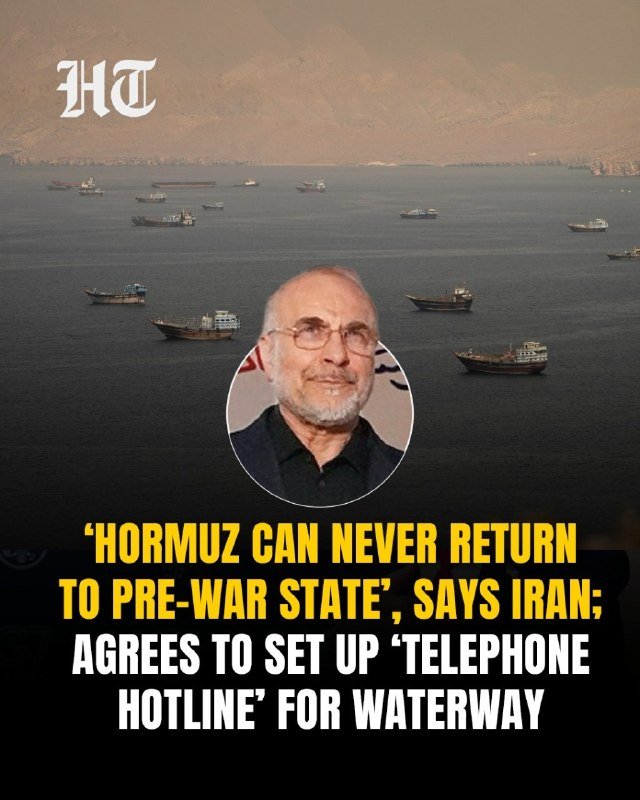
On 21 June 2026, Pakistan's Prime Minister Shehbaz Sharif pulled up a chair next to Iran's Parliament Speaker Mohammad Baqer Ghalibaf on the lawns at Burgenstock, Switzerland. The venue belongs to the Americans and the Iranians this weekend — a fresh round of Tehran–Washington negotiations, the most consequential diplomatic exchange between the two adversaries in months. Sharif was not on the formal agenda. His presence, confirmed by three Telegram channels covering the meeting (Open Source Intel, Press TV and WarFootage Witness), is the story.
Read past the photo opportunity and a more pointed question emerges. Why is Islamabad, a US-aligned nuclear state with a deep bilateral relationship with Saudi Arabia and a balance-of-payments crisis at home, inserting itself into a US-Iran channel at precisely the moment that channel appears to be opening? The answer is less about influence and more about insurance.
A cameo, not a seat at the table
The optics are easy to misread. A bilateral on the sidelines of a multilateral could suggest Pakistan is now a recognised stakeholder in any US-Iran settlement. The reporting does not support that reading. Press TV's account frames Ghalibaf's meeting with Sharif as one of several encounters Iran's lead negotiator held at Burgenstock, not as a co-equal track. The Iranian delegation is in Switzerland to talk to the United States; the Pakistani prime minister is in Switzerland to be seen talking to the Iranian delegation. Those are two different propositions.
What is verifiable: Sharif met Ghalibaf and Iran's Foreign Minister Abbas Araghchi, per Open Source Intel. What is unverifiable from these wires: whether the meeting produced any agreed language, any communiqué, or any follow-up working group. None of the three Telegram reports cite a joint statement. The conversation, as reported, appears to have been a courtesy-and-coordination huddle, not a negotiation.
That distinction matters because Pakistan's strategic community has spent the better part of a decade arguing over exactly this kind of positioning. After the 2019 Balakot crisis, after the FATF grey-list episode, after the IMF standbys that required Islamabad to publicly affirm neutrality between Riyadh and Tehran, the default Pakistani instinct has been to keep its head down. Showing up at Burgenstock is a small but visible departure from that instinct.
The structural reason for the pivot
A more honest read of the cameo is that Pakistan is hedging against a scenario it cannot fully control. Two pressures are converging. First, a US-Iran détente, if it produces sanctions relief, would rewire regional energy markets in ways that hit Pakistan's liquefied natural gas import bill and its hopes for a completed Iran-Pakistan pipeline. Second, an escalation in the Gulf — which remains the modal outcome in most published scenarios — would drag Pakistan into a sectarian posture it has spent years trying to escape.
Burgenstock lets Sharif claim credit for whichever way the wind blows. If talks succeed, Pakistan was in the room. If they fail, Pakistan kept channels open with Tehran that the Gulf monarchies cannot match. The reporting from the three Telegram channels, all of which surfaced the meeting within a 25-minute window on the morning of 21 June, suggests the choreography was tight and pre-arranged — the kind of move a government makes when it wants the cameras to capture it.
What the framing leaves out
There is a less flattering interpretation that the celebratory coverage is papering over. Pakistan's economy is contracting under IMF conditionality, its politics are consumed by the aftermath of the Imran Khan verdicts, and its security establishment is fighting a renewed TTP offensive along the Afghan border. A prime minister who jets to Switzerland for a sidebar with an Iranian speaker is a prime minister with bandwidth to spare — or, more cynically, a prime minister whose domestic audience benefits from foreign-stage photographs more than from policy deliverables.
The Iranian side has its own reasons to welcome the visit. Tehran has spent two years cultivating "eastern" alignments to compensate for the loss of European trade post-2024. A photograph with the Pakistani prime minister, broadcast on Press TV and reshared across the Iranian information ecosystem, is a useful signal to Washington: the regional queue to talk to Iran is not empty. Whether that signal is leverage or theatre depends on what happens in the actual negotiating room.
Stakes, and what to watch next
The honest answer is that nobody outside Burgenstock knows yet. Three readings are live, and the sources do not let this publication choose between them. The optimistic reading is that Pakistan is being quietly invited into a regional security conversation that will eventually include a US-Iran-Palestine-GCC package, in which case Sharif's presence is forward-leaning and substantive. The cynical reading is that this is a free photo, the diplomatic equivalent of a press release, with no operational content. The middle reading — and the one this publication finds most consistent with the reporting — is that Islamabad is buying an option. It wants the phone number to be live if and when a deal is struck, and it wants to be visible enough that neither Tehran nor Washington forgets to call.
What to watch in the next 72 hours: any read-out from Pakistan's foreign office beyond the Telegram-channel summaries; whether the Iranian side issues a more substantive characterisation of the meeting than the boilerplate Press TV line; and whether any of the Gulf capitals react publicly. A Saudi or Emirati statement on the Sharif-Ghalibaf meeting would tell you more about the regional stakes than anything Sharif himself has said.
Until then, file this one under diplomatic choreography with a possible second-act. Pakistan showed up. The harder question is what it brought with it.
This publication read three Telegram channels covering the 21 June 2026 Burgenstock meetings — Open Source Intel, Press TV, and WarFootage Witness — and found consistent confirmation of the Sharif–Ghalibaf–Araghchi encounter but no joint statement, no agreed text, and no verified readout beyond the press-cycle summaries.
Wire provenance
This editorial synthesis draws on the following public wire/social posts:
- https://t.me/osintlive
- https://t.me/presstv
- https://t.me/wfwitness