Explosion hits Qatar's Ras Laffan LNG plant, Doha says no leaks or injuries
Doha's Interior Ministry confirms an internal blast inside the Ras Laffan industrial zone; civil defence is on site, and a cause has not been named. The plant is too important to global LNG flows for an open-ended incident to stay local for long.
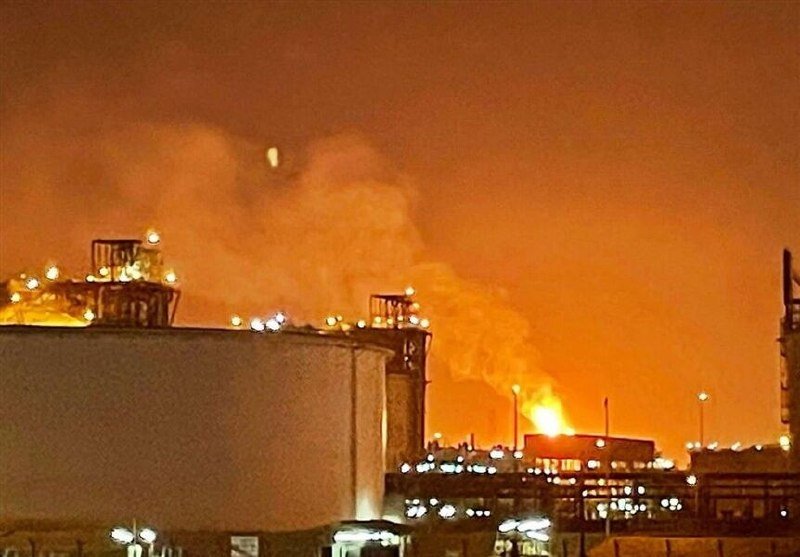
An internal explosion tore through one of the facilities in Qatar's Ras Laffan Industrial Area on the evening of 21 June 2026, with smoke visible across the northeastern skyline of Doha and Qatar's Interior Ministry confirming civil-defence deployment within minutes. Doha's official account, first carried by the Interior Ministry's own channels and relayed by regional and open-source channels including OSINTdefender and IntelSlava, attributes the blast to a technical cause and reports no injuries and no leaks, though no cause has been publicly named and the incident is unfolding. The Ministry's statement — that "an internal explosion occurred in one of the factories in the Ras Laffan Industrial Area, with civil defence teams responding to the incident, with no injuries or leaks reported" — is the most authoritative line currently on the record, and it sets the frame under which every subsequent claim is being processed.
Why this matters beyond Qatar is structural. Ras Laffan is not a peripheral site on the global LNG map; it is one of the largest liquefied natural gas export complexes in the world, a load-bearing node in European replacement supply for Russian pipeline gas, in Asian spot-market flows, and in the long-term offtake contracts that anchor QatarEnergy's commercial diplomacy. An incident at Ras Laffan, even a contained one, ripples through forward-curve pricing in Asia and Europe within hours and forces counterparties to price a tail risk that is normally treated as effectively zero.
What the official account actually says
Doha's communications have so far been disciplined and narrow. The Interior Ministry's statement, relayed by Clash Report and RN Intel within minutes of one another on the evening of 21 June 2026, limits itself to three claims: an internal explosion occurred, civil defence is responding, and there are no injuries and no leaks. The phrasing — "internal explosion," not "attack," not "accident," not "fire" — is deliberate. It locates the cause inside the facility's own process envelope rather than in any external vector, and it pre-empts the question of responsibility that would otherwise fill the vacuum while the facts are still arriving.
OSINTdefender footage circulating on X shows what appears to be the moment of the blast and a column of smoke rising above the site, with civil-defence convoys reported moving toward the industrial zone. None of this is contested; the question is what produced the blast, and on that point the official record is silent. Read closely, the Interior Ministry line is consistent with a process-safety event — a vessel failure, a hydrocarbon release, an ignition inside a containment boundary — rather than a kinetic event. It is also consistent with a denial in waiting: the wording leaves Qatar room to escalate or de-escalate its public account as more evidence comes in.
The structural frame: one site, many dependencies
Ras Laffan's geopolitical weight does not come from its acreage. It comes from concentration. A single complex carries an outsized share of Qatar's nameplate LNG capacity, and Qatar itself is the world's largest LNG exporter on most measurements. Europe spent 2022–2024 building terminal and contract infrastructure around the assumption that Qatari molecules would backfill Russian pipeline volumes through the high-demand winter months; South Korea, Japan and China have similarly long-dated offtake structures. A multi-week outage at Ras Laffan would not be a Qatari problem. It would be a global LNG problem that would arrive at the same time as the next heating-season planning cycle.
That structural fact is what turns a contained industrial incident into a market event before investigators have even been named. Even on the official "no leaks, no injuries" line, traders are pricing the option of a longer outage because the cost of being wrong on the upside is asymmetric — a winter of short LNG is politically and economically more costly to a European government than a few extra basis points of risk premium paid in June. This is the mechanism by which a contained explosion at a single industrial zone translates, within hours, into headlines about European storage policy, Asian spot tenders, and the geopolitical insurance value of US Gulf Coast export capacity.
What remains contested and unclear
The first twenty-four hours of an incident are usually the noisiest, and this one is no exception. Three points of uncertainty dominate. First, the cause: the Interior Ministry's "internal explosion" framing forecloses an external vector in public rhetoric without confirming one in fact, and the difference between a process-safety event and an external attack has very different implications for site security doctrine across the Gulf. Second, scope: no facility-level identifier has been released, and the Ministry's "one of the factories" wording is precise but evasive — it tells the reader that more than one structure exists at the site (which is true) without saying which one was affected. Third, throughput impact: even a contained fire in a non-process building inside the industrial zone can trigger a precautionary shutdown of adjacent trains, and the duration of any such shutdown is the single number that will move markets.
It is also worth naming what the official line does not claim. There is no reference to LNG specifically, despite Ras Laffan's identity as an LNG hub; the statement speaks of "factories in the Ras Laffan Industrial Area," a phrase that includes downstream petrochemical and helium assets alongside LNG trains. A responsible read at this stage treats the cause as unknown, the containment as officially claimed but not independently verified, and the market implications as contingent on whether adjacent infrastructure is affected.
Counter-reads and where they sit
The plausible alternative reads line up on a spectrum. On one end is the process-safety reading: large hydrocarbon-handling facilities have an irreducible rate of internal incidents, and Qatar's record at Ras Laffan over the past decade is consistent with mature industrial-safety management. Under this reading, the next 48 hours will see a phased inspection, a controlled restart of unaffected trains, and a quiet technical report. On the other end is the kinetic-attack reading, which would carry direct implications for Gulf shipping, US Central Command posture, and the broader regional pattern of infrastructure targeting that has featured in recent cycles of tension. Neither reading can be ruled in on current evidence. The Interior Ministry's framing is more consistent with the first than the second, but framing is not evidence.
A serious analyst also flags a third possibility that the official line is best read as neither denial nor confirmation but as a holding statement: accurate on the narrow facts it cites, silent on the broader facts it does not, and designed to buy time for technical assessment before a fuller account is published.
Stakes over the next week
If the incident is contained and throughput resumes within days, the episode will be remembered as a near-miss and a reminder of single-point concentration in the global LNG system. If the outage stretches into weeks, the consequences move from market noise to policy stress — European storage targets, Asian spot tenders, and the political case for redundant Gulf capacity all get revisited. Either way, the structural lesson is the same: the world's gas flows are run through a small number of very large sites, and the cost of that concentration is paid in volatility rather than in capacity.
Qatar has invested heavily in safety systems at Ras Laffan and has commercial incentives to publish a transparent technical account quickly. The next 24 to 48 hours will tell whether the rest of the system gets that account or another round of silence.
Desk note: Monexus is treating Qatar's Interior Ministry statement as the authoritative line on no-injuries and no-leaks while explicitly flagging that the cause has not been named. The market implications are framed as contingent on facility-level identification rather than asserted.
Wire provenance
This editorial synthesis draws on the following public wire/social posts:
- https://twitter.com/sentdefender/status/2068785951409606899
- https://t.me/ClashReport
- https://t.me/rnintel
- https://t.me/intelslava
- https://t.me/osintlive