Switzerland, four mediators, and the limits of a US-Iran deal
Four-way talks open in Switzerland with Doha and Islamabad at the table. The shape of the agenda tells you what Tehran actually wants.
The room is not in Vienna, not in Muscat, and not on the Qatari or Omani coast where previous back-channel rounds have lived. As of 2026-06-21T11:22Z, US and Iranian delegations are sitting across from each other in Switzerland under Qatari and Pakistani mediation, with Doha formally announcing the four-way format and Tehran's Foreign Ministry confirming the lineup earlier the same morning at 2026-06-21T10:31Z. The geography of the venue is itself a tell. The Gulf monarchies that have carried most of the indirect channel are now joined by Islamabad, and the talks have been escalated — quietly — from shuttle diplomacy to face-to-face.
The first-day agenda, according to a Foreign Ministry spokesperson, is not the nuclear file. Iran's Esmail Baghaei told reporters on 2026-06-21T10:12Z that Israeli attacks on Lebanon will be the focus of opening discussions — a framing that puts a regional escalation front and centre before sanctions, enrichment percentages, or snapback ever come up. If that priority survives the day's session, this round is being treated in Tehran as a security-of-the-axis conversation first and a non-proliferation conversation second.
What the mediator list tells you
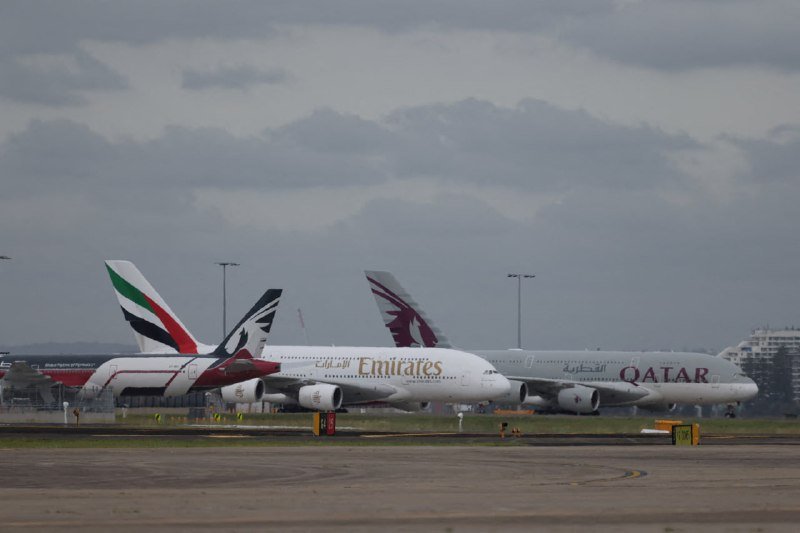
Qatar has earned its seat. Doha has hosted and ferried the previous rounds, carried messages between Washington and Tehran, and more recently brokered the Hamas-Israel exchanges that defined late-2025 and early-2026. Pakistan is a more revealing addition. Islamabad has the Sunni-majority diplomatic cover that the Gulf monarchies enjoy, but adds three things Doha alone cannot: a land border with Iran, a working relationship with both Tehran and Riyadh, and a public posture of not being inside any Western alliance architecture. The presence of Pakistan is the Iranian side reading the room — Washington will not accept a meeting in Tehran, but it will accept one in which Pakistan, a US security partner, vouches for the Iranian delegation's seriousness.
Switzerland as host is neutral ground in the legal sense, not just the geographic one. Geneva is where European sanctions lawyers, IAEA-adjacent technical staff, and the relevant banking infrastructure sit. The choice says the talks anticipate paperwork as well as atmospherics.
The Lebanese frame, and why it matters
If the first day is genuinely about Israeli strikes on Lebanon, then the negotiation is being treated as an act of regional de-escalation rather than as a classical arms-control round. That is consequential. Hezbollah's posture, the ceasefire's fraying edges, and the question of whether Washington can extract an Iranian commitment to restrain its proxies are all in scope. The Iranian side wants Israeli restraint priced into any deal; the American side wants leverage over the proxy network priced into any sanctions relief. Whether those two ledgers can be made to balance is the open question of the day.
The subtext, also reported in the Iranian Foreign Ministry's framing, is that Tehran views Lebanon strikes not as a side issue but as a precondition. Without some movement on that front, the nuclear conversation that Western delegations came prepared to lead does not start. That is a more confrontational posture than Tehran has taken in any round since 2015, and a more public one — Baghaei's remarks were made to reporters, not whispered in a corridor.
The counter-read
The Western wire line is straightforward: this is a nuclear round, and Iran's effort to lead with Lebanon is a diversion designed to peel the agenda away from enrichment, IAEA access, and stockpile questions. The structural objection is fair — non-proliferation negotiations that subordinate themselves to regional security cease to be non-proliferation negotiations. Tehran's read, equally fair in its own register, is that no Iranian government signs a document that leaves its allies exposed while its own facilities are still on the table. Both readings can be true simultaneously, and the day's outcome likely depends on whether the American delegation treats the Lebanon item as a procedural annoyance or as a substantive agenda item in its own right.
Stakes
If the talks hold their four-way shape through the week and the Lebanon question is treated as a deliverable, the ceiling is a regional package: Israeli restraint on the northern front in exchange for an Iranian pledge on the proxy network, with a sanctions-ratchet pause underneath. The floor is a procedural communique and a date for the next round. Either outcome prices into oil markets and into the political standing of the Qatari and Pakistani mediators in roughly the same way — as evidence that the channel exists, and that it works under pressure.
What remains uncertain
The sources do not name the head of either delegation, the precise Swiss venue, or the schedule beyond the first day. The Iranian Foreign Ministry's confirmation of the four-way format is not matched, in the materials available to this publication, by an equivalent confirmation from the US State Department — a gap that may simply reflect timing of the briefing cycle rather than substantive disagreement, but which readers should note. Whether the Lebanon agenda item is a negotiating position or a public posture is also unresolved on the public record; the day will tell.
Desk note: this article foregrounds the mediator geography and the publicly stated Iranian agenda rather than recycling the default Western framing that puts enrichment first. The four-way format — Qatar, Pakistan, the US, Iran — is the news, and the agenda as Tehran has stated it is the second-order story.
Wire provenance
This editorial synthesis draws on the following public wire/social posts:
- https://t.me/s/IntelSlava
- https://x.com/sprinterpress/status/
- https://t.me/s/thecradlemedia