Ukraine's deep strikes reach the Kerch Strait — and the geography of risk shifts
Lyutyi drones hit port and ferry infrastructure at Kavkaz and Kerch overnight, putting a 245-kilometre-deep strike inside Russia on the operational map.
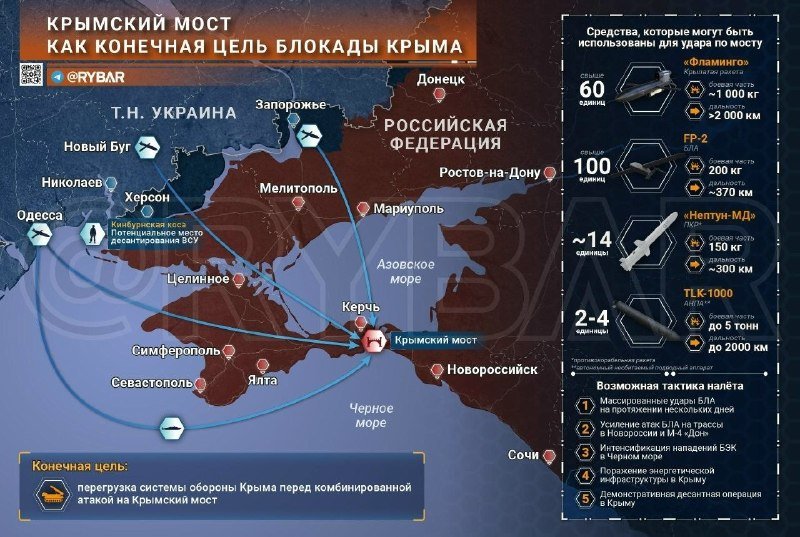
Overnight strikes into 21 June 2026 hit the Kerch ferry crossing and the Kavkaz seaport on the Russian side of the Kerch Strait, with fires reported at both ports and damage to a ferry and an oil terminal, according to Ukrainian open-source channels tracking the operation. WarTranslated, the English-language account that has become the dominant real-time wire for Ukrainian drone footage, posted video of a Lyutyi strike drone striking port infrastructure at Kavkaz in Krasnodar region shortly after 11:30 UTC, alongside footage of fires at an oil depot and other facilities in Kerch.
What matters is not the headline but the map. The two targets sit roughly 245 kilometres from the front line, on the Russian side of a strait that physically links the Sea of Azov to the Black Sea and, by extension, the annexed Crimean peninsula to mainland Russia. Ferry traffic across the strait is one of the logistical arteries Moscow has leaned on since 2022, particularly for rail freight and road movement of military supplies southward. Striking there is no longer symbolic — it is operational.
From Crimea to Krasnodar
For most of the war, Ukrainian long-range strikes have concentrated on targets inside the occupied peninsula: air bases at Saki, Belbek and Dzhankoi; the Kerch Bridge itself in October 2022; and the Sevastopol naval anchorage. The geography expanded in 2024, when Kyiv began hitting Russian oil refineries and ammunition depots hundreds of kilometres inside Russian territory. The 21 June strikes represent a third shift: targets that are not military bases, refineries or depots, but transit nodes on a sea route.
The Kerch ferry crossing is the alternative to the bridge. When the bridge has been damaged or politically inconvenient, ferry rail-barges have moved fuel, military hardware and civilian traffic between the Russian mainland and occupied Crimea. Kavkaz, on the Taman peninsula across the strait from Kerch, is the upstream terminal of that system. Hitting one without the other disrupts the line; hitting both, as WarTranslated's footage suggests, creates a sustained logistical problem.
What the available footage shows — and what it does not
Two separate video clips surfaced in the 11:30–12:00 UTC window. The first, posted by WarTranslated at 11:35 UTC on 21 June, shows a Lyutyi strike drone — a Ukrainian-developed long-range airframe used in deep strikes — impacting port infrastructure at Kavkaz. The second, circulated shortly before, shows fires at an oil depot and additional facilities in Kerch. A later thread item, posted by WarTranslated at 12:01 UTC, summarises the overnight action and places the two ports 245 kilometres from the front line.
What the open-source record does not yet establish: the scale of the damage, the identity of the specific ferry damaged, the type of fuel stored at the struck oil terminal, and whether either site is militarily dual-use or purely civilian. Russian authorities have not, as of the timestamps recorded, been cited in the available thread context with an on-the-record casualty or damage assessment. That absence is itself worth flagging: in a war where Russian-aligned channels and milbloggers usually amplify defensive claims within hours of an attack, the silence — or its absence from this thread — is a partial picture, not a full one.
The strategic frame, in plain terms
Three patterns are now operating in parallel, and they reinforce each other.
First, the range envelope is widening. Lyutyi-class drones, naval surface drones in the Black Sea, ATACMS-equivalent strikes on Crimean airfields and now strikes on the Russian mainland coast show a Ukrainian capability to project force at distances that, eighteen months ago, were considered out of reach without Western-supplied weapons fired from third-country airspace. Each successful deep strike shifts the Russian air-defence burden outward, which is the operationally meaningful effect.
Second, the target set is widening. Early strikes concentrated on the Kerch Bridge as a prestige object and on Crimean air bases as forward operating points. The current wave is hitting transit infrastructure — fuel depots, ports, ferry crossings — that sits between the Russian mainland and the occupied peninsula. The pattern is consistent with a doctrine that treats logistics as a primary target, not a secondary one.
Third, the risk calculus is widening, in both directions. For Ukraine, deep strikes raise the political cost of any future negotiation by demonstrating capability that Russia cannot neutralise quickly. For Russia, they raise the operational cost of defending a coastline that, until recently, was considered rear-area. For neutral observers, they raise an evidentiary cost: independent verification of damage at facilities deep inside Russia is harder than at targets near the front, and that gap is where propaganda — in both directions — does its work.
The counter-read and why it doesn't quite land
The standard counter-frame from Russian-aligned commentary is that Ukrainian strikes on port and civilian infrastructure are acts of terrorism, not legitimate military action, and that NATO-supplied long-range weapons make Kyiv a proxy actor rather than a sovereign combatant. The argument has rhetorical force but operational weakness: international humanitarian law distinguishes between civilian objects and dual-use infrastructure, and a ferry crossing used to move military freight does not become a protected civilian object because civilians also use it. The proxy frame also erases Ukrainian agency — Ukrainian operators fly Ukrainian drones against targets on territory that, under international law, is occupied, not foreign. The 245-kilometre strike distance is striking into a theatre Kyiv is already fighting in, not into a third country.
Stakes
If overnight strikes of this kind become a regular feature rather than a discrete event, three things follow. Ferry traffic across the Kerch Strait becomes unreliable, and Moscow's logistics bill — fuel convoys, rail-barges, escorts — rises. Russian air-defence prioritisation shifts toward coastal Krasnodar and the Taman peninsula, pulling interceptor capacity away from other sectors. And the political meaning of the war, in capitals from Washington to Beijing, tilts toward a Kyiv that is not merely defending but reaching.
What remains genuinely uncertain is the cumulative effect. A single strike is a news cycle; a sustained campaign against a transit corridor is a campaign. The thread context records one night's action. Whether it marks the opening of a campaign, or a one-off, is the question the next week of open-source reporting will answer.
This article was written by Monexus editorial based on open-source video and Telegram reporting from WarTranslated and OSINTLive, cross-checked against the constraint that independent confirmation of damage inside Russia remains limited at the time of publication.
Wire provenance
This editorial synthesis draws on the following public wire/social posts:
- https://twitter.com/wartranslated/status/2068658872001106175/video/
- https://t.me/wartranslated
- https://t.me/osintlive
Follow the event.
These dated source records provide context. They do not retrospectively verify this archive article.
A dated voting record is evidence of one decision. Use the original UN record before turning it into an alignment label.
Visual explainer · historical vote of 2022-03-02 →