Pakistan and Qatar in the room: the architecture of the new US–Iran talks in Switzerland
Delegations from Washington and Tehran sat down in Switzerland on 21 June 2026 with Qatar and Pakistan brokering. The mediator lineup is the story — and it tells a regional audience exactly how much the ground has shifted since 2018.
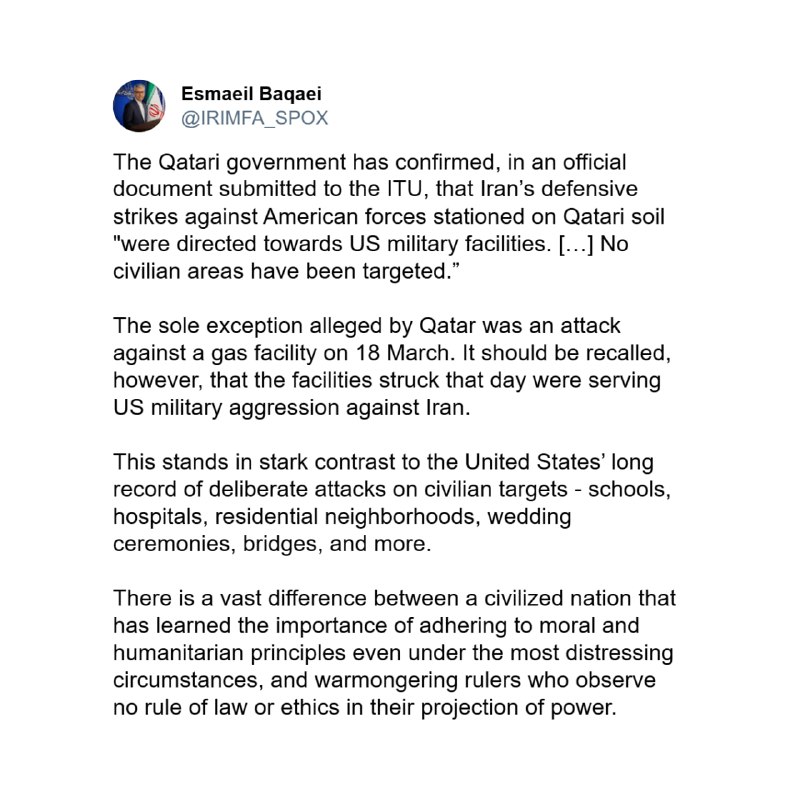
The delegations arrived separately, into the same Swiss canton, on the same Sunday morning, and the choreography was deliberate. By 11:20 UTC on 21 June 2026, American and Iranian representatives were in a room in Switzerland with mediators from Qatar and Pakistan, according to the Israeli defence reporter Amit Segal's Telegram channel, which confirmed the meeting was underway. Al Jazeera's breaking-news wire, citing the network's correspondents, logged the same moment in a single line: US and Iran delegations had arrived and talks had begun. The slot had been put on the public record the night before by the prediction-market account on X that first reported the venue, with a Pakistani confirmation that the round would open on Sunday in Switzerland.
The mediator list is the news, more than the venue. For a quarter-century, European-led formats — the E3, the EU3+3, the joint commission in Vienna — set the choreography when Washington and Tehran sat across a table on the nuclear file. On 21 June 2026, two Gulf-and-South-Asian states co-host the room. That is a structural reweighting of the diplomatic gravity well, and it is the single most consequential fact about this round, even if the communiqués stay thin for days.
What the four-power table tells us
The American side, the Iranian side, and the Qatari and Pakistani mediators are, at the moment of writing, the entire cast. The Al Jazeera wire and Segal's channel both name the four parties, and nothing more. No European, Russian, Chinese, or International Atomic Energy Agency presence is on the public list. The Pakistani foreign ministry's role is being read in regional reporting as a calibrated one: Islamabad has spent the past three years cultivating a working relationship with both the Trump administration and the Islamic Republic, and has positioned itself as a state that can move between Washington and Tehran in a way few others can. Doha, long the host of the Taliban's Doha office and a back-channel between the United States and Hamas, retains that same logic. Both mediators have reason to want a settlement; both have reason to be wary of a collapse that drags them into the crossfire.
For Tehran, a non-European table has appeal. The 2015 framework was, in Iranian public memory, signed under European pressure and collapsed under an American administration that pulled out unilaterally. A format dominated by Washington plus the IAEA and the European powers reproduces that structure. A format that includes two Muslim-majority states that Iran has not fought in this century reads, in Tehran, as something closer to an equal-status negotiation than a supervised one. That is not a small thing inside the Iranian system, where the legitimacy of any deal is partly a function of who is in the room.
For Washington, the mediator lineup is a logistics choice with a politics underneath. The Trump administration is working a Middle East in which Saudi Arabia, the United Arab Emirates, and Israel are now coordinated around an extended-pressure posture toward Iran, and where the European three are politically supportive but legally constrained. Doha and Islamabad offer cover: a venue, a fixer service, and a face-saving exit if either side needs one. The format is the message.
What the public record does — and does not — say about substance
The sources from this morning do not describe an agenda. Al Jazeera's breaking-news item is a single line confirming the delegations' arrival; the Segal post names the mediators; the prediction-market post on X flagged the time and place on 20 June. There is no public readout, no agreed framework, no numbered text, no concessionary sequence. Anyone who claims to know the substance of this round on the morning of 21 June is reading ahead of the wire.
The honest answer is that the round's known content is the format itself. The open questions — enrichment caps, the fate of the stockpile of 60%-enriched uranium, sanctions sequencing, the role of the IAEA inspection regime, the question of a sunset clause versus a perpetuity arrangement, the regional de-escalation track that has run in parallel — all of these sit behind closed doors. They will surface, if at all, in the next forty-eight to seventy-two hours, and they will surface in the language of anodyne communiqués whose every comma is contested.
A second-order question, also unaddressed by the public record, is what the Iranian negotiating team has the authority to commit. Tehran has insisted in recent months that any agreement must pass through the Supreme National Security Council and, ultimately, receive the endorsement of the Supreme Leader. A deal signed in Switzerland and then walked back in Tehran is the canonical failure mode of the Iran file, and the historical pattern is not encouraging for those betting on a quick outcome.
The structural shift underneath the venue
Look past the date and the lake. Since 2018, the diplomatic infrastructure around the Iran nuclear file has thinned out. The Joint Comprehensive Plan of Action survived until the United States withdrew; the deal's reimposed sanctions architecture remained in place through the first Trump term, the Biden administration, and the early months of the second Trump term, even as the IAEA's access and verification capacity degraded year on year. The European parties kept paying lip service to the deal but could not, on their own, hold the sanctions perimeter in place. Russia and China built parallel channels with Tehran that ran outside the JCPOA entirely. The result, by 2025, was a system in which the formal non-proliferation regime had weakened, the sanctions regime had loosened, and the de facto enrichment capacity inside Iran had grown — and in which no single outside power had the leverage to fix any of it.
A new round of talks, mediated by Islamabad and Doha, sits inside that picture. It says that the centre of gravity for Iran diplomacy has moved east and south: away from the E3 capitals, away from the JCPOA's institutional architecture, and toward states that have built independent working relationships with the Islamic Republic. The European powers, for the first time in the post-2003 era, are not even at the table. The IAEA, the body that would be responsible for verifying any deal, is also not on the public list. Both of these absences will be interpreted in Vienna, in Tel Aviv, and in Riyadh as signals — and the signals cut in different directions. To Tehran's conservative base, the absence of Europe and the IAEA is a relief. To Israeli and Saudi analysts, the same absence is a warning that the verification architecture is being negotiated away.
The deeper structural point is that the United States is, in effect, choosing a venue and a mediator set that allows it to bypass the old guardrails. Whether that choice produces a more durable outcome, or a more fragile one, is the bet of the next several weeks.
What is contested, and what comes next
Two readings of this round are both live. The optimistic one is that a regional format, led by states that have direct lines to both sides, can close a deal the Europeans could not — that the constraints on Iran's enrichment capacity, the fate of the higher-enriched stockpile, and a sequenced sanctions release can be tied together without the political theatre of the JCPOA's signing ceremony. The pessimistic one is that a format without the IAEA in the room is a format that cannot verify anything it agrees to, and that the absence of the European parties means the deal, if it lands, will have a thinner sanctions-coordination base behind it than its predecessor did.
Both readings have a real basis. The honest position is that the evidence is not yet in, and will not be in for several days. The 21 June talks are an opening, not a closing. The reporting from Israel, the Gulf, and Tehran in the next forty-eight hours will reveal whether the format produced movement or merely produced the appearance of movement. The mediator lineup, having done its first job — putting the parties in a room — now has a harder job: producing a text.
A few things are worth watching with discipline. The first is whether the Iranian side is authorised to agree to an enrichment-cap figure, or whether that is being held back for the Supreme National Security Council. The second is whether the IAEA is brought into a verification role before any text is announced, or only after. The third is whether sanctions relief is sequenced in a way that allows a snapback if the deal breaks down — the feature that most observers agree kept the JCPOA's nuclear constraints credible for as long as they held. The fourth is whether the regional de-escalation track — the file on Iran's proxies, on the Strait of Hormuz, on the Houthi maritime campaign — is addressed in the same room or in a parallel one. A nuclear deal that does not touch the regional file is one that the Gulf states will sign onto grudgingly, and that will not last.
For the moment, the only thing in the public record is a confirmed meeting, in a confirmed venue, between confirmed parties, with a confirmed mediator set. The substance, the timing, the durability, and the regional implications all sit ahead of the wire, not behind it. This publication will follow the next 72 hours closely, and will treat any claim of a breakthrough with the scepticism that twenty-five years of Iran-deal reporting has earned.
Desk note: The wire out of Tel Aviv and Doha in the first hours of the round carried the venue, the mediator set, and little else. This article foregrounds the mediator lineup — Pakistan and Qatar rather than the E3 and the IAEA — because that is the structural fact that the public record supports, and the one that will most shape the regional response in the days ahead. The substance remains to be reported.
Wire provenance
This editorial synthesis draws on the following public wire/social posts:
- https://t.me/amitsegal/
- https://x.com/Polymarket/status/
- https://en.wikipedia.org/wiki/Joint_Comprehensive_Plan_of_Action
- https://en.wikipedia.org/wiki/Iran_nuclear_deal_framework
- https://en.wikipedia.org/wiki/International_Atomic_Energy_Agency
- https://en.wikipedia.org/wiki/Pakistan%E2%80%93Iran_relations
- https://en.wikipedia.org/wiki/Qatar%E2%80%93United_States_relations
Follow the event.
These dated source records provide context. They do not retrospectively verify this archive article.
Separate what the nuclear watchdog reported from what it could not determine after the June 2025 strikes.
- https://t.me/amitsegal/
- https://x.com/Polymarket/status/
- https://en.wikipedia.org/wiki/Joint_Comprehensive_Plan_of_Action
- https://en.wikipedia.org/wiki/Iran_nuclear_deal_framework
- https://en.wikipedia.org/wiki/International_Atomic_Energy_Agency
- https://en.wikipedia.org/wiki/Pakistan%E2%80%93Iran_relations
- https://en.wikipedia.org/wiki/Qatar%E2%80%93United_States_relations