Vance's Lebanon answer lands in a room already tired of the question
An IRIB correspondent pressed the vice-president on Israeli operations in Lebanon at the Munich-style exchange. Vance's pushback on the framing now competes with the question itself.
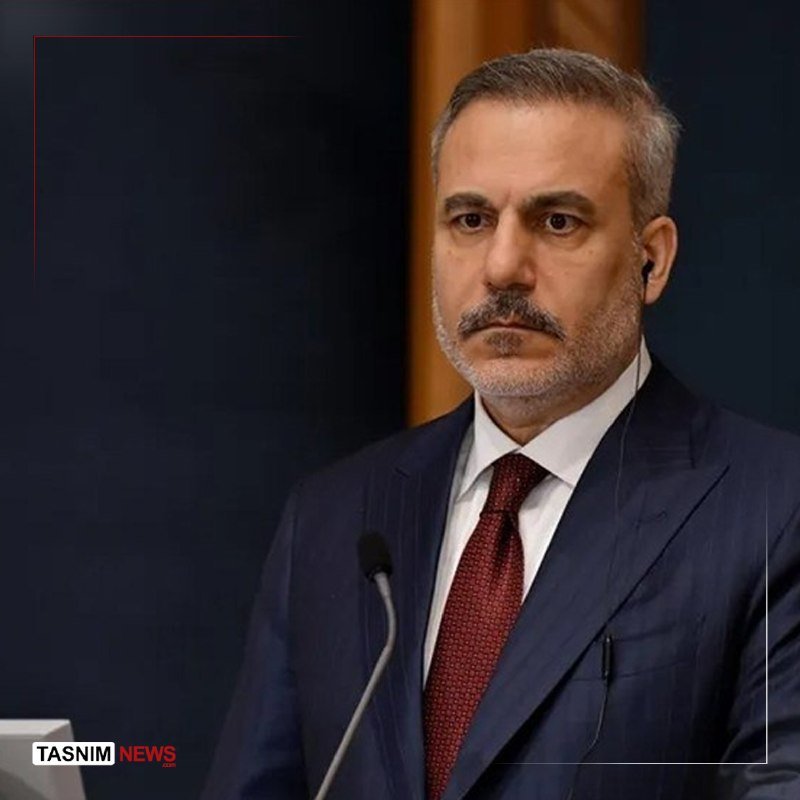
At roughly 13:03 UTC on 21 June 2026, a correspondent from Iran's state broadcaster IRIB stepped into the press pen where US Vice-President J.D. Vance was taking questions. Her line, captured first by ClashReport and replayed by channels aligned with both the Iranian opposition abroad and the Iranian state-aligned feed Middle East Spectator, was unusually direct: "Your ally Israel has something like genocide in Lebanon. The main issue is stopping this." Vance's response, in the same exchange, was equally crisp: "Ma'am, I think Trump and the U.S. have done more to stop the conflict in Lebanon than any government."
The exchange is short, but it captures a recurring problem in how this war is talked about in English-language rooms. The journalist's framing asked Washington to act; the vice-president's framing pointed back at Washington's own record. Both can be true at once, and both are routinely said without either disputing the other.
What the footage actually shows
ClashReport's first clip lands at 13:03 UTC on 21 June 2026; a second pass from the same channel follows at 13:41 UTC. Middle East Spectator posts its own cut at 13:21 UTC, and an opposition-aligned feed called Fotros Resistance circulates the same exchange at 13:23 UTC and again at 13:27 UTC. By 13:49 UTC the line is being re-translated on both sides of the Iranian information war — the question comes from IRIB, the answer from a US vice-president, and the frame on the clip comes from channels with opposed political lineages.
The reason the clip travels is not its news content. There is no policy announcement, no new sanction, no troop movement disclosed. It travels because the question — "why don't you stop the Israeli genocide in Lebanon?" — is the question that Lebanese, Iranian and a large share of Arab and Global South commentators have been putting to Western officials for months, and the answer Vance gave is the one Washington has settled on as its standard reply: credit, deflect, move on.
Why the framing matters
Two words do most of the work in the exchange: "ally" and "genocide."
"Ally" is the structural claim. It puts Israel inside a US-led security architecture and asks the architecture to take responsibility for what an Israeli government does inside Lebanese territory. The word has been the spine of Lebanese and Iranian diplomatic language toward Washington since at least the 2006 war, and it is doing the same work here.
"Genocide" is the legal-moral claim, and it is the one that Vance's reply most pointedly sidesteps. He does not engage the term. He does not reject it, redefine it, or accept it. He shifts the conversation to US mediation effort, leaving the classification of what Israeli forces are doing in Lebanon to others. That silence is itself a position. The dominant Western-wire coverage of Israeli operations in Lebanon has so far stuck to operational language — strikes, ground operations, displacement, casualty figures from the Lebanese health authorities and from UN agencies — without endorsing the genocide framing. The dominant Arab, Iranian and much of the Global South press has gone the other way. Vance's non-engagement preserves that ambiguity.
What we don't know from the clip
The footage that has been published is short and produced by channels with editorial positions on the war. The full transcript, the original English-language question as delivered by the IRIB correspondent (the clips carry Persian-accented English that has been re-translated in some passes), and the diplomatic venue in which the exchange took place are not specified in the items currently in circulation. It is not clear whether the exchange was a formal press conference, a side-event exchange, or a corridor question — a distinction that affects how much weight the answer is supposed to carry.
The clip does not specify whether the vice-president was asked about the most recent escalation or about the war as a whole, and the broadcast channels offering translations differ slightly in how they render the opening clause. That is normal for fast-moving footage of this kind; it is also the reason the lines that survive are short, declarative sentences rather than the longer policy framings that get hashed out in the briefing room afterwards.
The stakes
The exchange matters less for what it changes today than for what it rehearses. Washington is being asked, in rooms that are increasingly well-attended, to choose between two lines: that it is not Israel's keeper, or that Israel's conduct in Lebanon is something the US has a duty to constrain. The Vance clip is the first line in its sharpest current form, repeated by a senior US official on camera to a journalist from a country that is itself a party to the regional confrontation. The fact that the IRIB correspondent was given the question — and that Iranian state media, Iranian opposition outlets, and Western-aligned aggregators all carried the answer — tells its own story about how visual the diplomacy of this war has become, and how narrow the room for ambiguity is getting.
If the trajectory holds, the next time a senior US official is asked the same question, the question will be longer and the answer will need to be longer too. That's the test the clip sets, even if it does not pass it.
Desk note: Monexus is working from pool footage circulated by ClashReport, Middle East Spectator and Fotros Resistance on 21 June 2026, with no official White House transcript in hand at the time of writing. The frame the exchange travels under on each channel — genocide, ally, mediation record — has been preserved as it appears in those clips rather than collapsed into a single house framing.
Wire provenance
This editorial synthesis draws on the following public wire/social posts:
- https://t.me/ClashReport
- https://t.me/Middle_East_Spectator
- https://t.me/FotrosResistancee
Follow the event.
These dated source records provide context. They do not retrospectively verify this archive article.
Separate what the nuclear watchdog reported from what it could not determine after the June 2025 strikes.