Vance's Swiss stop with Pakistan's top brass is not just diplomacy
A short, warm exchange on the margins of a Ukraine peace conference signals that Washington's relationship with Pakistan's military is back at the centre of regional dealmaking.
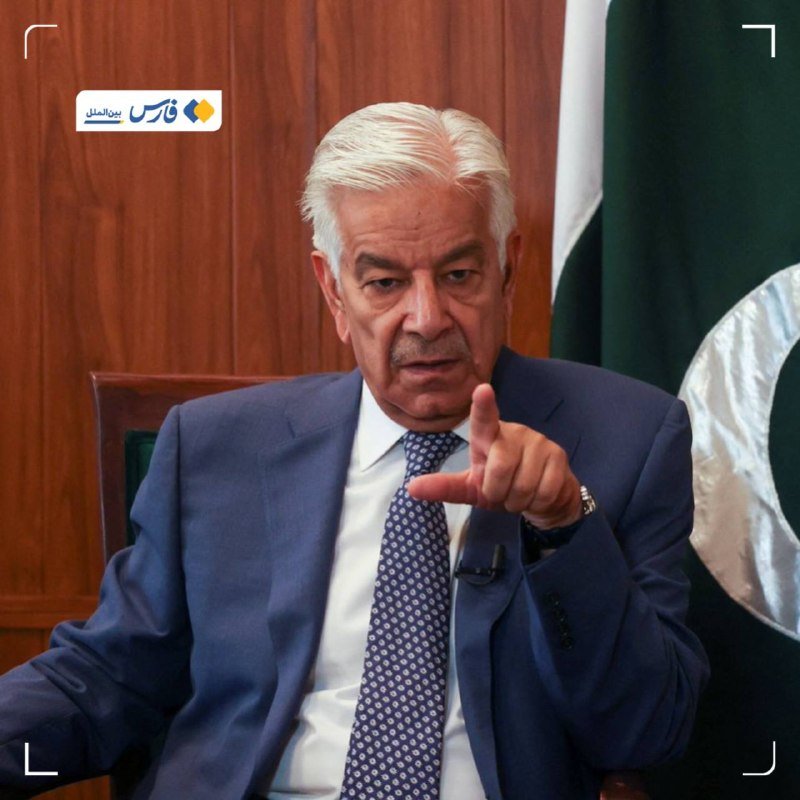
On the morning of 21 June 2026, US Vice President JD Vance met Pakistan's Army Chief General Asim Munir and Prime Minister Shehbaz Sharif in Switzerland, on the margins of the Summit on Peace in Ukraine convened by President Volodymyr Zelenskyy. According to the Telegram channel Clash Report, the exchange was brief but unusually direct: "JD Vance to Pakistan's Asim Munir: Thanks for everything you did." A second post from DDGeopolitics confirmed the trilateral meeting, listing both Sharif and Munir as participants. The framing matters more than the words. Pakistan's military leader is being thanked in public, by name, at a moment when Washington is trying to close the war in Ukraine, contain Iran, and keep the Gulf shipping lanes open.
What Munir is being thanked for
The conventional read is hostage diplomacy. Earlier in 2025 the Trump administration extracted from Pakistani custody a CIA informant who had helped locate Osama bin Laden in 2008; Munir's ISI is widely credited as the intermediary, and US President Donald Trump publicly thanked Pakistan at the time. The June 2026 exchange sits in the same register: a transactional, on-the-record acknowledgement that the Pakistani deep state can deliver services the US government values highly, and that those services earn political capital in Washington. Reading Vance's line as generic diplomatic courtesy misses the point. Nothing in the US vice-presidential repertoire is generic any more, and the words are being recorded by channels that work closely with Pakistan's military establishment.
Why the Ukraine summit is the cover
The Swiss venue is useful. A Ukraine peace summit pulls in regional players who have a stake in the war's outcome, including a Pakistan that has voted alongside the United States in UN forums and is itself a buyer of discounted Russian crude. For Vance, a sideline meeting with Munir and Sharif is an opportunity to test whether Islamabad can be useful on a different file: a de-escalation channel with Tehran, restraint in Afghanistan, and a deeper commercial relationship centred on critical minerals and LNG. The location also gives Munir the optics of being treated as a great-power interlocutor, not as the head of a regional army, which matters for domestic Pakistani audiences watching the army's external relevance expand. It is the kind of meeting a Pakistani general would not have been granted five years ago, and the kind a US administration that cared about Indian sensibilities might have thought twice about.
The Indian variable
The counter-narrative is already in production. New Delhi reads the warmth between Washington and Rawalpindi as a slow erosion of the post-2001 compact that has tied US policy on South Asia to Indian concerns. Indian commentators are likely to argue that any expansion of US-Pakistani military cooperation, even in counter-terror liaison, tilts the regional balance in a direction Islamabad has long wanted. The structural frame here is straightforward: Washington is re-balancing across a region where it cannot afford to write off a state of 240 million people with nuclear weapons, a 1,600-kilometre border with Afghanistan, and direct access to both Iran and the Gulf. That re-balancing is happening with Munir as the principal interlocutor, not with any civilian counterpart. The relationship that matters most is the one Washington cannot publicly call a military relationship.
The structural shift in plain language
The pattern is a familiar one in US statecraft: the people who can actually move a file are not always the ones the State Department is built to work with. Civilian governments in Pakistan are weak; the army is the institution that signs off on airspace, on border crossings, on ISI cooperation, and on the political fate of prime ministers. Treating that as a deviation from democratic norms is fair; treating it as a reason not to engage at all is a luxury Washington can no longer afford. The same logic has driven US engagement with the army in Egypt, with the National Guard in Myanmar, and, until very recently, with the security services in Saudi Arabia. It is realist, sometimes uncomfortable, and rarely acknowledged on the record. The Vance-Munir line is the record.
What remains uncertain
The sources do not specify the substance beyond the meeting itself. No readout has been published. The claim that Munir is being thanked for "everything you did" reads, on the public record, as shorthand for the earlier hostage-extraction cooperation and the broader counter-terror file; it could also be a polite formulation covering new asks on Iran, on Afghanistan's TTP, or on a future critical-minerals corridor. Indian government reaction has not yet been published in the available reporting. The US readout, when it appears, will probably collapse all of this into a single line about "shared regional interests." That line will be the least informative sentence in the entire episode.
Stakes
If the trajectory holds, Washington will be doing more of its South Asia business through Rawalpindi than through Islamabad's civilian apparatus, and India's room to shape US policy on its western neighbour will continue to narrow. Pakistan's military will deepen its reputation as the indispensable partner of the moment, a reputation that compounds rather than dissipates with each meeting. For the broader region, the question is whether the US-Pakistan file is being managed as a quiet side channel or whether it is being used to signal a structural re-prioritisation of South Asia away from India. A single line of thanks, in a Telegram post, from a sitting vice president, is the kind of signal that does both jobs at once.
Desk note: Monexus is framing this as a US-Pakistan military re-engagement, not as a Ukraine peace process story; the Swiss venue is the cover, not the substance.
Wire provenance
This editorial synthesis draws on the following public wire/social posts:
- https://t.me/ClashReport
- https://t.me/DDGeopolitics