Vance lands in Switzerland as US-Iran talks resume with Strait of Hormuz on the table
The US vice president touched down in Bern on 21 June for what he called a one- to two-day engagement, with the chokepoint through which a fifth of seaborne oil passes now part of the agenda.
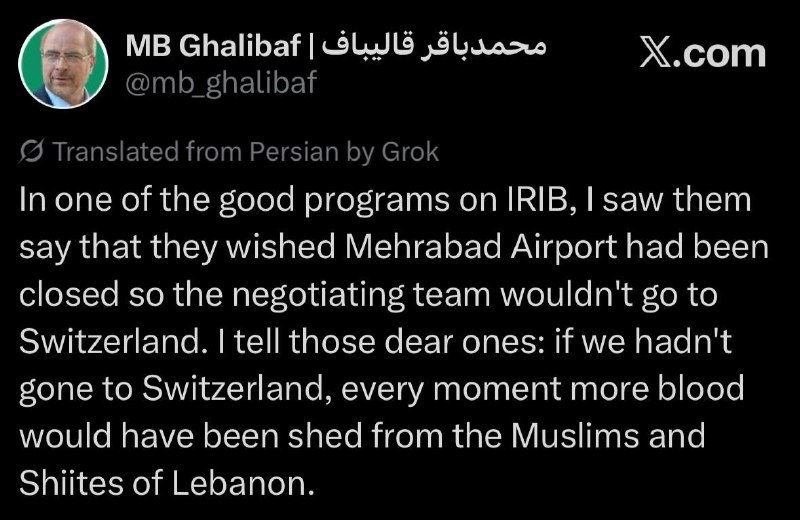
US Vice President JD Vance arrived in Switzerland in the early hours of 21 June 2026 for a fresh round of negotiations with Iran, telling reporters before departure that he expected to remain in the country for one to two days. The visit, confirmed by Reuters at 04:40 UTC and 05:00 UTC, puts the Strait of Hormuz squarely on the table alongside the long-running nuclear file, an expansion of the agenda that reflects how much global energy traffic now hangs on the corridor between the Persian Gulf and the Gulf of Oman.
The trip is the highest-level US engagement with Tehran since the previous negotiating round collapsed, and it is being conducted against a backdrop in which roughly a fifth of the world's seaborne oil transits Hormuz each day. That geography gives even a technical nuclear exchange a kinetic dimension: any escalation, accidental or otherwise, ripples through insurance markets, tanker routing and Asian import bills within hours.
What we know about the agenda
Speaking before departure, Vance framed the engagement as a one- to two-day affair and signalled that nuclear issues would dominate the formal agenda. "I hope we will make progress on the nuclear issue," he said, according to a pool report carried by Iranian outlet Tasnim, which has tracked the trip closely. Iranian state media, including Al-Alam, confirmed the vice president's arrival in the early European morning, and Iranian-linked channels were already running ticker coverage before the US press corps had filed its first dateline.
Reuters' two wires on the day — first at 04:40 UTC, then an update at 05:00 UTC — emphasised that Hormuz was now in the spotlight alongside the nuclear file. That is a meaningful broadening. For two decades the diplomatic literature on the US-Iran relationship has been written around enrichment, inspections, and the so-called sunset clauses of successive deals. A serious conversation about freedom of navigation through Hormuz pulls in the Gulf monarchies, the Chinese and Indian oil buyers who depend on the corridor, and the international maritime insurers who price war risk in real time.
The Iranian read
Iranian state and state-adjacent media have presented the trip as a normalisation moment rather than a confrontation. The framing in Tasnim's pool coverage is that Iran has agreed to talks, that the agenda is technical, and that the Islamic Republic's red lines on its nuclear programme and on the security of its coastline remain non-negotiable. That posture is consistent with the broader Iranian diplomatic line of the past year: a willingness to discuss limits, combined with an insistence that the country's enrichment capacity and its defensive perimeter are not on the table.
For a Tehran audience, the arrival of a sitting US vice president is itself a victory of sorts. It ratifies, even if only for two days, that the United States still considers direct bilateral engagement the primary lever on Iran policy — a posture that sits uneasily with the more confrontational rhetoric that has surfaced in some Western commentary in recent months.
The structural frame
What this engagement really sits inside is a re-pricing of the diplomatic premium on direct US-Iran contact. The 2015 Joint Comprehensive Plan of Action was negotiated through a multi-party architecture that included the United Kingdom, France, Germany, Russia, and China. The architecture that produced Vance's Swiss landing looks narrower and more transactional: bilateral, leader-led, and visibly run out of the vice president's office rather than the State Department. That choice tells you something about how the administration views the trade-offs — speed and discretion over institutional process, and a willingness to elevate the relationship above the normal working-level channels.
A second, quieter pattern is the role of the chokepoint itself. The Strait of Hormuz is the kind of infrastructure that only becomes legible to the wider public when it is nearly closed. Insurance premiums spike, rerouting around the Cape of Good Hope adds ten to fourteen days to a Gulf-to-East Asia voyage, and the price signal lands immediately in import-dependent economies from Tokyo to New Delhi. The fact that Hormuz is being discussed as a substantive item, rather than as a contingency, suggests that Washington now judges the risk of a miscalculation high enough to invest senior political capital in pre-emption.
What remains uncertain
The sources available on 21 June do not specify the precise composition of the delegations, the venue within Switzerland, or the agenda beyond the broad strokes Vance offered before departure. It is also unclear whether the engagement will produce a joint communiqué, a working-level follow-up, or simply a confidence-building handshake. Reuters' morning wires are the most authoritative English-language account on the public record; Iranian state and state-adjacent media add detail on Tehran's framing but are not independent on questions of US intent. A fuller picture will depend on what, if anything, emerges from the talks on day two.
The honest read is that this is a diplomacy of position-taking as much as of problem-solving. Vance has staked a public expectation of progress on the nuclear file. Tehran has signalled that the meeting is happening on its terms. The Gulf states, the European Union, China, and India will be reading the outcome less for the language on enrichment than for any signal on Hormuz — because the chokepoint is where the consequences of failure arrive first.
Desk note: Monexus leads with Reuters and the Iranian state-affiliated outlets that broke the arrival, treats the chokepoint question as substantive rather than rhetorical, and frames the engagement in plain editorial terms as a re-priced bilateral channel rather than a multilateral continuation of the JCPOA architecture.
Wire provenance
This editorial synthesis draws on the following public wire/social posts:
- http://reut.rs/4eU9WYq
- http://reut.rs/4vqwzK7
- https://t.me/wfwitness
- https://t.me/rnintel
- https://t.me/alalamarabic
- https://t.me/TSN_ua
- https://t.me/tasnimplus
Follow the event.
These dated source records provide context. They do not retrospectively verify this archive article.
Separate what the nuclear watchdog reported from what it could not determine after the June 2025 strikes.