Beijing tightens the screws on Washington and Hong Kong at the same time
Two moves in 24 hours — export and procurement curbs on US firms, and tighter cross-border rules in Hong Kong — point to a Beijing prepared to weaponise economic access in parallel.
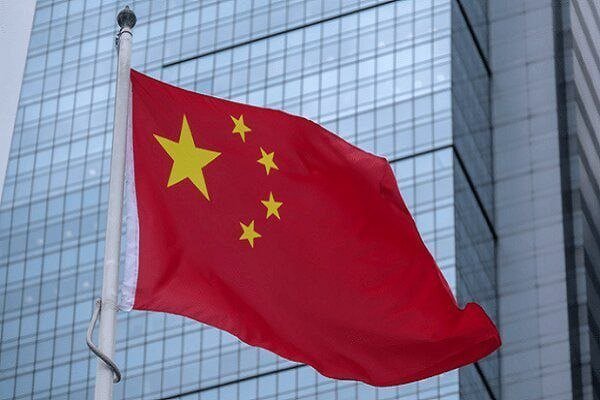
On 22 June 2026, China's commerce ministry moved against dozens of American companies with a fresh package of export and government-procurement restrictions, the clearest signal in months that Beijing intends to keep trade frictions live even as the broader US-China relationship drifts through a brittle détente. Hours earlier, the same government had tightened cross-border investment rules in Hong Kong — a separate cut aimed at a different audience but pulled from the same toolkit of state power.
The pairing is the story. For most of the past two years, Western commentary has framed China as reactive — a country absorbing tariffs, semiconductor controls and investment screening, then issuing measured responses. The sequence this weekend inverts that read. Beijing is acting in parallel, on two fronts, and on a calendar of its own choosing.
What's actually in the new US-facing measures
The 22 June package, reported by Nikkei Asia, targets export controls and government procurement against US firms, a category broad enough to encompass defence suppliers, dual-use technology vendors and the kind of mid-cap industrial companies that sit inside the global semiconductor and aerospace supply chain. China has used this lever before: the 2023 and 2024 cycles put companies like Lockheed Martin units, General Dynamics subsidiaries and a long tail of US defence and aerospace suppliers on so-called unreliable-entity lists, citing arms sales to Taiwan and participation in US export-control architecture.
This latest move is narrower in its public framing and wider in its signalling. Beijing is signalling to Washington that procurement access to the Chinese state — a market worth hundreds of billions of dollars annually, even after a three-year contraction — is a negotiable asset. For US companies, the practical effect is patchy: most large defence contractors sold little to the PRC before the rules and will sell less after. The real bite falls on dual-use suppliers, civil-aviation parts makers, and the long tail of US-listed firms whose China revenue still runs in the low single digits of total sales but matters in a downturn.
A counter-reading is also worth taking seriously. From Beijing's vantage point, the United States has spent the past four years layering export controls, outbound investment screening and secondary sanctions on Chinese firms, often on national-security grounds that the Chinese government considers pretextual. Beijing's commerce ministry has a legitimate procedural case that the US framework, as currently administered, is extraterritorial and discriminatory. Whether one accepts that case is a separate question; the case itself is not invented.
Hong Kong is the other front
While the US-facing announcement was still on the wire, a separate Nikkei Asia dispatch on 21 June described a tightening of cross-border investment rules in Hong Kong — described as the tightest yet, and rippling through the territory's financial and property sectors. Wealth managers, family offices and mainland-linked funds that have used Hong Kong as a routing hub for offshore yuan, dollar and gold flows are now facing more granular reporting, longer approval cycles and, in some product categories, outright restrictions on the size and direction of cross-border transfers.
The immediate market read is straightforward. Hong Kong's status as the principal offshore venue for mainland Chinese capital is the product of a specific legal and tax architecture that the central government has spent three decades insulating from on-shore capital controls. Tightening that architecture is a slow-motion act of integration: it pulls Hong Kong closer to the mainland's regulatory perimeter, with the side effect of reducing the territory's competitive edge against Singapore, Dubai and London as a wealth-management hub.
The counter-narrative — and it is the one that official Chinese commentary will stress — is that the tightening is anti-evasion rather than anti-business. Capital flight, opaque family-office structures, and round-tripping through the territory to disguise onshore exposure have all grown as the mainland property cycle has soured. A government that spent the last five years restoring macroeconomic discipline at home is acting consistently when it asks its offshore gateway to do the same.
What the pattern looks like from a distance
Step back, and the two moves are doing the same job in two different theatres. Beijing is using administrative tools — licensing, procurement access, capital-flow rules — to push back against a US-led framework that has, for the first time since the 1990s, treated economic access to China as conditional on political alignment. The Western policy debate still tends to frame these moves as defensive responses to US pressure. The 21–22 June sequence is harder to read that way. It is a state with leverage, choosing to use it.
That is not the same as saying Beijing is winning. Industrial-policy coherence at the centre does not always translate into delivery at the firm level, and the Chinese economy in mid-2026 is still working through a property correction, a youth unemployment problem, and a deflationary pulse in consumer prices. The leverage is real, but it is not unlimited.
What remains uncertain
Three things are still unclear, and the source material does not resolve them. First, the specific list of US companies targeted in the 22 June announcement: Nikkei Asia's wire reports the category and the policy instrument, not the full roster. Second, the scope of the Hong Kong capital-flow tightening: the public messaging emphasises anti-evasion, while the financial industry's read is that the rules are broad enough to constrain legitimate wealth-management business. Third, the coordination question — whether the US-facing and Hong Kong-facing moves were timed together as a deliberate signal, or whether they are two parallel processes inside the same policy cycle that happen to land on adjacent days. The official record will not say. Read carefully and assume the answer matters more than the wire suggests.
This publication framed the two moves as a single act, not as a pair of disconnected stories. Western wire coverage will likely lead with the US-facing announcement; that ordering hides the Hong Kong piece, which is where the longer-term structural shift is.
Wire provenance
This editorial synthesis draws on the following public wire/social posts:
- https://t.me/nikkeiasia
- https://t.me/nikkeiasia