India courts UAE with BrahMos and Akashteer as Delhi diversifies arms clients
Talks to sell the BrahMos cruise missile and Akashteer air-defence system to Abu Dhabi are early but moving quickly, according to Reuters — a signal of how India is repositioning itself as an arms exporter to the Gulf.
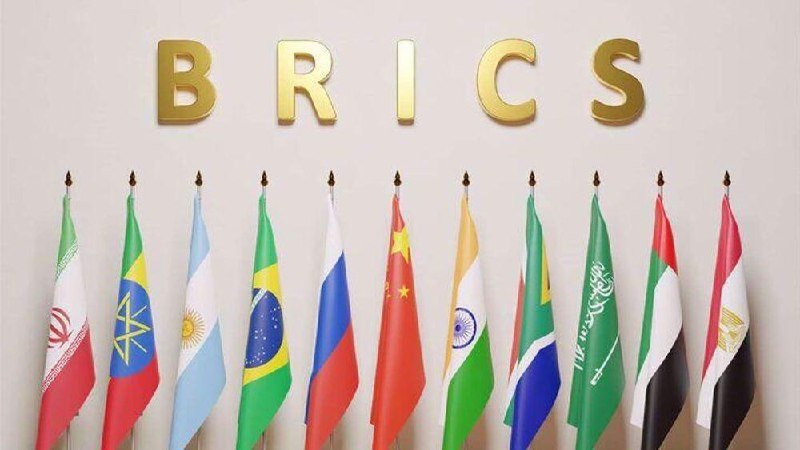
New Delhi is in early but fast-moving talks with Abu Dhabi to sell its flagship supersonic cruise missile BrahMos and the Akashteer air-defence system to the United Arab Emirates, Reuters reported on 22 June 2026. The conversations, still described as preliminary, would mark a notable deepening of defence ties between two countries that have built a closer political and trade relationship over the last decade, and would slot Indian-made weaponry into a Gulf order book historically dominated by the United States, France and Russia.
The discussions matter less for any single contract than for what they signal: India is now pitching itself as a serious arms exporter to the Gulf, and Gulf monarchies — hedging between Washington and a more contested regional security environment — appear willing to listen. The same morning the BrahMos news crossed wires, Reuters also reported that India is pressing the United States for preferential market access as part of an ongoing trade negotiation, underscoring how Delhi is pursuing economic and security partners in parallel rather than in sequence.
What's actually on the table
The two systems at the centre of the talks sit at very different points on the cost and complexity spectrum. BrahMos is the supersonic cruise missile developed jointly by India's BrahMos Aerospace — a joint venture between India's state-owned Defence Research and Development Organisation and Russia's NPO Mashinostroyeniya — and already in service with the Indian Army, Navy and Air Force. The missile has been exported to the Philippines and is in advanced talks with other buyers; a UAE order would extend its footprint into the Gulf.
Akashteer is the more novel proposition. It is an indigenous Indian air-defence command-and-control system designed to automate detection, tracking and engagement of hostile aircraft, integrating data from radars and forward air-defence units. Selling Akashteer to the UAE would be one of the first significant exports of an Indian-made air-defence C2 architecture, rather than a kinetic system. Reuters describes the talks as moving fast but not concluded; the terms, the delivery timeline and the offset commitments are not yet public.
Why Abu Dhabi, and why now
The UAE has spent two decades building one of the most diversified defence procurement portfolios in the Gulf. American platforms — F-16s, missile-defence batteries, THAAD — sit alongside French Rafales, Russian missile systems and a growing Chinese footprint in unmanned systems and certain surveillance categories. The willingness to entertain Indian kit reflects a broader Gulf pattern: importing from multiple suppliers, in part to preserve leverage over each of them.
For the UAE, an Indian air-defence C2 layer offers a complementary capability rather than a replacement for any existing system. BrahMos would be more politically sensitive, given its origins in a Russian joint venture and the longer-range strike profile of the missile family. Both sides have reason to calibrate: Abu Dhabi does not want to complicate its relationship with Washington by acquiring systems Moscow would see as a sensitive transfer, and New Delhi does not want to jeopardise its own deepening defence relationship with the United States by being seen to undercut American suppliers in the Gulf.
What India is trying to do
Defence exports have become a stated priority of the Indian government under Prime Minister Narendra Modi, with a public target of reaching roughly 500 billion rupees — about $6 billion — in annual exports by the end of the decade. The actual run-rate is materially below that, dominated until recently by lighter platforms and component sales to neighbours. BrahMos exports to the Philippines began to change that conversation; a UAE order would accelerate it.
There is also a diplomatic logic. The UAE is one of India's largest trading partners and a major source of investment in Indian infrastructure and sovereign-wealth flows into Indian equities. A defence relationship deepens a partnership that is already unusually broad for two countries that did not have a security dialogue of any depth before the 2010s. It also gives Delhi a foothold in Gulf security debates at a moment when Gulf states are recalibrating their posture toward Iran, the United States and the broader regional order.
The structural read
Two patterns sit underneath the headline. The first is the quiet diffusion of weapons-manufacturing capability across the Indo-Pacific: India, South Korea, Japan, Turkey and Indonesia are all selling more of what they used to only buy. The second is Gulf procurement behaviour, which has shifted from a near-monoculture dependence on US systems in the 1990s and 2000s to genuine multi-sourcing — French, Russian, Korean, increasingly Indian, and on the unmanned side Chinese.
That is not a wholesale realignment. The United States remains the security partner of record for the UAE, and the platforms most consequential to the Emirati deterrent posture are still American. What is changing is that the periphery of the order book — missile systems, coastal defence, C2 architecture, unmanned platforms — is now genuinely competitive.
Stakes and what remains contested
If the talks conclude, BrahMos in UAE service would be the first time the system has been deployed by a Gulf state, and would set a precedent for other Gulf buyers. Akashteer would test whether India can export a software-defined air-defence architecture into a market dominated by American and European incumbents. Either outcome would meaningfully change the texture of how defence-industrial capability is distributed across the Indo-Pacific.
The open questions are the obvious ones: how advanced the talks really are, whether Washington will weigh in — quietly or otherwise — on an Indian sale of a Russian-origin cruise missile into the Gulf, and how India reconciles its export ambition with its deepening strategic alignment with the United States. Reuters describes the negotiations as moving quickly but as still at an early stage. None of the headline systems have been formally contracted, and Indian and Emirati ministries have not publicly confirmed prices or timelines. Until they do, this remains a signal of intent rather than a transaction.
Desk note: Monexus treats Indian defence exports as a structural story, not a transactional one; the relevant frame is procurement diversification in the Gulf and the diffusion of weapons-manufacturing capability across the Indo-Pacific.
Wire provenance
This editorial synthesis draws on the following public wire/social posts:
- https://t.me/rnintel
- https://t.me/ClashReport
- https://x.com/reuters/status/2068976043008925696