Tehran pushes back on White House 'inspectors back in' claim as Marandi denies any deal
A White House social-media post on 22 June 2026 said Iran had agreed to the return of IAEA inspectors. Within minutes, a senior member of Iran's negotiating team publicly contradicted the claim.
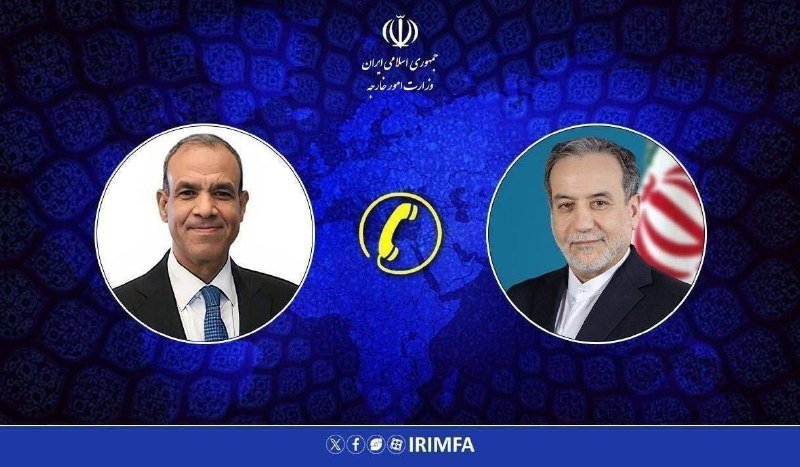
At 17:34 UTC on 22 June 2026, a short message went out from the White House account. Iran, it said, had agreed to the renewed entry of International Atomic Energy Agency inspectors. The wording was declarative, the diplomatic signal unmistakable: a deal, of some kind, had been struck between Washington and Tehran. Within an hour, the picture had been contradicted by one of the most senior Iranian voices at the negotiating table.
Professor Mohammad Marandi, a senior member of Iran's negotiating delegation and a Tehran University analyst closely associated with the Islamic Republic's nuclear-file posture, told OSINT-tracked Telegram channels that inspectors had not, in fact, been discussed. "Yesterday, the possibility of the Atomic Energy Agency's inspectors coming to Iran was not discussed," he said, according to messages logged by the OSINT Live, Abu Ali Express and English Abu Ali channels between 17:26 and 18:01 UTC. He added, via Tasnim-aligned coverage, that Iran does not intend to buy American agricultural products — a separate, but pointed, signal about the scope of any prospective arrangement. The contradiction was sharp, public, and immediate.
The two readings of a single afternoon
The exchange is the latest in a pattern that has defined the post-2018 US-Iran track: official communiqués that move markets and shape newspaper front pages, followed within hours by a counter-narrative from the Iranian side that the Western press is slower to absorb. On the White House framing, Iran has acceded to a basic nonproliferation ask — inspectors back in — and a deliverable is now in place. On Marandi's framing, nothing of the kind was on the table when the two delegations met, and the announcement overstates the result.
Neither side is unfamiliar with this kind of gap. Tehran has long used senior English-speaking academics tied to the negotiating delegation to set the public record, particularly when official MFA readouts lag. Marandi, a frequent commentator in Western outlets during prior rounds, is the most recognisable of those voices. The choice to put the denial on his account — rather than a foreign-ministry spokesperson — signals how the Islamic Republic prefers to manage disputes of this kind: a denial that reads as authoritative, delivered through channels that Western diplomats read attentively.
Why 'inspectors' carry so much weight
The substantive question beneath the messaging is whether the IAEA will regain the access it lost after Iran moved to restrict agency monitoring in 2021, and again more recently as tensions spiked around the regional war and the Strait of Hormuz crisis. Inspectors in country are the precondition for any technical verification of Iran's stockpile and enrichment posture — and therefore the precondition for any claim by Washington that it has constrained Tehran's programme. A White House announcement that Iran "has agreed" to their return is, in effect, a claim to have extracted a nonproliferation concession. Marandi's denial is, in effect, a claim that the concession was never on offer.
Both claims cannot be accurate in their plain reading. Either the subject was discussed and an agreement was reached, in which case Marandi is dissembling; or it was not discussed, in which case the White House account is premature or, in the harsher reading, manufactured. The most plausible middle ground — that the issue was raised informally or signalled rather than negotiated — is the one neither side has an interest in voicing, since it strips the announcement of its headline value on the American side and the denial of its forcefulness on the Iranian side.
What is being negotiated, in fact
Marandi's second remark — that Iran does not intend to purchase American agricultural products — points to the actual terrain of the exchange. The negotiations appear to combine nonproliferation questions (inspectors, enrichment limits, stockpile accounting) with a wider economic track that has included the easing of sanctions on Iranian oil exports, dollar-clearing arrangements, and the release of frozen revenues. Agricultural purchases from the United States are a recurring flashpoint inside Iran, where hardliners view them as a Trojan-horse normalisation of the bilateral relationship. The fact that the Iranian negotiator chose to use the same platform to rule out the agricultural-purchase track is, in itself, an indication of the political constraints he is operating under at home.
That dynamic is the structural feature the day's episode sits inside. US-Iran deals are rarely signed in a single document; they emerge in cascading, partial, often-reversible steps, each of which is sold to a different domestic audience. The White House post is calibrated for an American audience that reads deliverables; the Marandi rebuttal is calibrated for an Iranian audience that reads concessions. Both communications are, in that sense, doing real work — but for different publics.
Stakes if the gap widens
If Marandi's denial holds, and inspectors do not in fact return, the White House post becomes the kind of premature announcement that has historically forced the US side to walk back claims and produced rounds of mutual recrimination. If the White House post holds, and Marandi is out on a limb within his own delegation, the contradiction is itself a signal that the Iranian negotiating team is split — which would, in turn, push any durable deal further out of reach. The IAEA Board of Governors is the venue where the technical answer will eventually be settled: a Board of Governors report confirming or denying resumed monitoring is the only document that matters.
The narrower stakes are also concrete. Oil markets, which moved briefly on the White House post, will not settle on a Telegram-channel exchange. The dollar-rig question — whether Iranian oil revenues clear through third-country banks at the rates Tehran accepts — depends on inspector access, because that is how Western governments certify Iranian compliance. If the inspector question is unresolved for another quarter, expect sanctions enforcement to harden in parallel. The risk for Washington is a deal that exists on the front page and not in the centrifuge halls; the risk for Tehran is the inverse — a deal signed in Natanz and never delivered in Vienna.
This publication has framed the dispute as a public disagreement between two named sources of comparable authority, rather than treating either announcement as a settled fact. The IAEA's own technical assessment — not the social-media posts of either capital — is the only document that will ultimately close the gap.
Wire provenance
This editorial synthesis draws on the following public wire/social posts:
- https://t.me/osintlive
- https://t.me/englishabuali
- https://t.me/tasnimplus
- https://t.me/abualiexpress
Follow the event.
These dated source records provide context. They do not retrospectively verify this archive article.
Separate what the nuclear watchdog reported from what it could not determine after the June 2025 strikes.