Iran's delegation leaves Geneva after 18 hours of talks, US counterpart remains — what's actually on the table
Technical-level talks begin in Switzerland after Iran's senior delegation returned to Tehran, leaving the substance of the exchange opaque and the timetable uncertain.
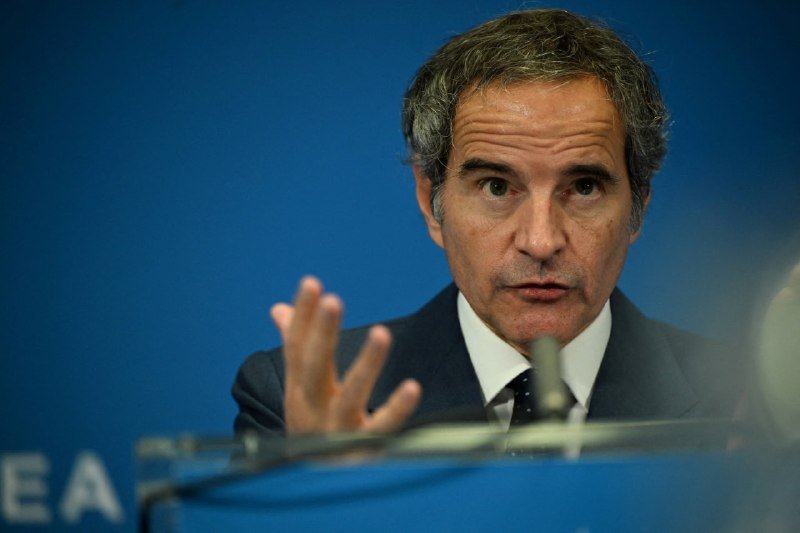
Iran's negotiating delegation wrapped up a marathon session in Switzerland on 22 June 2026 and is back in Tehran, Iranian Foreign Minister Abbas Araqchi said in the early hours of the morning, capping roughly 18 hours of direct exchanges with the United States. The substance of those talks remains undisclosed; the choreography around them is now the story.
The Iranian side framed the session as one technical round among several, with deputy-level working groups expected to continue the conversation in the coming days. The US delegation, by contrast, remained in Switzerland as of the most recent public reporting, an asymmetry that has fuelled competing readings of who blinked first. The timing — barely a week after a publicly visible escalation cycle between Washington and Tehran — has lifted the diplomatic optics above their actual policy content. Until texts, drafts or readouts appear, what is on offer is less interesting than what the posturing reveals about each side's domestic constraints.
What the wire reports, and what it does not
Four separate channels carried the same core fact between roughly 07:17 UTC and 08:14 UTC on 22 June 2026. Open Source Intel, citing Araqchi directly, said the Iranian delegation had left Switzerland for Tehran. Iranian state agency IRNA confirmed the round had ended and the delegation was travelling home. The Clash Report added the duration — 18 hours of talks — that other outlets did not include. Israeli television correspondent Amit Segal, reporting from the negotiations track, said technical talks would continue from today and that the senior Iranian side had returned to the capital.
What none of the four items specify: any joint statement, any agreed text, any timeline for a further ministerial meeting, any indication of which issues were tabled, and whether sanctions relief or nuclear constraints formed the spine of the exchange. The 18-hour duration is suggestive of substantive give-and-take; it is also consistent with a session that ran out of road on a single technical question and went home to consult. Both readings are live until a readout forces a verdict.
The structural frame: why Geneva, why now
A diplomatic track between the United States and Iran that is publicly visible, technically structured, and conducted through intermediaries in a neutral European capital fits the template of earlier back-channel rounds that have intermittently stabilised — or merely deferred — the longer confrontation. Switzerland has hosted US-Iran contacts before, and the choice of Geneva is less a signal of breakthrough than of the diplomatic grammar the two sides default to when neither can afford a public collapse and neither can claim a public win.
The asymmetry of who stayed and who left reads cleanly through that lens. Returning the senior delegation to Tehran allows Iran to claim the round is procedurally complete on its side, while leaving the working-level cadre in place preserves the technical channel. For Washington, keeping the delegation in country — if confirmed by a US readout — signals willingness to keep the conversation moving even as domestic political pressure builds around sanctions enforcement and any prospective deal. Neither side's posture is novel. Both are recognisable from previous cycles.
What counter-narratives are doing in the gap
Israeli reporting on the negotiations, including Segal's items from the same track, has tended to foreground the gap between what is being negotiated and what Israeli officials say should be on the table. That framing treats the US-Iran channel as a containment exercise at best and a concession at worst, and reads any continuity of talks as a slowing of pressure rather than a step toward resolution. It is a legitimate read; it is also a read shaped by Israeli threat perception rather than by the documents on the table.
Iranian state media, by contrast, frames the round as a normalised technical exchange — sanctions file, nuclear file, regional file — with the senior side's departure a sign of disciplined process rather than walkout. IRNA's wording is deliberately procedural. The Western-wire read, where it has surfaced, has been sparse: most major outlets have not yet carried a verified readout, and the absence of named Western on-the-record sourcing is itself a constraint on the available frame. The honest summary is that the dominant framing of these talks is being set, at this hour, by non-Western channels — Iranian state media and regional Telegram aggregators — with Western-wire confirmation trailing behind.
Stakes over the next 72 hours
The next three days will determine whether Geneva produced a working document or merely a working rhythm. If deputy-level talks resume on schedule and a date is named for a further ministerial round, the market and political read is continuity: pressure maintained, escalation deferred, room for a longer negotiation. If the working-level channel stalls, or if Tehran's public line hardens, the track degrades back into the posture cycle that preceded it. Either outcome is compatible with the four items currently in the public record.
The harder question — whether either side has the domestic political latitude to convert technical progress into a binding arrangement — is not answerable from the available sourcing. Iranian decision-making around any deal runs through the Supreme National Security Council and ultimately the office of the Supreme Leader; US decision-making runs through a Congress that has shown little appetite for the relief architecture a deal would require. Neither constraint is visible in the four-channel read, but both shape what the technical talks can plausibly produce. The delegation's 18-hour stay in Switzerland is a fact; what it portends is, for now, a posture, not a position.
This publication filed the above without a confirmed Western-wire readout; the source ledger is dominated by Iranian state media and regional aggregators, which limits the interpretive weight the analysis can carry. We will update when primary confirmation is available.
Wire provenance
This editorial synthesis draws on the following public wire/social posts:
- https://t.me/amitsegal
- https://t.me/osintlive
- https://t.me/abualiexpress
- https://t.me/ClashReport
- https://en.wikipedia.org/wiki/Iran%E2%80%93United_States_relations
- https://en.wikipedia.org/wiki/Abbas_Araqchi
Follow the event.
These dated source records provide context. They do not retrospectively verify this archive article.
Separate what the nuclear watchdog reported from what it could not determine after the June 2025 strikes.