Messi's Record and a Stadium-Entry Ban: Two Argentinas at the World Cup
On the same day Lionel Messi became the all-time World Cup scorer, Buenos Aires moved to keep 13,000 delinquent fathers out of stadiums. The contrast is the story.
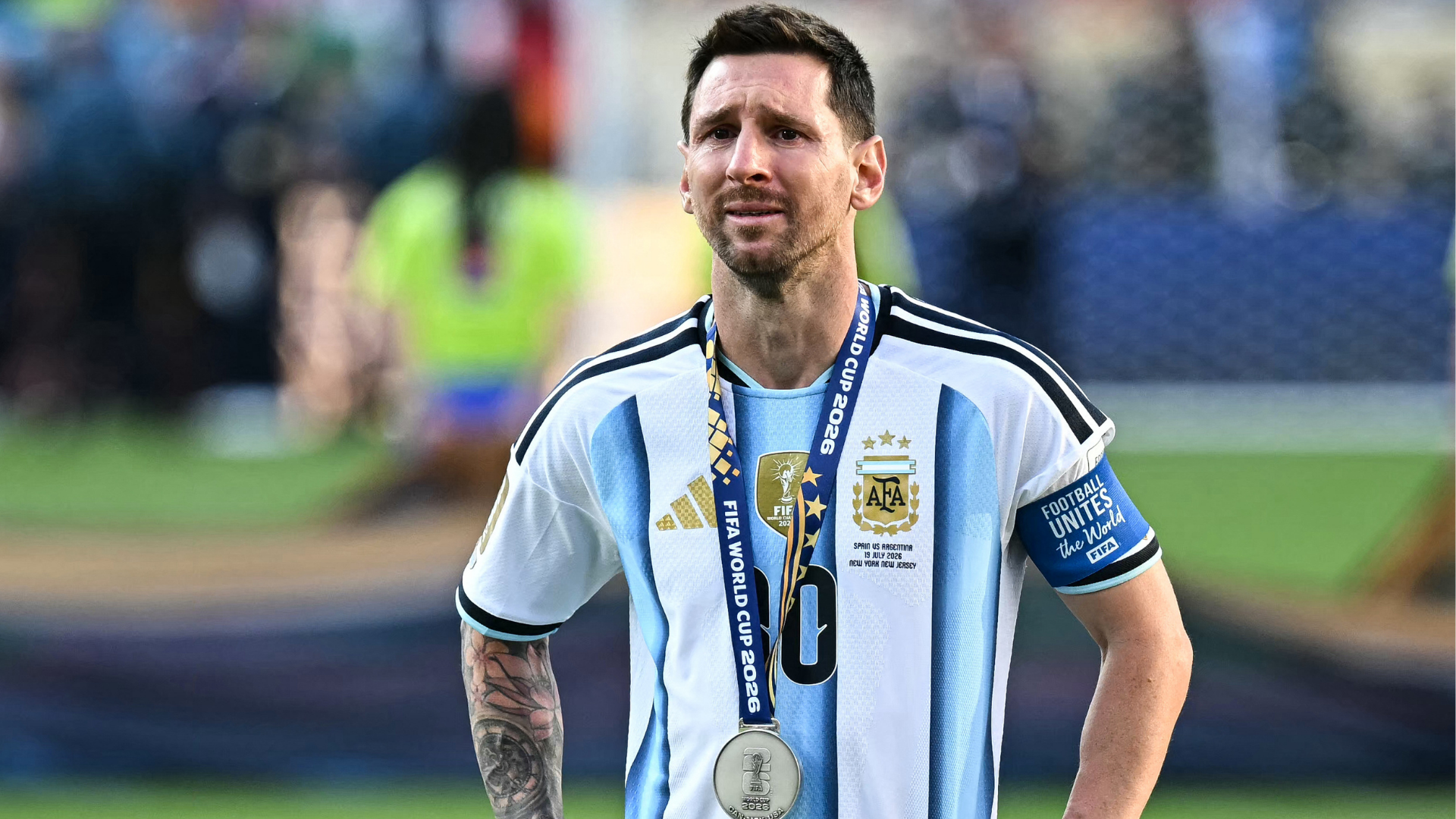
On 22 June 2026, two stories about Argentine men hit the wire within hours of each other, and the distance between them is the story. At 17:49 UTC, Lionel Messi scored his 17th World Cup goal and passed the all-time record. Roughly twenty minutes later, news spread that Argentina had barred roughly 13,000 fathers with unpaid child support from attending matches at all. The country that produces the planet's most-watched athlete is also the country that has decided a delinquent father's punishment is to lock him out of the stadium.
The record is unambiguous and the reaction was immediate: Polymarket flagged Messi as the official all-time leading World Cup scorer on 22 June 2026 at 18:09 UTC, twenty minutes after the goal itself went round the wires. Messi is, by any reasonable measure, the most consequential individual player of his generation. The framing of the ban is more interesting than the framing of the record, because the ban reveals how a state decides whose civic presence is earned and whose is conditional.
The goal, briefly
Messi's 17th World Cup goal does not need much decoration. Insider Paper's 17:49 UTC alert and the Polymarket confirmation at 18:09 UTC are enough to place the moment in time. Past record holders were men who played in eras with fewer games and fewer tournaments; the modern game's expanded formats have made accumulation easier, which is why the achievement belongs alongside, rather than above, the older marks. What is new is the calendar: Messi has now outscored every man who has ever worn a national shirt at a World Cup, and he did it for a country that is simultaneously rewriting the rules of who gets to watch him.
The ban, less briefly
Per the same wire cycle on 22 June 2026, Argentina has moved to block approximately 13,000 fathers with outstanding child-support debts from attending World Cup matches. The mechanism is administrative rather than criminal; the state already holds the debtor registry, and the tournament's ticketing and accreditation systems offer a clean choke point. The political logic is straightforward: a public, visible humiliation for men who have failed in private obligations to their own children, timed to coincide with the maximum possible global attention to Argentine maleness.
Three things are worth saying about the ban in plain terms. First, it is selective enforcement by design — only fathers, only those with registered debts, only for the duration of a tournament. It does not address the underlying economic conditions that produce arrears; it addresses the optics of those conditions. Second, it presumes state legitimacy to police private morality through access to public spectacle, which is a power no democracy grants lightly. Third, it converts a global sporting event into a domestic enforcement tool, which raises the question of what other registries — tax, traffic, electoral — might be deployed the same way the next time the cameras are on Argentina.
Two readings of the same afternoon
The mainstream read is that Argentina has found a clever, low-cost way to shame deadbeat dads in front of a billion viewers. That read is not wrong, and it is the read that will travel best in English-language coverage because it is tidy and it flatters the viewer.
The other read is that a state with persistent problems in family-court enforcement, in wage informality, and in the economic precarity of single-parent households has decided the cheapest intervention is to deny those households a slice of national joy. Roughly 13,000 fathers is a number large enough to imply a structural problem with the child-support system itself, not a few thousand bad actors. The ban punishes the visible without fixing the cause.
What the contrast actually says
A country that produces the world's most celebrated footballer is also a country willing to weaponise his stage. That is the structural frame. Major tournaments are not just sport; they are the rare moments when a state can address its entire domestic audience and a foreign audience at once, and the Milei government — like every Argentine government before it — is treating the World Cup as a venue for policy announcements that would otherwise require legislation, debate, and a vote.
The stakes are concrete. If the model works, expect copycats: other Latin American states with similar debtor registries and similar tournament calendars will be tempted to do the same. Expect also the predictable pushback from fathers'-rights groups and from libertarians inside Argentina who will read the ban as the state overreaching into leisure. What the ban does not solve — the arrears, the children, the families — will still be there in October, when the stadiums are quiet and the cameras have moved on.
What remains genuinely uncertain is the legal durability of the measure. The sources do not specify the statutory basis, the appeals process, or whether the ban survives a constitutional challenge under Argentina's Article 14 of freedom of movement, or Article 42 of consumer protection in ticketed events. The framing of the ban as a one-tournament enforcement action is clean politics; the litigation that follows is the part nobody on the wire has priced in yet.
Desk note: Monexus treats the Messi record and the father-ban as a single story, not two. Most wire desks will split them; the editorial choice here is that they belong together because the same Tuesday produced both, and the contrast is the reporting.
Wire provenance
This editorial synthesis draws on the following public wire/social posts:
- https://t.me/insiderpaper
- https://x.com/polymarket/status/
- https://x.com/polymarket/status/