The Strait of Hormuz, weaponised in plain sight
Donald Trump is openly threatening to seize the world's most important oil chokepoint while Iranian voices counter-claim it has already been shut. The reality on the water is messier than either narrative.
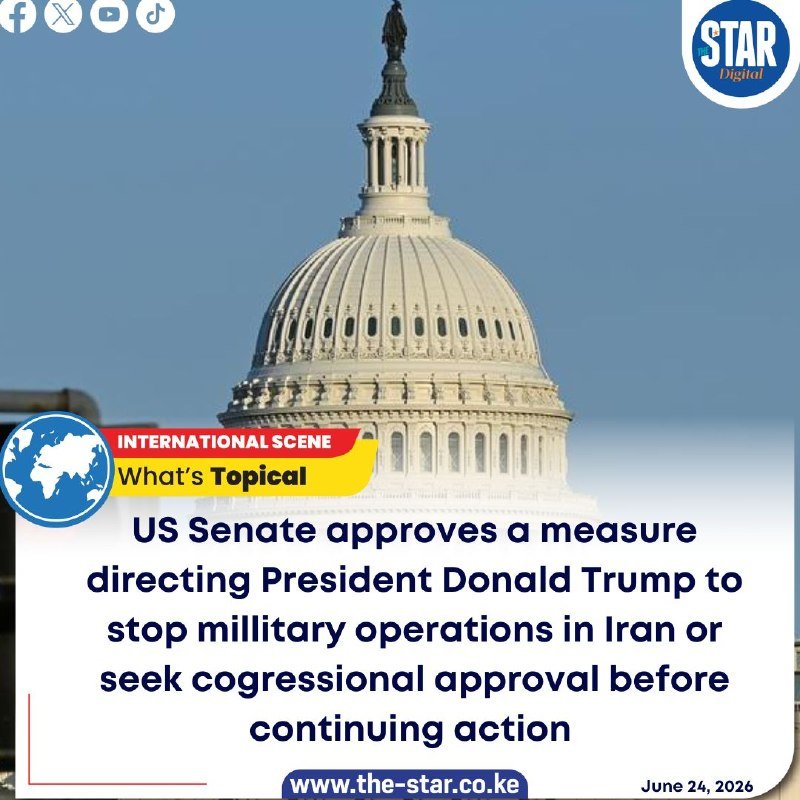
On 21 June 2026 the United States and Iran spent the better part of a trading day publicly threatening each other's access to the most important energy corridor on earth. President Donald Trump told Fox News that, if Iran closed the Strait of Hormuz, Iranian negotiators "will not be able to return to their country." Earlier in the day he had said the US might "take over" the waterway if a deal is not reached. By evening, oil futures were jittery, tanker insurers were repricing war risk, and Iran's envoy in Geneva was reiterating that the strait had already been shut. The oil market, for its part, kept discounting the claim: tankers were still moving, per Bloomberg reporting cited by Cointelegraph, even as Iranian state media insisted the chokepoint was sealed.
This is the script now running in slow motion: a hegemon, a sanctioned petrostate, and a waterway through which roughly a fifth of global seaborne crude passes — each trying to convince a global audience that the other one blinked first. The market is watching the rhetoric; the ships are watching the radar. The disconnect between the two is the story.
The threat that isn't a threat
Trump's language has been deliberately escalatory without being operationally specific. "Take over" is the kind of phrase that fits a campaign rally and a presidential presser; it does not, on its own, constitute a deployment order for the US Fifth Fleet, which is already the dominant naval force in the Persian Gulf. Telling Iranian negotiators they may not be allowed to fly home is, similarly, a travel-sanction threat wrapped in colloquial English. The function is to compress the negotiating timeline.
For Tehran, the counter-script is also familiar: close the strait, claim it is closed, force a panic, then bargain from the spike. The complication is credibility. On 21 June 2026, even as Iranian-aligned accounts asserted the corridor was sealed, Bloomberg's markets desk reported that oil continued to flow. The market read the gap between claim and reality, and priced accordingly.
Reading Fuad Izadi's "sixty days"
Into this came a voice worth taking seriously: Fuad Izadi, a senior expert on US affairs writing on X on 22 June 2026 at 05:44 UTC. His claim was specific. Iran, he argued, would not collect a single rial in tolls or duties from the strait for sixty days. After that window, the United States alone would be collecting duties from transit traffic. The framing is essentially a countdown: Tehran loses revenue, Washington gains a revenue stream and a permanent forward position. The implication is that the Iranian negotiating position has a shelf life measured in weeks, not months.
That reading, if it holds, reframes the brinksmanship as a financial clock. It also aligns the operative timeline of any "takeover" with a budget arithmetic on the Iranian side. Tehran's incentive to settle, on this account, is the absence of a fiscal backstop once the sixty days expire.
What the market is telling us
The two most reliable witnesses in a chokepoint crisis are the tanker trackers and the underwriters. On the day the strait was supposedly closed, oil was still moving. That does not mean the threat is fake — it means the threat is being held in reserve. The market is pricing an option, not an outcome. War-risk premiums on Persian Gulf tonnage are the cleanest read; until those move sharply and durably higher, traders are inferring that neither side has crossed from theatre to action.
That is the structural frame: the strait has been turned into a signalling channel. Its closure, or its threatened closure, is being used as a negotiating instrument rather than a military operation. The oil that still moves is part of the message — proof that the system is functional enough to make Tehran's threat visible without yet forcing a global supply shock that would redraw the political map.
Stakes and the quiet escalation ladder
The plausible counters, and the reasons they are less convincing, are worth naming. Iran may be hoping for an oil spike that forces Western capitals to broker a deal; yet Brent has, by the available reporting, continued to flow and to clear. The US may be hoping a takeover threat deters any closure attempt; yet the threat is not yet backed by a stated rule of engagement, and the credibility of US force-projection in the Gulf is no longer a settled assumption. The market, in other words, is sceptical of both scripts — and is making that scepticism visible through prices, not commentary.
What is not yet knowable is whether the sixty-day window Izadi describes matches the actual Iranian fiscal runway. The sources do not specify how the figure was calculated or which revenue lines are included. There is also no public confirmation, on the available record, that the US Navy has been instructed to board or divert any commercial traffic. The escalation ladder is steep but, as of 22 June 2026, rungs are still in place rather than being removed.
The plain reading: a corridor that carries a fifth of seaborne oil is being used as a stage for two negotiating positions, neither of which is quite the operation it is being sold as. The risk is not that the strait closes tomorrow; it is that the day it does close, the world will have stopped listening to the warnings.
This publication treated the claim and the counter-claim with equal scrutiny, but the oil market — by far the most disciplined witness — as the tie-breaker on the day in question.
Wire provenance
This editorial synthesis draws on the following public wire/social posts:
- https://x.com/sprinterpress/status/2037712000000000000
- https://x.com/unusual_whales/status/2037712000000000000
- https://x.com/unusual_whales/status/2037712000000000001
- https://t.me/cointelegraph/2037712000000000000