Trump, Tehran, and the Israel gap: how a 22 June push on nuclear inspections widened a transatlantic crack
On 22 June 2026, Donald Trump's nuclear-inspection post and an Israeli right-wing channel's electromagnetic-weapon claim put a widening US-Israel gap over Iran on the front page, while Tehran's negotiators watched from the wings.
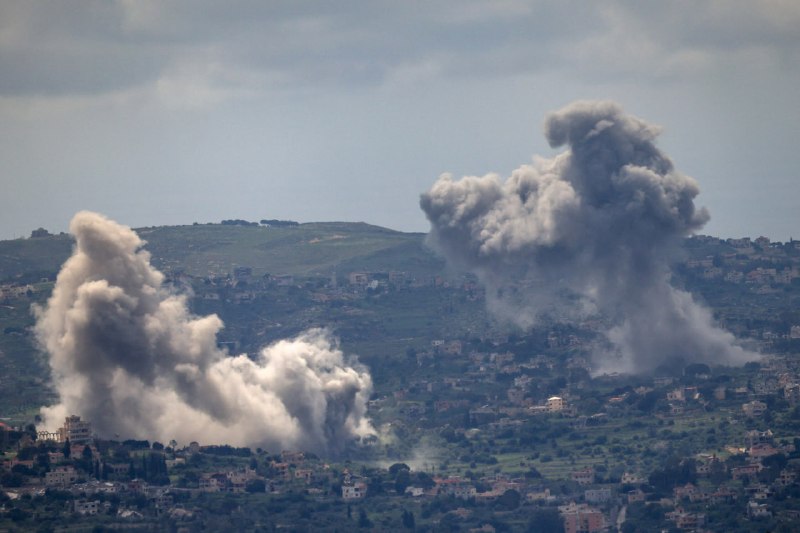
At 17:14 UTC on 22 June 2026, Donald Trump posted about nuclear inspections in Iran, thrusting back into the headlines a dispute that had been moving, quietly, through back-channels for weeks. By that hour, Israeli commentators were already sharpening the knives. A senior Israeli media figure had argued, at 16:55 UTC, that the US president had made a "grave mistake" in his talks with Iran and that Israel should let him discover that for himself — a striking posture for an Israeli leader to take toward a sitting American president in public. By 16:30 UTC, Channel 14 — a Hebrew-language outlet closely aligned with prime minister Benjamin Netanyahu — had carried a more exotic accusation: that Tehran was using an "electromagnetic low-frequency weapon" to influence Trump's decisions, and that "they implanted these wa[ves]" into the diplomatic environment. Read together, those three signals sketch a familiar but accelerating pattern. The Iran file is no longer simply a contest between Washington and Tehran. It is a triangular argument in which the loudest voice in the room is Israel's opposition, while the actual negotiation runs between two principals who, on the evidence of Trump's post, are still talking.
The thesis this publication advances is straightforward: the most consequential Iran story of mid-2026 is not what is happening inside the inspection regime, but the diplomatic distance opening between the United States and Israel as the negotiation matures. Israeli security concerns remain legitimate and central. They are also, on the present record, increasingly divergent from the trajectory Trump appears to be pursuing. The gap is not yet a rupture — Israeli officials still meet their American counterparts, and US Central Command still coordinates posture in the Gulf. But the rhetorical register has shifted, and in diplomacy, register is often a leading indicator of position.
What Trump actually said — and what he didn't
The 17:14 UTC post on Truth Social-style distribution networks framed as Trump's own intervention leaned on a familiar vocabulary: nuclear inspections, accountability, and the implicit threat of consequences. Reporting around the post has not, in the materials available to Monexus at the time of writing, disclosed the full text of the message. What the post signals, rather than what it says, is the more telling story. A US president publicly re-engaging on nuclear inspections, after a period in which the International Atomic Energy Agency (IAEA) has complained of constrained access to Iranian facilities, is a low-cost act of political theatre. It reassures domestic audiences that Tehran is not being let off the hook. It also gives the Iranian negotiating team a public marker against which any future deal can be measured.
The structural point underneath: in any negotiation between a great power and a regional power, the question of who is seen to be moving matters as much as who actually moves. A presidential post on inspections reframes the negotiation as a verification exercise, not a sanctions-relief exercise. That framing helps Washington; it complicates Tehran; and it leaves Israel — which would prefer the entire question framed around Iran's ballistic-missile programme and regional proxies — out in the cold.
Israeli security concerns about Iran's nuclear programme are legitimate and long-standing. They predate the current US administration. They will outlast this negotiation, whatever its outcome. They must be conveyed without dismissiveness. But legitimacy is not the same as alignment, and the alignment question is where the present tension sits.
The Israeli counter-narrative — strategic and conspiratorial
Two distinct Israeli voices surfaced within the same ninety-minute window on 22 June 2026. The first, captured at 16:55 UTC, was the strategic complaint: the US president had made a "grave mistake" in his talks with Iran, and Israel would be better served letting him find that out for himself. This is not a minor comment. It implies that Israel's interest is no longer identical to the United States' interest in the negotiation, and that Israel has calculated it can sit out a bad deal rather than fight one in advance.
The second, at 16:30 UTC on Channel 14, was more lurid. The channel, aligned with Netanyahu's political base, claimed Iran was using an "electromagnetic low-frequency weapon" to influence Trump's decisions — an assertion that, on its face, sits outside the empirical toolkit of any serious security analyst. Monexus cannot, on the materials in hand, corroborate the electromagnetic-weapon claim. It is included here because its circulation matters: it tells us something about the political constituency from which opposition to a US-Iran deal is being mobilised, and the rhetorical altitude at which that opposition is now operating. Conspiratorial framing is not new in Israeli public discourse on Iran. What is notable is that it is appearing at the precise moment the US negotiating position appears to be softening — suggesting, at minimum, that the domestic Israeli permission structure for a deal has narrowed.
The counter-narrative is therefore two-layered. At the elite level, Israeli commentators are making a strategic argument: the United States is overestimating its leverage and underestimating Iran's capacity to wait out sanctions. At the popular level, the same conclusion is being dressed in conspiratorial language: the Americans cannot be trusted to see what is in front of them. The strategic argument deserves serious engagement. The conspiratorial framing deserves to be named for what it is.
The structural frame — middle-power mediation, without a referee
Strip away the personalities and the provocations, and what remains is a familiar pattern: a great power negotiating with a regional power over the terms of a regional order, while a second regional power — Israel — argues that the order being negotiated will not protect it. This is the diplomatic geometry of the entire post-Cold-War Middle East: a triangle in which Washington, Tehran, and Jerusalem each have veto power over the others' preferred outcome, but only Washington can deliver a deal that the others will accept.
What has changed in mid-2026 is that the United States appears, on the present evidence, to be negotiating without Israel's prior blessing. The diplomatic literature on alliance management is unambiguous: when a patron negotiates with a client's principal adversary without the client at the table, the client's trust account is debited. That debit can be repaid later, but only by visible concessions to the client. Israel will, in the coming weeks, plausibly request those concessions — over missile defence, over West Bank policy, over the speed of any sanctions snap-back. The negotiation is no longer just about Iran's centrifuges. It is about what Washington owes Jerusalem for staying out of the room.
For Iran, the structural read is more ambiguous. Tehran's negotiating position is constrained by an economy that has absorbed years of sanctions pressure, and by a security establishment that distrusts American commitments. But the same back-channel that produced Trump's 17:14 UTC post also produces Iran's incentive to keep talking. The negotiation survives because both sides calculate that the alternative — escalation — is worse. Israel's argument, in this geometry, is that the alternative is not worse, or at least not worse for Israel. That is a contestable read of regional deterrence, and one on which reasonable strategists disagree.
Stakes — who wins, who loses, by when
If a deal is concluded on the present trajectory, the winners are: the Iranian negotiating team, which secures sanctions relief; the Trump administration, which claims a foreign-policy headline; and the Gulf Arab states, which prefer a managed nuclear file to an open one. The losers are: the Israeli defence establishment, which loses its veto over the negotiation; Iranian opposition groups, whose leverage diminishes as Tehran is reintegrated; and the IAEA, which is being asked to certify a constrained-inspection regime rather than the more permissive access it would prefer.
If the negotiation collapses, the winners are: the Israeli right, which has spent years arguing that engagement with Tehran is a strategic error; Iran's hardliners, who would prefer crisis to compromise; and regional actors — including Russia and the Gulf — who profit from a more crowded and less coordinated Middle East. The losers are: ordinary Iranians, who bear the cost of renewed sanctions; the global non-proliferation regime, which loses its most visible recent test case; and the United States, which would face the awkward task of explaining why two years of diplomacy produced nothing.
The time horizon is short. Negotiations of this kind tend to settle in weeks, not months, once the principals have decided to move. The 22 June 2026 sequence — Trump's post, the Israeli strategic complaint, the Channel 14 conspiracy theory — reads less like a turning point than like a snapshot of a process that has already turned. The question is no longer whether something happens. It is what shape it takes when it does.
What remains uncertain
The public record on 22 June 2026 leaves three things unresolved. First, the substance of Trump's 17:14 UTC post: the materials Monexus has reviewed do not contain the full text, and the diplomatic weight of the intervention depends on the specific claims made about access, timelines, and consequences. Second, the electromagnetic-weapon claim from Channel 14: presented without corroboration in any wire or official source, it is best treated as a political signal about the Israeli right's permission structure rather than a factual claim about Iranian capabilities. Third, and most consequentially, the position of the Israeli government as distinct from the Israeli commentariat: the materials available include the strategic complaint of a media figure and the conspiratorial framing of a Netanyahu-aligned channel, but not a coordinated Israeli-government statement on the negotiation's status. That statement, when it comes, will be the more reliable indicator of where this is heading.
What the sources do agree on is narrower but worth recording: there is a US-Iran negotiation in progress; there is an Israeli objection to it; and the Israeli objection is no longer being expressed in private. How that gap is closed — or whether it widens — will determine not only the fate of the nuclear file, but the shape of the US-Israel relationship for the rest of this US political cycle.
Monexus framed this piece around the diplomatic gap between Washington and Jerusalem, rather than around the technical merits of the inspection regime, because the 22 June evidence shows that gap widening, while the technical questions remain substantively unresolved. Wire reporting on the post itself has not, at the time of writing, established the specific claims made about access or timelines.
Wire provenance
This editorial synthesis draws on the following public wire/social posts:
- https://t.me/englishabuali
- https://t.me/Middle_East_Spectator
- https://en.wikipedia.org/wiki/Joint_Comprehensive_Plan_of_Action
- https://en.wikipedia.org/wiki/International_Atomic_Energy_Agency
- https://en.wikipedia.org/wiki/Channel_14_(Israel)
- https://en.wikipedia.org/wiki/Israel%E2%80%93United_States_relations
- https://en.wikipedia.org/wiki/United_Nations_Security_Council_Resolution_2231
Follow the event.
These dated source records provide context. They do not retrospectively verify this archive article.
Separate what the nuclear watchdog reported from what it could not determine after the June 2025 strikes.
- https://t.me/englishabuali
- https://t.me/Middle_East_Spectator
- https://en.wikipedia.org/wiki/Joint_Comprehensive_Plan_of_Action
- https://en.wikipedia.org/wiki/International_Atomic_Energy_Agency
- https://en.wikipedia.org/wiki/Channel_14_(Israel
- https://en.wikipedia.org/wiki/Israel%E2%80%93United_States_relations
- https://en.wikipedia.org/wiki/United_Nations_Security_Council_Resolution_2231