US Treasury Issues 60-Day Waiver on Iranian Oil as Diplomatic Track Opens
A 60-day general licence from OFAC lets Iranian crude and petrochemicals reach buyers until 21 August 2026, the clearest signal yet that the US-Iran channel is producing concrete movement.
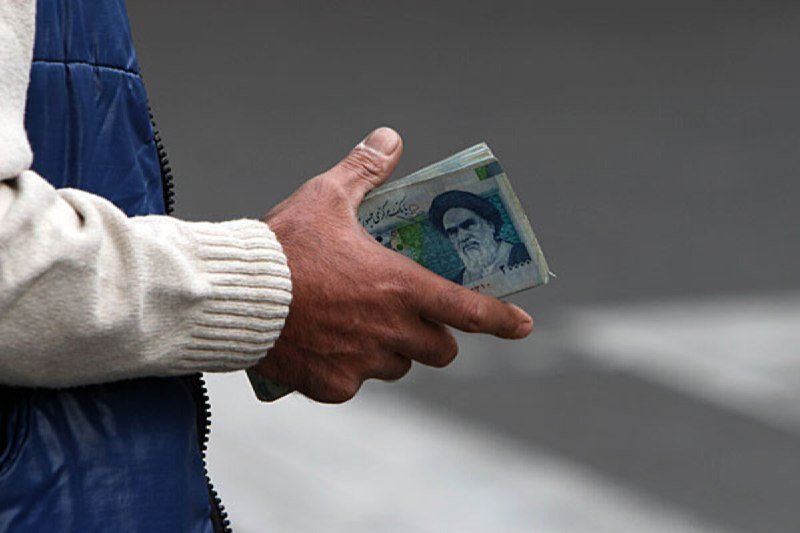
The US Treasury Department issued a 60-day general licence on 22 June 2026 authorising the production, delivery and sale of Iranian-origin crude oil, petroleum products and petrochemicals through 21 August 2026, according to multiple wire channels that reproduced the OFAC filing. The move, posted to OFAC's recent-actions page, is being read as a deliberate matching of economic breathing room to the calendar of US-Iran talks now underway. Treasury Secretary Scott Bessent, named in circulation as the lead voice on the unfolding arrangement, is the senior US official most publicly associated with the diplomatic track.
The licence is short, narrow, and transactional. It does not unwind the underlying sanctions architecture. It carves out a window long enough to bring Iranian barrels back to market and short enough that either side can reverse course without a legal rewrite. That choice — window, not settlement — is the story.
What the licence actually does
A general licence of this kind, issued by the Office of Foreign Assets Control, functions as a standing permission for any person subject to US jurisdiction to undertake the listed transactions without separate case-by-case approval. Reporting from the OFAC recent-actions index and aggregators reproducing it frames the permission as covering production, delivery and sale of Iranian-origin crude, petroleum products and petrochemicals. The end-date — 21 August 2026 — is the operative constraint. After it lapses, absent renewal or replacement, the prior sanctions posture snaps back into force.
This is the technical move that determines everything downstream. The duration is short enough to preserve leverage; the terms are broad enough to actually let oil move. Buyers, shippers, insurers and refineries have long memories about secondary-sanctions exposure. A two-month authorisation gives them a workable risk horizon; an indefinite one would require a more durable political settlement than currently exists.
The diplomatic backdrop
The licence lands in the middle of a public US-Iran negotiating track. Reporting from Fars News International, the English-language outlet of Iran's state-aligned Fars news agency, characterises the Treasury action as a permission to exempt Iranian oil and petrochemical exports from sanctions during the talks. The framing from the Iranian side is accordingly transactional: the US has given something concrete, and the expectation is reciprocity in the form of movement on the nuclear file or on regional de-escalation. Treasury Secretary Bessent is the named US interlocutor in the public framing.
Two things follow. First, the licence is not a concession in the abstract; it is a calibrated bet that some quantity of Iranian oil can reach market without collapsing the pressure that brought Tehran to the table. Second, the 60-day clock is itself a negotiating instrument. Both sides know that absent progress, the window closes, secondary-sanctions risk returns, and the next round of bargaining starts from a tighter position for Iran.
Why the market read is cautious
Oil-market reactions to sanctions easing are rarely one-way. A window that brings Iranian crude back into circulation depresses the supply-side premium that has supported prices under a tighter regime. At the same time, the same window is a hedge against a tail scenario in which talks collapse and Iranian flows go from sanctioned to actively disrupted — a risk that has historically pushed tanker insurance and freight rates sharply higher. Net effect: spot prices are likely to soften modestly, while longer-dated risk premia on shipping and on regional infrastructure should compress but not vanish.
The credibility question is the one to watch. Buyers will not move at scale on a single 60-day licence. Refineries, particularly in Asia, will run the calculation on whether the political backing in Washington is durable enough to underwrite a full procurement cycle. The first licence is a signal; the test of seriousness is renewal, expansion, or replacement at the end of the window.
What remains uncertain
The sources available do not specify several variables that will determine whether this becomes a real inflection or a short tactical thaw. The licensing text's exact scope — which counterparties are covered, whether Chinese and Indian refiners are explicitly addressed, whether the permission reaches financial messaging and shipping insurance or only physical cargo movement — is not fully visible in the reporting circulated so far. The Iranian side has not, in the public reporting reproduced here, committed to a specific reciprocal step. And the question of whether the diplomatic track survives domestic political pressure in Washington and Tehran is, as ever with US-Iran negotiations, the dominant unresolved variable.
The most plausible alternative read is that this is principally a price-management gesture: a way for the United States to push a measure of supply into the market during a window of demand softness, while keeping the underlying sanctions regime intact as leverage. The dominant framing — that this is a substantive opening matched to a real negotiating track — is more consistent with the choice of a 60-day window tied explicitly to the duration of the talks, and with the named involvement of Treasury's senior leadership. Both readings can be partly right; what distinguishes them is what happens on 22 August 2026.
This publication framed the story around the licence's specific 60-day architecture and the negotiating calendar it tracks, rather than treating it as a generic sanctions-easing headline. Where Iranian state-aligned outlets emphasised the exemption as a US concession, Monexus read the same facts through the window's built-in expiry.
Wire provenance
This editorial synthesis draws on the following public wire/social posts:
- https://ofac.treasury.gov/recent-actions/20260622_33
- https://t.me/wfwitness
- https://t.me/disclosetv
- https://t.me/FarsNewsInt
- https://t.me/osintlive
- https://t.me/rnintel
- https://twitter.com/disclosetv/status/20690575136