Vance Casts Iran Deal as 'Classic Trump' Bargain, Says Qatar and Kushner Hold the Routing Keys
Returning to Washington on 22 June 2026, the vice president framed the weekend's Iran talks as a transaction — and put a Qatari–Kushner channel at the centre of any release of frozen Iranian funds.
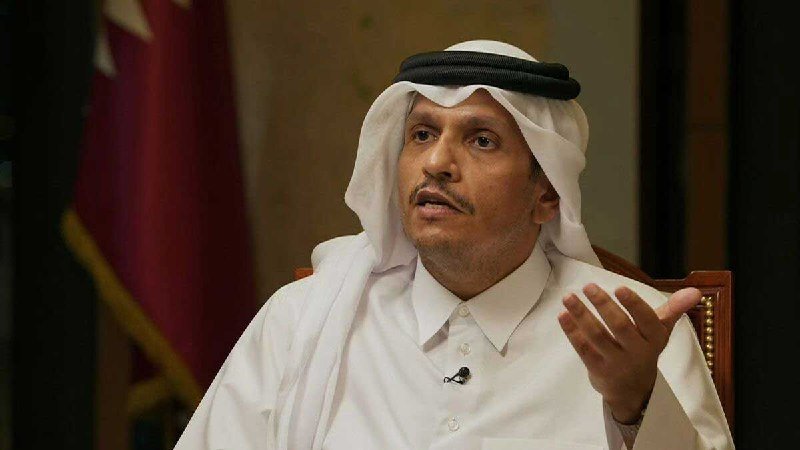
Reporting from the talks site, Vice President JD Vance told reporters at 11:35 UTC on 22 June 2026 that he would return to Washington that day while "technical teams will continue talks," and that the two sides had "made a lot of good progress." The remark, captured by Open Source IntelVance on the ground and amplified by ClashReport and the Iranian state channel Al-Alam Arabic, was the most concrete public read-out of a US–Iran negotiating round that has run, off and on, since the early spring. Vance then did something more unusual: he put a private commercial channel at the centre of whatever deal is taking shape. "What Jared and the Qataris and the entire team accomplished is, to me, a classic Trump deal," Vance said, adding that "if Iranian assets are ever unfrozen, they are going to make American farmers richer and help feed the world." Per Al-Alam Arabic's 11:16 UTC dispatch, he was explicit about the mechanism: "Kushner is working with the Qataris to establish an American approval mechanism for unfrozen Iranian assets."
The thread matters less for its theatrical framing — a sitting vice president praising a former president's deal-making is, at this point in the administration, routine — than for the plumbing it describes. The money, in this telling, does not move on its own once sanctions are eased. It moves through a Qatari-facilitated corridor, signed off by an American gatekeeper, and lands, at least in part, in US agricultural exports. That is a particular theory of how a sanctions unwind should function: foreign reserves released in tranches, conditional on American commercial involvement, with political cover from a Gulf state whose banks sit on the right side of the global dollar system to do the routing.
What Vance actually said
Three substantive claims came out of the briefing window between 11:16 and 11:36 UTC, all attributable to Vance on the record. First, that "we made a lot of good progress" — the same generic language US negotiating teams have used after rounds with Pyongyang, Moscow and Caracas. Second, that the US delegation, led at working level by the vice president, was splitting: Vance home, technical staff staying. Third, and most consequentially, that the architecture for any future unfreezing of Iranian central-bank and oil-revenue balances held abroad is not a generic re-entry into SWIFT or a generalised OFAC general license. It is a bespoke approval pipeline, run by Jared Kushner and a Qatari counterpart, with a stated commercial destination: US farm goods.
Al-Alam Arabic, the Iranian state channel, headlined the Kushner–Qatar mechanism as a story in its own right, not as a footnote to the broader talks. That editorial choice is telling. Tehran is not treating the Kushner–Qatari channel as a US side conversation; it is treating it as the channel. If the official Iranian read of the weekend is that the routing question is now the live one, the political economy of the deal has narrowed accordingly.
The counter-narrative
The upbeat US framing competes with three other reads of the same moment, none of which can be dismissed on the available evidence. The first is the regional-security read: that a sanctions-relief architecture of this kind, layered on top of the still-festering Israel–Gaza and Israel–Hezbollah fronts, hands Tehran hard currency precisely when its proxy network is under the most pressure since the 2006 war. Israeli security planners, who have a documented institutional interest in any channel that funnels dollars to the Islamic Republic, are unlikely to accept "American farmers richer" as a sufficient answer for why the mechanism exists at all.
The second is the sanctions-credibility read, which lives inside the US Treasury and the European Commission's DG TAXUD: that ad hoc approval pipelines undermine the universality of the dollar-based financial system. The whole point of OFAC compliance is that it is rule-based, not deal-based. A Qatari-facilitated, Kushner-cleared channel for Iranian funds is, structurally, the kind of exception that other adversaries will demand tomorrow — and that American banks will be asked to police.
The third is the Iranian domestic read, which Al-Alam Arabic's editorial emphasis reflects: any "American approval mechanism" is, by definition, a sovereigntist concession. The political question inside Iran is whether the cost of unfreezing — accepting an external gatekeeper on how the country's own reserves are spent — is worth the relief. Previous Iranian negotiators have walked away from precisely this kind of architecture.
Structural frame
Strip the personalities out and the arrangement Vance is describing is a familiar one in the post-2014 sanctions literature: a partial return of a sanctioned economy to dollar-cleared trade, mediated by a Gulf intermediary, with political risk underwritten by a US political family. It is the same template that defined the 2015–2018 Iran business boom, when Dubai and Istanbul re-exporters carried most of the commercial lift. The novelty in 2026 is that the intermediary is being named in advance and the gatekeeper function is being privatised, in the sense that the people deciding which Iranian transactions clear are not at OFAC, the State Department or the Treasury — they are at a Trump-family-aligned Middle East portfolio operation. This is the same configuration of actors that built the 2020 Abraham Accords corridor, the same configuration that managed the 2025 Gaza ceasefire backchannel, and the same configuration that, per repeated reporting in 2024 and 2025, monetised a stake in a post-conflict reconstruction fund. The pattern is the story. Each instance can be defended on its merits; the cumulative effect is the displacement of formal US institutional control by informal family-and-Gulf control over the most sensitive financial chokepoints in the Middle East.
Stakes and what to watch
If the architecture Vance described at 11:35 UTC on 22 June holds, three things follow over the next 60 to 180 days. US soybean, corn and wheat exporters see a near-term demand pulse as Iran re-enters global grains procurement, with Tehran historically a top-ten wheat importer during sanction-relief windows. Qatar's financial sector cements a position as the indispensable middleman for Iran–Gulf trade, edging out the UAE in the corridor-auditing business. And the precedent travels: any future sanctioned state — Venezuela, Sudan, the Cuban offshore — now has a template to point to when asking why its reserves cannot be routed through a similar private channel with a sympathetic American principal at the helm.
The counterfactual is just as legible. If the technical talks break down — the same phrase, "technical teams will continue talks," has preceded collapse in three of the last four US–Iran rounds — the Kushner–Qatar mechanism never leaves the briefing-room slides, and the architecture exists only as evidence of how far the US was willing to go. The most plausible live outcome is partial: a pilot tranche, calibrated to a US agricultural export cycle, with the approval mechanism operating as much as a political signal to Tehran as a working financial pipe.
What remains uncertain
The sources available do not specify the size of any unfreezing under discussion, the legal instrument a Kushner–Qatari approval mechanism would use, or which Iranian counterparties would be eligible. Vance's framing — "if Iranian assets are ever unfrozen" — was conditional, and Open Source IntelVance's own reporting flagged that "a few questions [remain] for reporters on the table." The dollar figures, the legal form, and the counterparty list are the three pieces of information that would turn the briefing-room pitch into a deal, and none of them are on the public record from this round. Until the technical teams produce something in writing, the architecture Vance described is, in Monexus's read, a public description of a private design — and the distance between those two is where this negotiation will be fought.
This piece relies on on-the-ground reporting from Open Source IntelVance and the Telegram wires of ClashReport and Al-Alam Arabic, all timestamped 11:16–11:36 UTC on 22 June 2026. Where the briefing read diverges from institutional US, Israeli, Iranian or European positions, those divergences are surfaced rather than smoothed.
Wire provenance
This editorial synthesis draws on the following public wire/social posts:
- https://t.me/osintlive
- https://t.me/ClashReport
- https://t.me/alalamarabic
- https://t.me/osintlive/2
- https://t.me/osintlive/3
- https://t.me/osintlive/4