Aoun takes the call: Vance and Rubio lean on Beirut as Israel–Lebanon ceasefire enters its fragile phase
Washington rings Beirut the same day Aoun met Iranian officials, signalling that the US wants Lebanon's new president to keep the Israel–Hezbollah front quiet — and that Tehran is being talked about, not talked to.
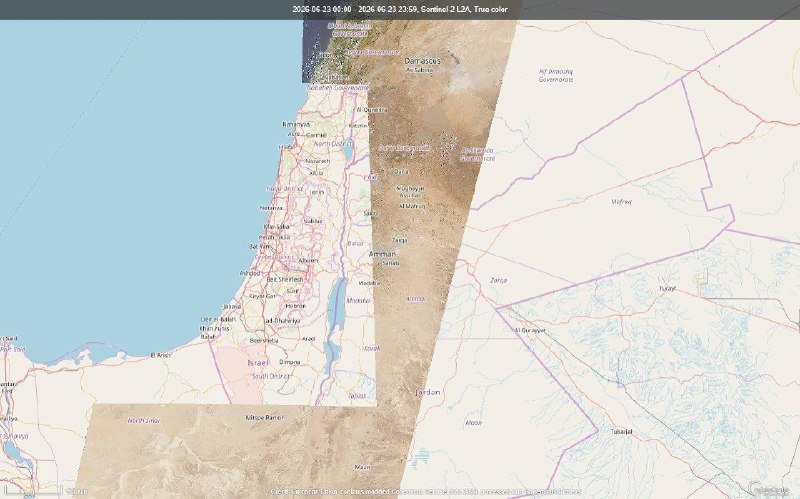
At 15:34 UTC on 23 June 2026, the office of Lebanese President Joseph Aoun confirmed that the president had taken a phone call that afternoon from US Vice President JD Vance and US Secretary of State Marco Rubio. The read-out, carried in identical terms by the Beirut-aligned outlet The Cradle and by Middle East Eye, framed the conversation as an attempt by Washington to lock Beirut into the still-unsteady Israel–Lebanon ceasefire that has held, in fragments, since the most recent round of fighting ended earlier in 2026. Aoun's office said the American side "reaffirmed" support for the president and for Prime Minister Nawaf Salam, and urged Lebanon to keep extending state authority into the south — the belt where Hezbollah's military presence remains the explicit sticking point in any durable arrangement. The timing is the story: the call landed the same day Aoun was in Switzerland meeting Iranian officials, a fact confirmed by Middle East Eye's 16:17 UTC wire and corroborated by the Lebanese read-out. Beirut is being courted; Tehran is being managed.
The ceasefire's centre of gravity is no longer the battlefield. It is the Baabda presidential palace and the question of whether Aoun — a former army commander elected in January 2025 on a sovereignty-first platform — can credibly disarm, or at minimum demilitarise, Hezbollah's armed wing south of the Litani without triggering a domestic crisis his coalition cannot survive. Lebanon does not appear in the read-outs as a passive recipient. Aoun's office characterised the call as a request for follow-up "consultations and coordination," and Beirut framed the Iran meeting, separately, as an effort to ensure regional actors speak to one another rather than past one another. The diplomatic choreography suggests a Lebanese government that is, for the moment, the most useful intermediary either side has.
The American ask
The Vance–Rubio call is the public face of a US posture that has shifted noticeably since the start of 2026. The Trump administration has publicly committed to a longer, more transactional engagement with Beirut: ceasefire preservation, yes, but also a Lebanese commitment to constrain Hezbollah's reconstitution, accept a measure of international monitoring in the south, and align Lebanon's reconstruction funding with donors who want political cover. The read-out published by Aoun's office makes the conditionality plain — Washington "reaffirmed" its support for the Aoun–Salam line, which is a softer way of saying the support is conditional on the Aoun–Salam line continuing to do what the White House wants it to do. The same point is made, in plainer English, by the war-monitoring account War on the Witness: the US is backing the government's posture, not backing the government in the abstract.
The Lebanon file also has an unmistakable domestic-US dimension. A ceasefire that visibly holds in the south, paired with visible Lebanese government action against Hezbollah infrastructure, is the cheapest available argument the administration can make to a war-weary American audience that its Middle East posture is producing deliverables. A collapse in the south would do the opposite. The Vance call is, in this sense, an exercise in managed expectations on both ends of the line.
The Iran variable
What makes the read-out more than a routine courtesy is the Swiss meeting. Aoun travelled to Switzerland to meet Iranian officials on the same day; the two sequences — Beirut-to-Tehran and Washington-to-Beirut — are not coincidental. Iran has an interest in a Lebanon that does not become a hostile platform against Hezbollah, and in a reconstruction track that does not foreclose Iranian commercial and political access. The US has the opposite interest. Aoun is, in effect, the only person sitting in the middle of both impulses. The read-out's careful diplomatic language — "consultations and coordination," "reaffirmation," "support for the efforts" — is the public form of a private conversation in which Beirut is being asked to triangulate, not to choose.
This is also where the Iranian angle has its limits. Iran is present in the read-outs as the subject of a Lebanese diplomatic visit, not as a party to the underlying ceasefire architecture. The November 2024 arrangement that paused the most recent round of Israel–Hezbollah fighting was negotiated bilaterally under US and French sponsorship, with Qatari mediation on implementation. Tehran's leverage in this phase runs through Beirut, not through Washington. The Vance call is the US signalling — to Aoun, to Salam, and to anyone in the Iranian foreign ministry who reads Western wires — that it intends to keep the channels running through Lebanon, around Iran.
What the framing leaves out
The dominant Western framing of this episode is straightforward: the US is enforcing a ceasefire, and Lebanon is complying. That framing holds for the narrow question of who is making the call. It frays when you ask what "complying" means on the ground. Reports carried by the same outlets that have been tracking the ceasefire describe ongoing Israeli strikes inside Lebanese territory when IDF officials say they have detected Hezbollah reconstitution activity, and ongoing Hezbollah signals that any disarmament must be paired with a credible Israeli withdrawal timeline. Neither Lebanon's read-out nor the US statement addresses those asymmetries. The US position, as conveyed by Vance and Rubio, is that Lebanese authority in the south is the test. The Lebanese position, as conveyed by Aoun, is that Israeli restraint is also part of the test. The read-out smooths that over.
There is also a quieter counter-narrative worth naming. Some Lebanon-watchers — and several accounts aligned with the South Lebanon discourse — argue that the US is less interested in a sovereign Lebanese state than in a Lebanese state that does the sovereign-looking things Washington wants, while leaving the underlying security architecture in the hands of an external guarantor. On that reading, the Vance call is not a confidence-building exercise; it is a maintenance call. The Aoun government has incentive to play along because its reconstruction funding runs through the same channel.
Stakes and the next ninety days
If the trajectory holds, three things are likely. The ceasefire survives in its current fragmented form into the autumn, with periodic Israeli strikes against individual targets and intermittent Hezbollah responses. Reconstruction funding for Lebanon begins to flow, with political conditions attached, from Gulf and Western donors. The disarmament question — the actual test of Lebanese sovereignty in the south — is deferred, in slow-moving technical talks, into 2027. The winners are the Lebanese political class that can claim credit for a quiet border, the US administration that can claim a deliverable, and the Gulf donors who get leverage in Beirut. The losers are the Shia communities in the south who bear the cost of any unilateral action, and the Iranian axis whose presence in the conversation is increasingly managed rather than consulted. The single most uncertain variable is whether Aoun, having staked his presidency on the sovereignty card, can absorb a US ask that is publicly conditional without visibly breaking with it. The 23 June read-out suggests he intends to try.
The Monexus desk note: the wires have run this as a phone call between two governments. The structurally interesting fact is that the call and the Iran meeting are the same diplomatic move, executed in two time zones, on the same day.
Wire provenance
This editorial synthesis draws on the following public wire/social posts:
- https://x.com/MiddleEastEye/status/2069408840467062784
- https://t.me/thecradlemedia
- https://t.me/wfwitness
Follow the event.
These dated source records provide context. They do not retrospectively verify this archive article.
Separate what the nuclear watchdog reported from what it could not determine after the June 2025 strikes.