Iran's top diplomat lands in Islamabad hours ahead of a high-stakes medical delegation
Foreign Minister Abbas Araghchi arrived in the Pakistani capital on 23 June 2026, meeting President Asif Ali Zardari and Prime Minister Shehbaz Sharif hours before a parallel Iranian medical delegation was due in the city.
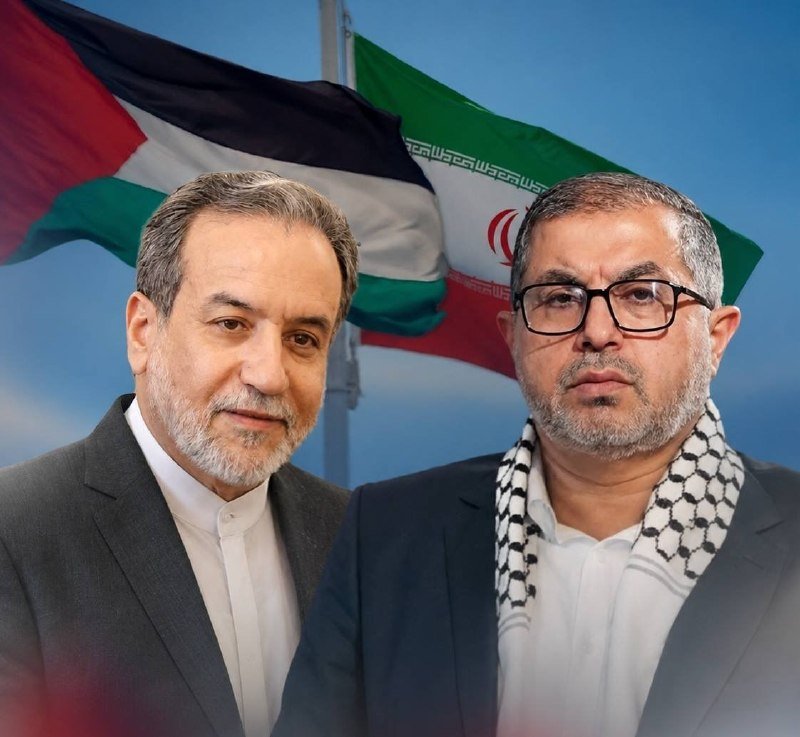
Iranian Foreign Minister Seyyed Abbas Araghchi touched down in Islamabad on the morning of 23 June 2026, where he was received at the highest levels of the Pakistani state — by President Asif Ali Zardari and Prime Minister Shehbaz Sharif — just hours before a separate Iranian medical delegation was due to arrive on its own official visit. The sequencing is the story. The minister and the doctors are travelling in the same window, to the same city, to the same host, and the optics read as a single coordinated push rather than two unrelated trips that happen to overlap on a calendar.
What is being coordinated, and to what end, is the question the rest of the day will answer. Tehran's state-aligned outlets are treating the visit as routine, but the choreography — the head of the foreign ministry, the head of state, the head of government, and a parallel medical team, all in Islamabad on the same day — points to something denser than a courtesy call.
A two-track arrival
According to state-affiliated outlets, Araghchi's plane landed in the Pakistani capital at roughly 07:20 UTC on 23 June 2026, in time for scheduled meetings with the presidency and the prime minister's office. The medical team, described in those same dispatches as an "official visit of doctors," was due in Islamabad later the same day. The framing across the Iranian wire is identical: Araghchi's trip and the doctors' trip are happening in the same city, on the same day, and the meetings at the top of the Pakistani state are taking place "hours before the arrival of the doctors."
That framing is worth taking seriously on its own terms. Iranian state media is not known for understatement about the foreign minister's movements; when the same wording is repeated across four separate channels, it is because the messaging is deliberate. The signal to Islamabad, and to anyone watching from New Delhi, Beijing, Riyadh or Washington, is that this is a high-priority engagement — not a stopover.
The substance of the meetings has not yet been disclosed in the items available to this publication. Iranian state media is publishing arrival and meeting footage, but has not yet put out a readout of topics, communiqués, or signed instruments. That gap is itself a data point. The first hours of a diplomatic visit are the ones a host ministry uses to set the news cycle; the silence from Tehran's readouts suggests the productive conversations are still under way.
What the two-track signals
The decision to send the foreign minister and a medical delegation in the same window is the kind of pairing that reads as logistics when it is logistics, and as politics when it is politics. The medical track, on its face, is a soft-power instrument — clinical exchanges, training partnerships, possibly patient referrals. The diplomatic track is something else: it is the channel through which Tehran is signalling to Islamabad that the relationship is being raised in tier, in tempo, or in both.
Pakistan occupies an unusual position in Iran's regional architecture. It is a neighbour with a long, sometimes fraught, border; it is a majority-Muslim state with which Tehran has no sectarian fracture; and it is a country that has, at various moments, served as the indispensable back-channel for talks between Washington and Tehran. That last role has been more or less dormant in 2025 and the first half of 2026 as the United States and Iran have worked through other intermediaries, including Oman and Qatar, on the nuclear file and on de-escalation in the wider Middle East. A senior Iranian visit to Islamabad, with the head of state and the prime minister both making time, can be read as either a quiet return of the back-channel function, or as an effort by Tehran to widen the set of mediators it keeps close.
A second read is possible. The medical-delegation framing may be doing more work than it appears. Iran's health diplomacy in the region — including in Iraq, in Afghanistan, and in parts of Central Asia — has in recent years been a vehicle for soft-power projection that survives the political weather. Pairing it with the foreign minister's trip, rather than scheduling them separately, packages the two tracks as a single message: cooperation, in whatever field, is being upgraded.
What is not yet on the record
The reporting on this visit, as of the items in front of this publication, is arrival-and-meeting material. There is no joint statement, no signed memorandum, and no read-out of specific asks. Iranian state media is treating the meetings with the Pakistani president and prime minister as the headline, with the medical delegation framed as the context. That ordering is itself a clue: when a foreign minister travels with a medical team in his slipstream, the political visit is the vehicle and the medical visit is the cargo, not the other way round.
What remains contested, and what the available reporting does not resolve, is whether the timing of this visit ties to a specific external event — a round of indirect US–Iran talks, a regional security development, a piece of pipeline or corridor diplomacy — or whether it is part of a quieter, longer-running effort to consolidate Iran's ties with Pakistan's civilian government in Islamabad. The two are not mutually exclusive, but the framing chosen by Iranian outlets, and the speed with which the meetings were placed at the top of the Pakistani state's calendar, is consistent with the more event-driven read.
The structural frame
Iran's regional diplomacy in 2026 has increasingly used the device of the multi-track visit: a senior political figure travels, and a sectoral delegation travels alongside or just behind, so that a single arrival delivers several messages at once. The medical-delegation track is a particularly durable form of this device, because it survives changes of government in the host country and because it produces visible, photogenic outcomes — a clinic opened, a patient seen, a training session filmed — that can be repackaged for domestic Iranian audiences as evidence of international standing. The diplomatic track is the harder, less visible one, and the one that determines whether the visit produces a tangible result.
For Pakistan, the calculus is the other way round. Hosting an Iranian foreign minister at the level of the presidency and the prime minister's office is, in itself, a signal — to Washington, to Riyadh, to New Delhi, and to Tehran — about where Islamabad currently places the relationship in its wider portfolio. The Pakistani state has, in the past, been careful to balance its ties with Iran against its ties with Saudi Arabia and the Gulf, and against its much louder partnership with China. A visit of this prominence, on a single day, with a medical delegation in tow, is the kind of arrival that gets read in all four capitals at once.
Stakes
If the visit is, as the choreography suggests, a return of the Iran–Pakistan back-channel function, the immediate beneficiaries are the negotiators on both sides — and, indirectly, whoever in Washington or the Gulf is looking for a venue that is neither Oman, nor Qatar, nor Turkey. If it is, alternatively, a soft-power consolidation exercise, the beneficiaries are the Iranian health-sector institutions that get the visibility and the Pakistani clinical counterparts who get the access. In either case, the cost of the visit is low, the optics are high, and the optionality for the next move is preserved.
What the available reporting does not yet tell us is whether anything concrete — a communique, a working group, a patient-transfer agreement, or a piece of trade or transit business — will be announced before Araghchi's plane leaves Islamabad. That is the test the rest of the day will set.
— Monexus framed this visit as a coordinated two-track engagement, with the diplomatic and medical tracks read as a single signal rather than two coincidental arrivals, and weighted the Iranian state-media framing as primary source material rather than as detached wire reporting.
Wire provenance
This editorial synthesis draws on the following public wire/social posts:
- https://t.me/tasnimnews_en
- https://t.me/JahanTasnim
- https://t.me/alalamfa
- https://t.me/alalamfa
- https://t.me/farsna