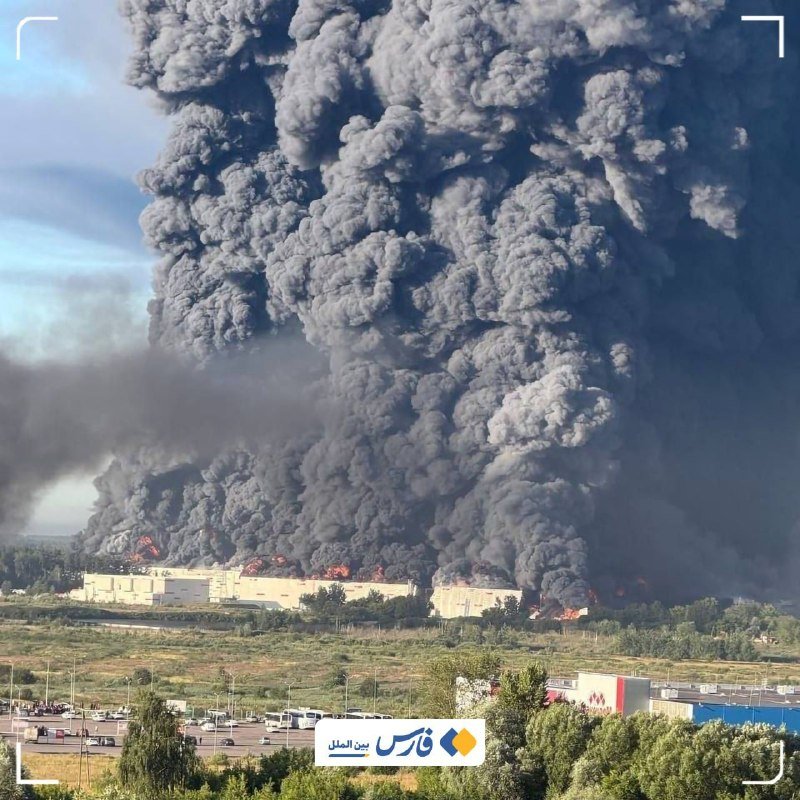
A railway bridge in occupied Crimea is gone, and Russia has not explained how
Ukraine's SSO says a rail bridge over the North Crimean Canal no longer exists. The claim is unverified, the framing matters, and the silence from Moscow is itself a story.

At 11:03 UTC on 23 June 2026, four Ukrainian-language Telegram channels — the special-operations-focused noel_reports, the war-translation hub wartranslated, the public broadcaster hromadske_ua, and the English-language Kyiv Post wire — carried the same one-line claim: Ukraine's Special Operations Forces (SSO) had destroyed the railway bridge over the North Crimean Canal in occupied Crimea and said the structure "no longer exists." By 11:03 UTC, no footage had been released; no Russian ministry had commented; no independent geolocation had been published. The story was, for the moment, a single Ukrainian claim amplified in unison across four outlets that all cite the same source.
The bridge is not a symbolic target. The North Crimean Canal is the freshwater artery that has, since 2014, defined the logistics of occupation in Crimea, and the rail span over it sits inside a wider Russian-supplied network used to move materiel, fuel, and construction supplies toward the peninsula's northern flank. Reporting its loss — if confirmed — is reporting a degradation of the occupation's physical backbone, not a political gesture. That distinction is the story.
What the four sources actually say
Read closely, the four Telegram posts are variations on a single sentence. noel_reports frames the claim as a "❗️" flash, adds that SSO "hinted footage of the s[trike]" would follow, and uses the word "destroyed." wartranslated, which usually parses Russian and Ukrainian battlefield copy into English, repeats the SSO wording verbatim: the bridge "no longer exists." hromadske_ua, the public broadcaster, leads with "🔥" and a subscribe button, calling the structure "the railway bridge across the North Crimean Canal in Crimea." Kyiv Post's English-language official channel is the most parsimonious, using the institutionally careful phrase: "a railway bridge over the North Crimean Canal in occupied Crimea has been destroyed." None of the four posts cites an intercept, a satellite image, a before-and-after coordinate, or a Russian denial. None of them names the specific SSO unit. The chain of provenance runs SSO → Telegram → four outlets, in a window of roughly fourteen minutes (10:49 to 11:03 UTC).
That is normal for the early minutes of a Ukrainian battlefield claim. It is also a reason to slow down.
Why the silence from Moscow is the second story
Russia's occupation administration in Crimea has, for over a decade, treated infrastructure damage to the canal corridor as politically combustible. A 2014 act of sabotage by Ukrainian activists briefly cut the canal's flow and remains a foundational story in Crimean Tatar and Ukrainian memory of the occupation. Since 2022, Russian state-aligned channels have reacted to strikes on Crimean bridges, rail hubs, and the Kerch Strait crossing with rapid on-the-record denials, accusations, or counter-claims — usually within hours. The fact that no Russian ministry, no occupation official, and no prominent Russian milblogger had commented in the first hour after the SSO claim is, in itself, an editorial data point. It does not disprove the Ukrainian claim; it just means the verification work has not yet begun in the open.
There is also a counter-frame worth holding in mind. Ukrainian battlefield communiqués have, on several occasions during the war, announced the destruction of structures that were later shown by open-source analysts to be damaged but not destroyed, or to be the wrong span entirely. The pattern is not dishonesty so much as the fog of offensive reporting: the operator on the ground sees a hit, reports a kill, and the institutional press inherits the language. The SSO wording — "no longer exists" — is unusually absolute. The more cautious framing, when it appears, will be in subsequent reporting, not in the first hour.
The structural frame, in plain language
The North Crimean Canal is the hydrological reason Crimea is habitable at the scale Russia needs it to be. The rail bridge over it is a logistics node, not a strategic prize on its own. The interesting question, once the smoke clears, is what a sustained Ukrainian campaign against Crimean inland infrastructure would imply: a shift from striking the peninsula's maritime approaches (Sevastopol, Kerch) toward degrading the land bridge to it. That is a different kind of war — slower, more methodical, and aimed at the operating costs of occupation rather than at its symbols. A single bridge claim does not establish such a campaign. But four Ukrainian-aligned channels publishing the same line, in the same fourteen-minute window, in the same absolute language, is the first footprint of one.
What we verified, and what we could not
What we verified: that on 23 June 2026, between 10:49 and 11:03 UTC, four distinct Telegram channels — Kyiv Post's official feed, hromadske_ua, wartranslated, and noel_reports — each carried the claim that Ukraine's Special Operations Forces had destroyed a railway bridge over the North Crimean Canal in occupied Crimea. Each attributed the claim to the SSO. None provided footage, geolocation, or independent corroboration in the window observed.
What we could not: independent satellite or open-source confirmation of the bridge's status; any Russian or occupation-administration response; identification of the specific SSO unit allegedly responsible; the bridge's precise coordinates, span length, or role in the Crimean rail network. The sources do not specify whether the rail span in question is the main canal crossing near Tairove, a secondary span further north, or a separate structure.
The honest reading of the available record is that a Ukrainian battlefield claim has been made and amplified, and that nothing else has yet been said. That is the news, for now, and the rest is a question of what gets shown in the next twenty-four hours.
This publication has reported the claim in the language its source used. Where the SSO's framing turns out to be premature, we will say so. Where it is corroborated, we will say so. The point of the first hour is to record what was said, by whom, in what words — not to ratify it.
Wire provenance
This editorial synthesis draws on the following public wire/social posts:
- https://t.me/noel_reports
- https://t.me/wartranslated
- https://t.me/hromadske_ua
- https://t.me/Kyivpost_official