IAEA chief pushes for rapid return to Iranian nuclear sites as diplomacy window narrows
The UN nuclear watchdog's director general says inspections of Iran's facilities should resume 'without losing much time,' as Tehran and the agency race to fix a date and scope before the diplomacy window narrows further.
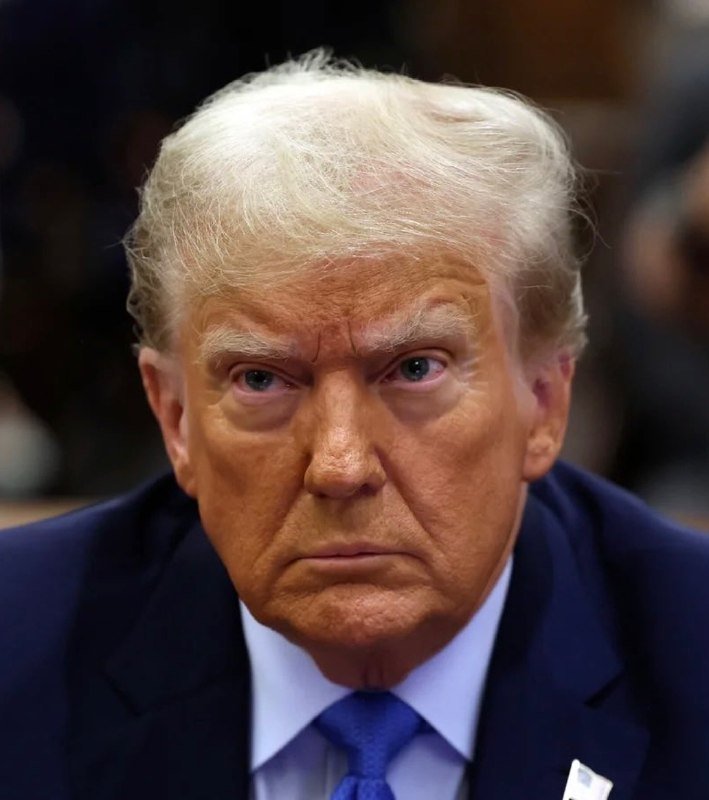
The head of the United Nations nuclear watchdog said on 23 June 2026 that inspectors should return to Iranian nuclear facilities "without losing much time," framing the rapid resumption of on-site work as the agency's top immediate priority. Speaking in the same window in which Iranian officials confirmed they were preparing to set a date for talks, Rafael Grossi, Director General of the International Atomic Energy Agency, said the agency's "best option" was to begin inspections as soon as possible and that the priority was to confirm the location of Iran's stockpiled material.
The exchange marks one of the first concrete procedural steps toward restoring access since the IAEA's monitoring presence in Iran was sharply curtailed. Whether it produces a durable inspection regime, or another short-lived window before the next suspension, is the question now hanging over the file.
A date is finally on the table
According to a 20:47 UTC post by Sprinter Press on X quoting the IAEA Director General, Grossi stated that "we believe that inspecting Iran's nuclear facilities as soon as possible is the best option. Our top priority is to confirm the location of Iran's" material. Around the same time, at 20:46 UTC, Iran's Al-Alam network summarised the same message, reporting that "the atomic agency will inspect Iran's nuclear facilities, it should be done without losing much time. The most important priority is to determine the storage location of hi"ghly enriched material.
A third thread, posted to the Tasnim Plus Telegram channel at 21:56 UTC, recorded the reciprocal Iranian line: the Director General of the Atomic Energy Organization of Iran said "we will soon discuss with Iran to determine the time of the inspections and their details." The phrasing — talks "soon," with the time and scope yet to be agreed — is a tell. It signals movement, but movement of a particular kind: process, not access. The two sides are negotiating the choreography of an inspection visit before any inspectors have boarded a plane.
What the IAEA is actually asking for
The agency's stated objective is narrow and verifiable. Grossi has publicly framed the immediate task as confirming the location of Iran's declared nuclear material, particularly highly enriched uranium, and re-establishing baseline continuity of knowledge at facilities where IAEA cameras, seals and online enrichment monitors were removed or suspended. Without that baseline, the agency cannot credibly certify that material has not been diverted, processed or relocated during the access gap.
Iranian state-aligned coverage, including Al-Alam's summary, has echoed the "storage location" language — a notable rhetorical alignment, because it implies the dispute is about accounting for material already declared, not about characterising Iran's enrichment programme as such. That is a meaningfully different framing from the position Iranian officials have taken in some past episodes, when the existence of undeclared sites was itself a flashpoint. Whether the narrower framing survives contact with the on-the-ground negotiation is the open question.
The IAEA, for its part, has not publicly committed to a specific site list, a specific timetable, or a specific output beyond what Grossi has called the "best option" of rapid return. The agency is, in effect, asking for permission to do the boring technical work — counting, sampling, sealing, recording — that any verification regime depends on. The boring work is also the indispensable work, which is why the agency keeps asking for it.
Why the framing matters
The public exchange is, on its face, a technical scheduling conversation between a UN agency and a member state. Read in isolation, it is the kind of dry procedural step that rarely makes headlines. Read against the wider backdrop, it is closer to a stress test.
Iran's nuclear file has spent much of the past two years oscillating between confrontation and quiet accommodation. The 2015 Joint Comprehensive Plan of Action, the Trump-era withdrawal in 2018, the subsequent escalation, and the indirect exchanges mediated by Oman and Qatar have all left a residue: a stockpile of enriched uranium whose disposition remains contested, a curtailed IAEA presence, and a public diplomacy track that runs in parallel to, rather than through, the agency. In that context, the choice of language matters. The agency's "as soon as possible" is itself a pressure tactic — a public timestamp against which any future delay can be measured.
There is also a structural point. The IAEA is the only body with a universal legal mandate to inspect Iranian nuclear facilities. Bilateral channels, regional intermediaries and the Board of Governors can shape pressure and incentives, but they cannot, on their own, re-establish verification. If the agency cannot get back on the ground in a defined window, the diplomatic track loses its most important independent input. That is the asymmetry Grossi is publicly trying to close.
What remains uncertain
The three sources do not, between them, specify a date for the talks, a list of facilities to be visited, the duration of any access, or the modalities — whether inspectors will be permitted to take environmental samples, install or re-install surveillance equipment, or interview site personnel. The Iranian-side reference to "the time of the inspections and their details" suggests all of those questions are still open. The Al-Alam summary, sourced to "Grossi's claim," frames the agency's posture in language close to Tehran's own, which may reflect genuine convergence on the immediate next step, or a familiar pattern in which Iranian state-aligned coverage softens the agency line for domestic audiences.
Two readings are plausible. The first is that both sides are settling into a working-level rhythm: a defined inspection visit, a partial re-establishment of continuity of knowledge, and a de-escalatory headline that allows all parties to claim something. The second is that the procedural conversation is being used to buy time while the underlying dispute — over the scope of Iran's enrichment activity, the fate of the stockpile, and the sanctions architecture around it — continues to drift. The agency's own framing leans against the second reading, but the agency is not the only actor in the room.
The next signal worth watching is whether the announced talks produce a calendar date within days, or whether the word "soon" stretches into weeks. The first would suggest a verification track with real traction. The second would suggest another diplomatic interval, with the IAEA's "best option" quietly downgraded to its only available one.
This article maps the procedural state of play against the public statements of the IAEA Director General and Iranian officialdom as carried by state-aligned and wire channels on 23 June 2026. It does not claim access to private negotiating positions and treats the "soon" timeline as the variable to watch, not as a settled fact.
Wire provenance
This editorial synthesis draws on the following public wire/social posts:
- https://t.me/tasnimplus
- https://t.me/alalamfa
Follow the event.
These dated source records provide context. They do not retrospectively verify this archive article.
Separate what the nuclear watchdog reported from what it could not determine after the June 2025 strikes.