India's Russian pivot is bigger than a tanker route — it's a realignment in plain sight
As Iran warps Gulf energy flows, New Delhi quietly deepens its Russian crude and coal purchases and makes peace with Beijing. The global south is not waiting for Washington to redraw the map.
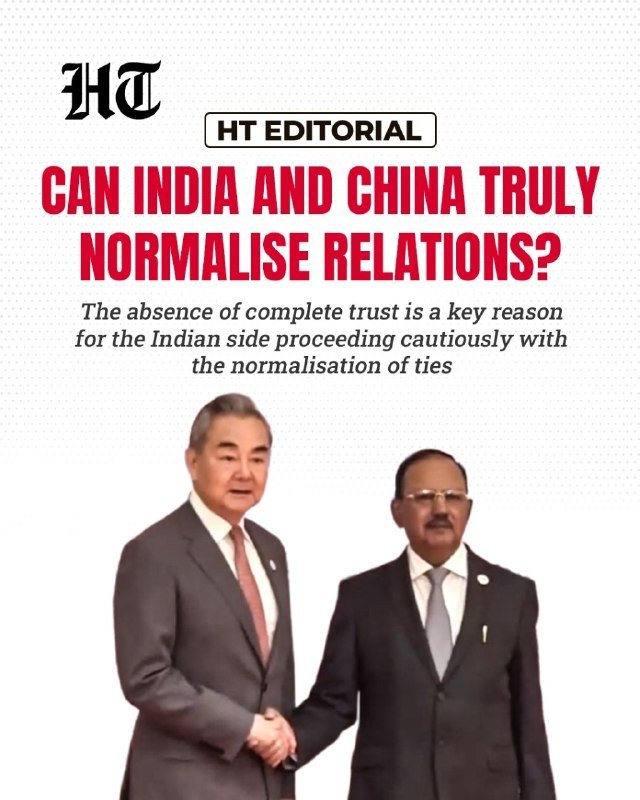
On 23 June 2026, three short wires arrived in the same morning. India and China announced relations are improving after years of border tensions. Analysts warned China's oil imports may never fully recover from the Iran conflict. India, according to the same morning's reports, has ramped up purchases of Russian oil and coal as the Iran crisis disrupts energy flows. Read separately, these are three discrete data points. Read together, they describe a realignment — quiet, transactional, and proceeding with the kind of bureaucratic patience that terrifies strategists in Washington because it cannot be deterred by a single tweet.
The thesis is straightforward: with Gulf energy disrupted and US-led supply chains looking less reliable by the quarter, the two largest consumers on the Asian landmass are converging — not into a formal bloc, but into a pragmatic geometry. New Delhi is buying more from Moscow. Beijing and New Delhi are lowering the temperature on the Line of Actual Control. China is recalculating how much foreign crude it will ever get back. The era of treating Asian energy policy as a derivative of Gulf security is closing in front of us.
What the wires actually say
The India–China rapprochement, reported at 09:19 UTC on 23 June 2026, follows the familiar template of incremental confidence-building: more border meetings, fewer troop stand-offs, the kind of boilerplate language about "mutual sensitivity" that signals something has moved behind the scenes. The framing matters less than the timing. Less than six hours earlier, at 06:38 UTC, market analysts were warning that Chinese crude imports may not recover fully from the Iran conflict — a structural, not cyclical, judgement. By 03:08 UTC the same day, India had reportedly increased Russian oil and coal purchases specifically because Iran-related disruption is rewriting delivery economics. Each item feeds the next.
The Russian oil route is the spine
Indian refiners began scaling Russian crude purchases in 2022 when discounted Urals barrels became available after the G7 price-cap architecture. What changed in mid-2026 is the reason. India is no longer buying Russian oil because it is cheap in absolute terms; it is buying Russian oil because Gulf barrels — historically the marginal supplier to South Asia — are intermittent. The Polymarket wire at 03:08 UTC frames the purchases explicitly as a hedge against Iran-driven energy disruption. That is a strategic shift, not a procurement decision. Indian state refiners are building optionality into the grid that did not exist two years ago, and Moscow is happy to supply it because every dollar of Indian demand reduces Russian dependence on a single Asian customer.
The structural counter-narrative, the one Western energy desks tend to underplay, is that this is what rational buyers do when supply becomes politicised. Gulf barrels now travel under the shadow of Iranian closure threats and US sanctions enforcement that varies by administration. Russian barrels travel under the shadow of secondary-sanctions risk and shipping-insurance cost. New Delhi has, in effect, decided it will hold two open positions rather than one — and is willing to absorb the political friction with Washington that comes with the second leg. The Chinese energy complex, bruised by the same Gulf volatility, appears to have arrived at the same conclusion from the opposite direction: more Russian, more Iranian where possible, more domestic, less faith in the Strait of Hormuz as a permanent artery.
Beijing and New Delhi are not allies. They are converging utilities.
The temptation in Western commentary is to read the 23 June India–China announcement as the prelude to a formal alignment — an "Asian NATO," or worse, a Beijing-led coalition against the liberal order. The evidence does not support that. The two governments fought a lethal border clash in Galwan in 2020; the trust deficit has not gone away. What is happening is narrower and more durable than friendship. Both governments need Russian hydrocarbons. Both governments want Gulf volatility priced into their planning. Both governments see a US foreign-policy posture that is more transactional under successive administrations, and both have concluded that hedging is cheaper than dependence. Convergence of interest is not alliance; it is the cold geometry of two large states standing on the same plate.
The Chinese position on its own energy supply deserves to be stated in its strongest form, because it is rarely steelmanned in Western wires. Beijing has spent fifteen years building strategic petroleum reserves, diversifying pipeline imports from Russia and Central Asia, and underwriting domestic refining capacity at a scale no other country has attempted. The 06:38 UTC analyst warning that Chinese imports "may never fully recover" is not a story about Chinese weakness; it is a story about a system that has decided it can run, at least partially, on a smaller imported barrel count than it did a decade ago. That is industrial policy paying off.
The stakes, plainly stated
If the trajectory holds, three things happen by the back half of 2026. First, the marginal price-setter for Asian crude shifts further toward Moscow and away from the Gulf, with Indian and Chinese demand absorbing Russian volumes the G7 cap was designed to keep discounted. Second, the political cost of US secondary sanctions on Indian refiners rises, because Washington will be asking New Delhi to choose between a stable supply line and a US-aligned posture — and New Delhi has already chosen supply. Third, the diplomatic floor under India–China relations stops being a crisis-management hotline and starts being a working channel, which makes future border incidents cheaper to absorb.
What remains genuinely uncertain is whether this convergence survives the next US presidential transition or the next Gulf shock. The morning's three wires are inputs, not verdicts. None of them specifies which Indian refiners have signed which Russian contracts, what discount Urals is trading at versus Brent on the relevant date, or whether the Line of Actual Control de-escalation includes the kind of buffer-zone arrangements that previous rounds of talks produced. The sources do not specify. The reader should hold the conclusion loosely.
But the direction of travel is harder to dispute than the cable-news frame suggests. The global south is not waiting for Washington to redraw the map. It is redrawing the map in real time, one discounted cargo at a time.
Desk note: Monexus treated this as a single integrated realignment story rather than three separate wires — the convergence of energy, border, and great-power geometry is the news. Western wires have tended to report each item in isolation; that framing obscures the structural shift.