Iran's football team gets two-day early US entry for Egypt match after visa backlash
The US Department of Homeland Security has agreed to let Iran's squad enter the country two days ahead of schedule for their Group A fixture against Egypt, following a public row over entry restrictions imposed on Team Melli.
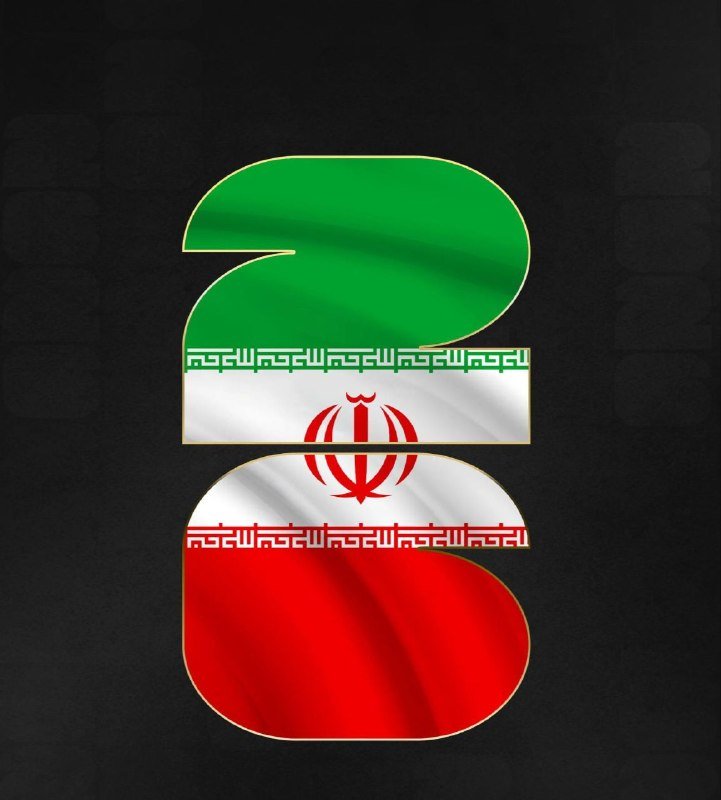
Iran's national football team has been granted entry to the United States two days earlier than originally scheduled for its Group A match against Egypt, after the US Department of Homeland Security reversed course under sustained public pressure. The decision, reported on 23 June 2026, ends a visa standoff that had become an embarrassment for both Washington and FIFA in the run-up to the 2026 World Cup.
The episode crystallises a recurring problem at the intersection of mega-event sport and great-power politics: when a host country treats the tournament as a venue for ordinary immigration policy, the sporting calendar bends — and a fixture the world is meant to watch becomes a test of diplomatic nerve.
What the reversal covers
The Cradle Media reported on 23 June 2026 that the US Department of Homeland Security has allowed Iran's delegation to enter the country two days ahead of the previously set schedule. The earlier entry window gives Team Melli a fuller acclimatisation block before the Group A match against Egypt.
Iran's football federation, the IRIFF, had publicly objected to restrictions that, in the federation's telling, left the squad with an inadequate window between arrival and kickoff — particularly after long-haul travel from Tehran. The federation's complaint was amplified by Iranian state media and by federation-linked figures on social networks, framing the original schedule as politically motivated and at odds with the standard treatment afforded to other qualified teams.
Why Washington blinked
Three pressures converged. First, the optics: a host nation of the World Cup publicly throttling a qualified national team's preparation is hard to defend in front of the global television audience FIFA is counting on. Second, FIFA's own protocols for participating teams include reasonable acclimatisation windows, and Iran had a credible claim that its window was being compressed relative to peers. Third, the diplomatic cost: with Tehran and Washington already engaged in a fragile nuclear track, treating the football team as a pressure point carried obvious downside risk for a separate negotiation file.
US officials did not, in the available reporting, characterise the reversal as a concession to Tehran. The framing inside the United States is administrative adjustment, not policy shift. For Iran, the result is what matters: training time, recovery time, and the ability to walk onto the pitch against Egypt on equal logistical footing.
Counterpoint
There is a plausible reading on the other side. The original schedule may have reflected genuine security-processing workload rather than a political signal: Iran is one of the 19 teams whose travel into the United States is processed under enhanced vetting, alongside several other states, and security vetting pipelines have finite capacity. Two days is a small operational adjustment, not a structural concession.
The reporting from The Cradle, a Beirut-based outlet that covers Iran and the wider region from a non-Western angle, leans toward a political-restrictions reading. Western wire coverage had not, at the time of writing, produced a detailed on-the-record account of the original decision or its reversal. The dominant frame therefore rests on Iranian and Iran-sympathetic sourcing, and that sourcing tilt should be noted.
Stakes for the tournament — and for the channel
For the World Cup itself, the episode is a manageable headache. The Egypt match proceeds; Team Melli gets a workable preparation window; FIFA avoids a confrontation with a member federation on its own showpiece stage.
For the longer US-Iran track, the signal is more interesting. Every interaction between the two governments is now read for evidence of thaw or freeze. A two-day entry window is, in itself, almost nothing. The fact that it required public argument to obtain suggests the underlying relationship is still brittle enough that even small administrative gestures are contested.
The honest uncertainty: the available reporting does not specify which restrictions were eased, whether conditions were attached to the earlier entry, or whether any reciprocal Iranian concession was offered. The Cradle's account establishes the headline outcome; the operational detail — and the answer to whether this represents a real recalibration or a one-off fix — remains to be confirmed in subsequent wire reporting.
Desk note
This publication led with the Iran-aligned regional outlet on the story because Western wires had not yet filed a detailed account of the reversal at the time of writing, and because the substantive fact — the two-day early entry — is itself uncontested. Readers should weight the political framing accordingly; the operational core is what FIFA and the teams will now work from.
Wire provenance
This editorial synthesis draws on the following public wire/social posts:
- https://t.me/thecradlemedia
- https://t.me/thecradlemedia/