Tehran Draws a Red Line on Missiles as Washington Tests Whether Diplomacy Can Hold
Rubio drew a red line on Hormuz tolls while Iran's negotiator rejected the US proposal to redirect unfrozen funds to American farmers. The two positions now define the actual shape of a diplomacy neither side will admit is stalling.
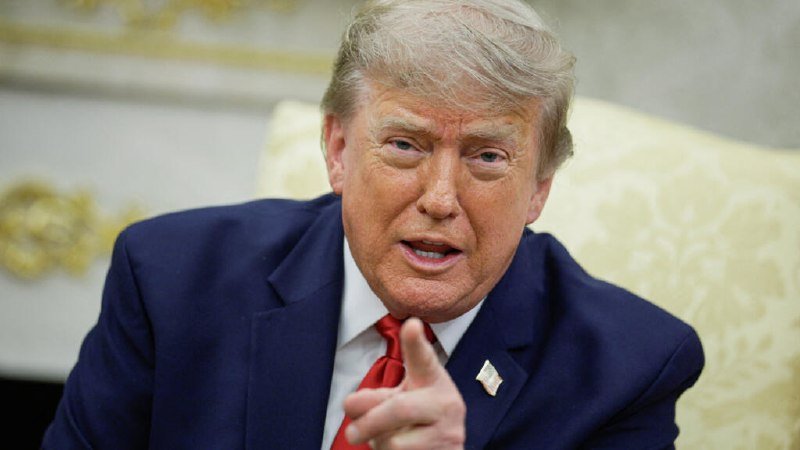
On Thursday evening in Washington, US Secretary of State Marco Rubio drew a deliberate line across the negotiating table. The United States, he said, would not accept any Iran deal that allowed Tehran to impose fees on shipping through the Strait of Hormuz. Any such arrangement would cause "total chaos." It was the clearest public marker yet of where Washington's red lines sit in a diplomacy that Iran's own negotiator insists is moving forward.
The exchange captures the defining tension of the week: a public back-and-forth in which both sides keep talking past each other on missile limits, frozen assets, and the architecture of regional commerce, while telling the world they are still talking. The question now is whether either side has the discipline to keep the channel open until the harder conversations arrive.
The line Rubio would not cross
Rubio's Hormuz remark landed with unusual specificity. The United States, in effect, defined one outcome off the table before negotiators had even agreed on what the table held. Shipping through the strait is not a peripheral question. Roughly a fifth of global oil transits the narrow corridor; a pricing regime imposed by either Iran or its adversaries converts a maritime lane into a lever of state power. By naming the chaos he would not absorb, the Secretary elevated a technical dispute into a strategic declaration.
That posture tells its own story. American negotiators, who spent decades treating the strait as infrastructure to be defended, are now framing a hypothetical Iranian toll as a casus belli. The shift suggests Washington sees the talks not as arms control in the classical sense but as a contest over the rules of the regional commons. Tehran, by the same logic, is being asked to accept a negotiating outcome that constrains its future leverage on a chokepoint it borders.
Tehran's definitional answer
From the Iranian side, the response was predictably vertical. Iranian state media carried the Foreign Ministry's lead negotiator dismissing the suggestion that Tehran's unfrozen assets would be routed through American agricultural purchases as American leaders trying to "skew" the bargain. Separately, Iranian outlets treated Donald Trump's claim that agricultural purchases would start "very soon" and at "very large" volume as fantasy rather than fact.
Read against Rubio, the Iranian posture amounts to a parallel red line. One side will not accept a price tag on the strait; the other will not accept that its own money can be redirected toward American farmers on Washington's terms. The symmetry is the problem. Both governments have an interest in demonstrating to domestic audiences that they are not giving anything away, even as both have an interest in claiming that the diplomatic track is alive. The gap between those two postures defines the actual negotiation.
Money, missiles, and the deal that has to be bigger than its parts
Tehran's missile programme remains the strategic prize. Washington has spent two decades framing Iranian missiles as the central proliferation problem of the Middle East; Tehran has spent the same period investing in missiles as its most survivable deterrent. Any deal that does not touch the missile file risks being dismissed in Washington as cosmetic. Any deal that does risks being dismissed in Tehran as surrender.
Which is why the US is reaching for adjacent pressure points. The agricultural-asset proposal is a clue. By tying the release of frozen Iranian funds to purchases of American products, Washington would convert a passive financial balance into an active trade relationship on American terms. Tehran's reading of that construct, that the money should be allowed to circulate where Iranian planners direct, is the same reading one would expect from any sovereign negotiating its own reserves back.
Then there is Lebanon. Rubio, on Thursday, separately described Israel and Lebanon as making "significant progress" in Washington talks and nearing a "commitment of intent" between the two countries. A Lebanese track that produces anything resembling a maritime or border settlement would change the regional sub-text of an Iran file currently being negotiated in public by diplomats who also have to manage a wider theatre. An Iranian negotiator watching a US-mediated Israel-Lebanon outcome would be watching the price of normalisation from across the room.
The wider geography is not standing still
The negotiations are happening inside a region that refuses to pause for them. The UN's International Maritime Organization paused ship evacuations through the Strait of Hormuz on Thursday after a projectile struck a vessel, until safety guarantees could be reconfirmed. That single incident, sourced through world wires, does more to illustrate the stakes of the Rubio line than any of the press conferences did this week.
Further afield, Canadian Prime Minister Mark Carney said on Friday (Tehran time) that Canada should reopen its diplomatic representation in Tehran and Caracas, framing the move as a deliberate restoration of contact. In a separate theatre, the Ansarallah leader used an address marking the Islamic New Year to deliver what his channel called a "FINAL WARNING" to Saudi Arabia and Somaliland. None of these tracks is formally inside the US-Iran file. All of them reshape the political weather around it.
What the next thirty days are really about
Washington is conducting two negotiations simultaneously. The public one concerns missiles and sanctions. The quieter one concerns what a successful US-Iran deal would look like in a Middle East where Israel-Lebanon talks are advancing, where Ansarallah is publicly raising its temperature, where Canada is reconsidering the map of its diplomatic presence, and where the Strait of Hormuz has to keep functioning for any of the above to matter. Rubio's "not at any price" is not an obstruction of the public negotiation. It is a load-bearing pillar of the quieter one.
The live risk is that both sides overplay the public theatre while under-delivering on the private work. Tehran's negotiator and Rubio's language are calibrated for domestic audiences who are watching for signs of capitulation. The test of the next month will be whether the channel can absorb that pressure without leaking. The UN's Thursday pause on Hormuz evacuations, and the projectile strike that triggered it, are the reminder that the negotiation is being conducted on a fault line, not in a conference room.
Sources: France 24 ("US seeks Iran deal, but 'not at any price,' Rubio says," 25 June 2026); Middle East Eye / X (Rubio on Israel-Lebanon "commitment of intent," 25 June 2026); France 24 and X (Hormuz shipping framework reporting); Fars News International and Press TV (Iranian negotiating positions, 25 June 2026); Tasnim and Al-Alam (Canadian diplomatic posture toward Tehran, 25 June 2026); DDGeopolitics / Telegram (Ansarallah escalation messaging, 25 June 2026).
Desk note: Monexus framed this around the gap between Tehran's public definitional act and Washington's deliberately open-ended conditionality, rather than treating either side's narrative as settled. The wire fragments available on the thread are statement-level, not document-level; readers should read the analysis above as a map of the negotiation's shape, not of its text.