Israel's Lebanon Strikes and Iran's IAEA Freeze: Reading the Ceasefire Through Tehran's Lens
On 23 June 2026, Iranian state media carried three near-simultaneous signals — strikes on southern Lebanon, a warning to Israel, and a closed door at the IAEA. Read together, they sketch the negotiating posture Tehran wants Washington to see.
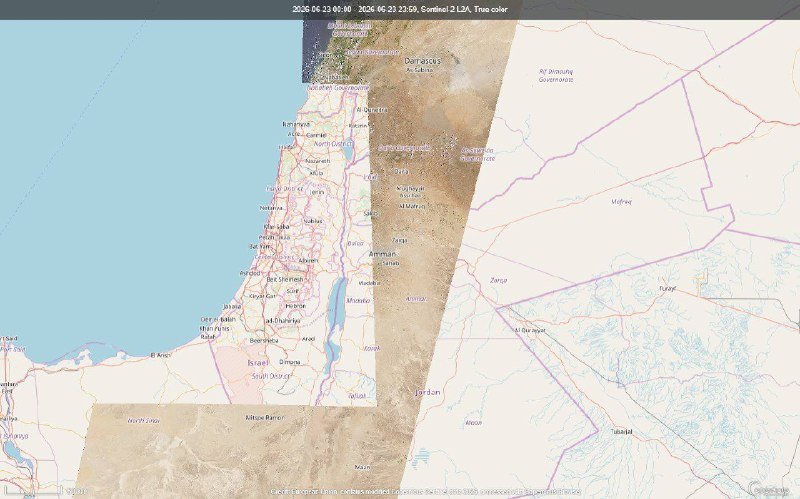
At 09:08 UTC on 23 June 2026, Iran's Foreign Ministry spokesman Esmaeil Baqaei closed a door. There would be, he said, no meeting with the International Atomic Energy Agency chief and no arrangement for inspectors to visit nuclear facilities Iran says were damaged in recent strikes. The line landed on state outlets almost simultaneously with two other signals from Tehran: a UN-envoy warning that any Israeli attack on Hezbollah in Lebanon would draw a response, and reporting that Israeli forces had struck southern Lebanon — described, in the framing of Iranian-aligned outlets, as a fresh ceasefire violation. Three messages, one morning, one audience: the United States, mid-negotiation, weighing whether the architecture of the past six months still holds.
The dominant Western framing of this moment treats Iran's posture as obstruction — a refusal to cooperate with inspectors at precisely the moment when international monitors matter most. That framing has real evidentiary support: IAEA access to damaged sites is a baseline verification question, and Tehran's flat denial is, on its face, a non-cooperative act. But the framing also flattens what Iranian state media is actually doing with the simultaneity of these three moves. Read together, they look less like three separate incidents than like a single coordinated negotiating tableau.
The ceasefire file and what 'violation' means
At 09:50 UTC, PressTV, the English-language outlet of Iranian state broadcasting, carried a one-line alert: Israeli forces had attacked southern Lebanon, framed explicitly as a ceasefire violation. Forty minutes earlier, at 09:10 UTC, Iran's mission to the United Nations had warned that any Israeli strike on Hezbollah would draw a proportional Iranian response, citing a memorandum the Iranian side treats as still binding. The sequencing matters. A reported strike on Lebanese territory, followed by an Iranian warning, followed by an Iranian refusal to open nuclear sites to inspectors, is a pattern in which each item is positioned to be read against the other two.
Whether the southern Lebanon strike constitutes a ceasefire violation is contested terrain. The ceasefire arrangement under discussion — the November 2024 framework and its subsequent extensions — distinguishes between operations against Hezbollah infrastructure and operations the Israeli side characterises as targeted, defensive, or precision activity. Iranian-aligned outlets collapse that distinction into a single category of violation. Israeli and Western-wire reporting typically does not. The two readings cannot be reconciled from open sources alone; the underlying operational facts — what was struck, by whom, with what munition, against what target — are not in the public record as of 23 June 2026.
The IAEA freeze, in Tehran's telling
The Baqaei remarks, carried by both PressTV and IRNA's English service within a ten-minute window, are the most consequential of the three signals. The Foreign Ministry spokesman denied any meeting with the IAEA Director General and any inspection arrangement for affected nuclear facilities. He framed the decision in sovereign terms: Iran will decide the use of any unfrozen funds without restriction. The subtext is the sovereignty frame that runs through Iranian diplomatic communication — that damaged facilities are Iranian territory first, inspected territory second, and that the precondition for any access is a restoration of the financial architecture Iran was promised.
The Western reading hears stonewalling. The Iranian reading hears reciprocity: facilities were struck, sovereignty was breached, the inspectors come only after the funds unfreeze. Neither reading is decorative. Each is a coherent position held by serious actors with legitimate equities. The question is which reading the negotiating environment rewards.
What the simultaneity buys Tehran
The structural pattern here is not new. Iran has, across multiple rounds of tension since 2018, used clustering — multiple signals compressed into a short window — to project a posture of controlled escalation. The logic is straightforward. A single warning reads as rhetoric. A warning delivered alongside a reported violation read by one side as live, and a refusal to cooperate on a verification track that the other side considers central, reads as a negotiating position with weight behind it. The morning's three items, taken together, communicate: there is a cost to ignoring the southern Lebanon file, there is a cost to ignoring the funds file, and the two files are not separable.
This is not a counsel of despair about the state of diplomacy. It is a description of how leverage is being presented by one side of a negotiation whose outcome materially affects oil markets, regional shipping corridors, and the credibility of the non-proliferation regime. The United States, Israel, and the European troika are the audiences the simultaneity is engineered for, and each receives a different message.
Stakes and what remains unverified
The honest read at 09:50 UTC on 23 June 2026 is that the wire inputs available do not resolve three things. First, the operational details of the southern Lebanon strike — target, munition, casualties, Israeli intent — are not in the public record. Second, the status of the memorandum Iran cites is ambiguous; whether it is a binding bilateral instrument, a political understanding, or a framework whose terms have drifted is not clear from open sources. Third, the IAEA Director General's calendar is not visible in the thread inputs; Baqaei's denial of a meeting does not preclude a future meeting, and Iranian messaging on this point has historically allowed for sequencing.
What can be said with confidence is that Tehran has chosen 23 June 2026 to reassert, in three registers at once, that the files are linked. The negotiation that follows will turn on whether the other side treats them as one file or three. That is the structural choice the day has put on the table.
This article clusters three near-simultaneous Iranian state-media signals into a single editorial frame; sources are limited to the wires cited below.
Wire provenance
This editorial synthesis draws on the following public wire/social posts:
- https://t.me/presstv/
- https://t.me/presstv/
- https://t.me/presstv/
- https://t.me/Irna_en/
Follow the event.
These dated source records provide context. They do not retrospectively verify this archive article.
Separate what the nuclear watchdog reported from what it could not determine after the June 2025 strikes.