Trump pushes IAEA inspections back into Iran's narrative, accuses Democrats of enabling nuclear weapon
On 23 June 2026, the US president publicly contradicted Tehran's denial that UN inspectors would visit damaged nuclear sites, and used the moment to draw Democrats into the row.
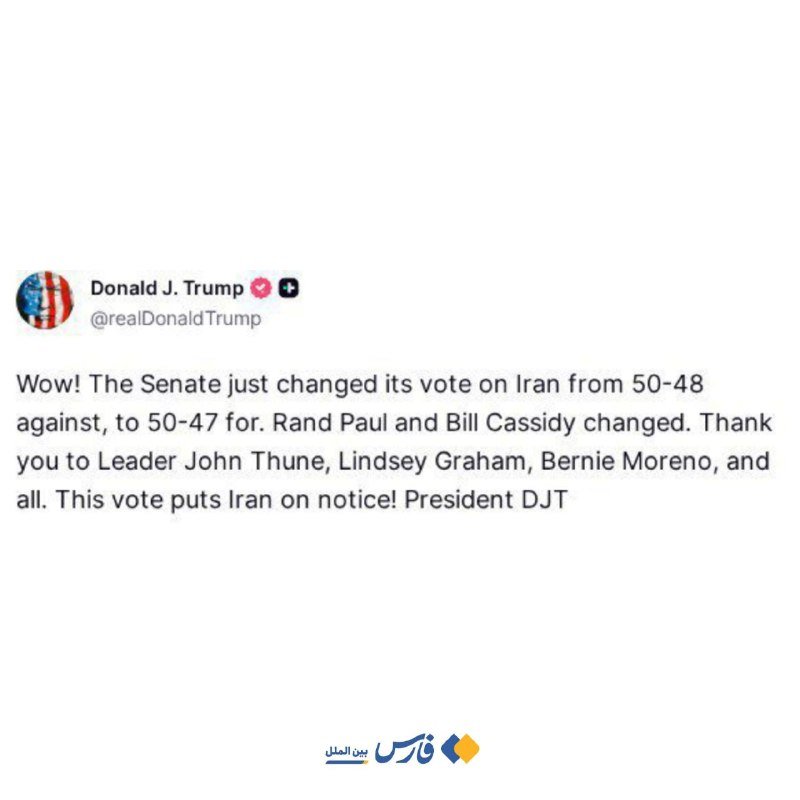
At 19:20 UTC on 23 June 2026, US President Donald Trump publicly rejected Iran's claim that no inspections of damaged nuclear sites had been scheduled by the International Atomic Energy Agency, telling reporters that Iran's public statements contradicted what had been agreed privately and that UN inspectors would proceed. Within minutes, the same press window widened into a domestic political attack: by 19:28 UTC, the president was arguing, per wire reporting of his remarks, that Democrats had voted in favour of Iran acquiring a nuclear weapon — a line the administration has used before in moments of constrained diplomacy.
The exchanges matter because they sit on top of an unresolved inspection dispute. Tehran's foreign ministry had earlier insisted no IAEA visit was imminent; the White House now asserts the opposite. Each side is therefore accusing the other of lying about the same meeting, in real time, in front of global markets and a UN agency whose credibility hinges on being able to get its inspectors through the door.
A contradiction the IAEA cannot leave alone
Reuters reported at 19:20 UTC on 23 June 2026 that Trump said Iran was wrong about there not being any plans for IAEA officials to inspect damaged nuclear sites, adding that the UN nuclear watchdog inspectors would be on the ground. The Reuters wire was echoed at 18:31 UTC by Telegram channels carrying the same Trump quote: that Iran's public statements contradicted what was agreed privately, and that he would cancel the arrangement if Iran continued to deny it publicly.
That is a sharper formulation than the usual diplomatic fog. The US position is now: a deal exists; Iran is denying it exists; and the consequence of denial is the deal itself collapsing. The IAEA, whose Director General Rafael Grossi has spent the past two years threading a needle between Iranian obstruction and Western demands for access, is being asked to put inspectors on planes based on a private commitment that one of the two parties now disputes having made.
Democrats, oil, and the politics of the moment
The press conference was not only about Tehran. By 19:28 UTC, per wire reporting, Trump was telling reporters that Democrats had voted in favour of Iran having a nuclear weapon — a line calculated to land with a domestic audience still absorbing claims, surfaced in US tabloid coverage on the same day, that the administration's recent moves to end the war in Iran have sent his approval rating higher and oil prices lower.
The sequencing is deliberate. If oil is falling because of a credible end to the Iran file, the political dividend belongs to the White House. The counter-narrative — held by Congressional Democrats and by arms-control analysts — is that the administration is offering Tehran a deal too thin on verification to last, and that the IAEA pushback is a substitute for the harder work of re-establishing baseline monitoring of Iran's enrichment and stockpile. On that reading, the inspector dispute is not a misunderstanding; it is the visible part of a verification gap.
The structural shape of the standoff
What is happening is not a single crisis but two layered ones. The outer layer is the war-end narrative the administration is selling — sanctions relief in exchange for capped enrichment, with IAEA access as the verification spine. The inner layer is whether the IAEA actually has the access it needs to certify whatever the outer layer claims to have negotiated.
Iranian state-aligned reporting has framed the standoff as an Iranian negotiating tactic: deny the deal publicly to preserve leverage at home, while keeping the private channel open. US reporting frames it as Iranian bad faith, with the inspectors held hostage to Tehran's preferred script. Both framings can be true in part. The harder question — what an IAEA inspector would actually find at the damaged sites, and whether Iran would allow sampling rather than just visual access — is the one neither side wants to litigate in public.
What the next 72 hours test
The market read of the day is that oil is moving on the war-end story rather than on the verification story. That is a bet that the inspector dispute gets resolved quietly, in the same private channel that allegedly produced the original commitment. If it does not, the bet unwinds quickly: inspectors are turned back, the White House cancels the arrangement, and the administration reverts to maximum pressure, with the IAEA left publicly embarrassed.
The domestic political sequence — the Democrats-have-voted-for-an-Iranian-bomb line layered onto a press conference about inspectors — suggests the White House is hedging that second outcome. Whether that hedging is preparation for a collapse, or choreography for an aggressive new round of sanctions, the press conference on 23 June did not say.
Desk note: this piece is built from three contemporaneous wire reads of the same Trump press appearance on 23 June 2026, plus US tabloid framing of the political backdrop. The inspector dispute is reported here as Trump described it; Iran's official position, as carried by Iranian state media, is that no inspections were scheduled — a contradiction the article flags rather than resolves.
Wire provenance
This editorial synthesis draws on the following public wire/social posts:
- https://t.me/wfwitness
- https://t.me/insiderpaper
- https://t.me/ClashReport
- https://t.me/uniannet
Follow the event.
These dated source records provide context. They do not retrospectively verify this archive article.
Separate what the nuclear watchdog reported from what it could not determine after the June 2025 strikes.