Trump–Iran standoff over IAEA inspections reopens as Reuters/Ipsos shows Americans split on the war
Washington insists inspections are still scheduled; Tehran publicly denies it. A new Reuters/Ipsos poll shows only a quarter of Americans see justification for the war — a gap the White House cannot afford to ignore.
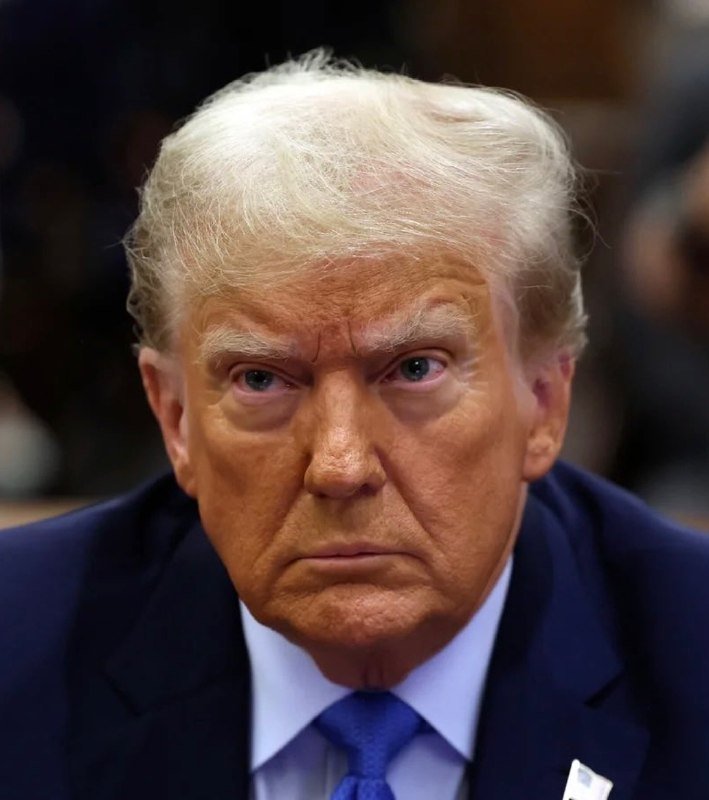
At 18:31 UTC on 23 June 2026, U.S. President Donald Trump publicly rejected Iran's claim that no International Atomic Energy Agency (IAEA) inspections of Iranian nuclear sites are currently scheduled, accusing Tehran of contradicting in public what it had agreed to in private and warning that he would "cancel" the arrangement if the Iranian position held. The exchange, carried by the Telegram channel wfwitness in near-real-time, lands on the same day a Reuters/Ipsos poll circulated by Al-Alam Arabic and Tasnim registered a sharp American public retreat from the war: only one in four respondents said they believed there was justification for the conflict, and the same survey put Trump's approval at 34%, with roughly half of those polled opposed to the war.
The IAEA row and the polling collapse are not two stories. They are the same story, told from opposite ends of the same wire.
The inspection fight, in plain terms
The dispute is narrow and technical on its face. Iran has publicly stated that no IAEA inspection visits are presently scheduled, a posture consistent with the Islamic Republic's repeated moves since 2019 to limit inspectors' access to sites damaged or reassigned during the war. Trump, speaking to reporters and amplified by wfwitness at 18:27 UTC and again at 18:31 UTC, said Iran's public line does not match its private commitments and threatened to scrap the deal in response.
Both claims are credible on the available evidence, and that is the problem. Tehran has, in the past, denied in public what its diplomats conceded in back-channel contacts, and it has also used the gap between the two to buy time. Washington has, equally, used leaks of "what they really said" to shape the political environment before formal negotiations resume. The IAEA itself, headquartered in Vienna, has not been quoted in the available reporting saying which side's version of the schedule is correct. That silence is itself a fact: the agency has been careful, since the June strikes, not to be drawn into the rhetorical battle over who is to blame for the inspection regime's degradation.
The practical stake is whether the September framework — under which Iran was meant to provide the IAEA with a list of facilities and a calendar of access — survives the summer. If Trump's "cancellation" threat is executed, the diplomatic architecture collapses back toward the pre-2015 status quo, with all the breakout implications that carried.
What the polling actually says
The numbers from the Reuters/Ipsos survey, summarised at 18:26 UTC by Al-Alam Arabic and at 18:00 UTC by Tasnim, are stark by any historical standard for a U.S. war two months old. Twenty-five percent of respondents see justification for the conflict. Fifty percent are opposed. The President's approval stands at 34%.
The Iranian outlets have framed these figures as a verdict on the war's illegitimacy, and Tasnim's 18:00 UTC bulletin went further, describing Trump's claim that Americans "support" the war as "repeated words and lies." That characterisation is partisan and should be flagged as such. But the underlying numbers are not invented: Reuters/Ipsos is a long-running, methodologically transparent instrument, and a 25% justification figure is consistent with the pattern of presidential-approval collapses seen in Korea, Vietnam, and the second Iraq war at comparable durations. The U.S. public is not learning to love this war. It is, on the polling evidence, actively turning against it.
For the White House, that is a constraint, not an abstraction. Wartime presidents whose approval drops below the mid-30s typically see Congress begin to peel away on supplemental funding within a quarter. House Republican appropriators, several of whom already broke with the administration on the May strike package, will read these numbers carefully.
The structural read
The collision between an inspection dispute and a cratering approval rating is a familiar one in American Middle East policy. Wars opened quickly, on the rationale of a discrete and reversible strike, almost always run into the same three walls: the target state's refusal to collapse on schedule, an inspectorate that cannot certify compliance in real time, and a domestic public that does not want a long occupation. The June 2025 operation against Iran followed that script exactly. The 2026 phase is now hitting the second and third walls at once.
What the available reporting does not settle is whether the White House has decided to treat this as a political constraint to be managed, or as a strategic signal to be overridden. Trump's threat to "cancel" the arrangement, made in the same window as the polling drop, is consistent with the latter reading: an effort to reassert leverage publicly at the moment private leverage is narrowing. That is a defensible negotiating posture, but it carries a cost. Each public cancellation threat that does not result in cancellation is, eventually, read by Tehran as a bluff. Each that does result in cancellation is, eventually, read by the U.S. public as escalation.
What remains uncertain
The reporting available at 18:31 UTC does not establish the content of the alleged private Iranian commitments, the schedule the IAEA is or is not operating against, or the size of the U.S. troop or naval posture in the Gulf. The polling is a single Reuters/Ipsos wave, not a trend; whether the 25% figure is a floor or a continuing slide will only be visible in the next fielding. And the Iranian state outlets' characterisation of Trump's statements, while politically predictable, is not a basis on which to read the substance of the diplomatic dispute. The most that can be said with confidence is that the public rhythm of threats and denials on 23 June is tightening, and the domestic political space inside which the administration can keep the war on its current trajectory is narrowing with it.
The IAEA row is the story Washington and Tehran will negotiate. The polling is the story the war will be judged by. On the evidence of 23 June, those two clocks are running in opposite directions.
— Monexus Staff. Monexus framed this as a single story, with the technical inspection dispute and the public-opinion collapse treated as coupled variables. Wire coverage of the day, by contrast, is likely to run the two as discrete items.
Wire provenance
This editorial synthesis draws on the following public wire/social posts:
- https://t.me/wfwitness
- https://t.me/alalamarabic
- https://t.me/JahanTasnim
- https://t.me/JahanTasnim
- https://en.wikipedia.org/wiki/International_Atomic_Energy_Agency
Follow the event.
These dated source records provide context. They do not retrospectively verify this archive article.
Separate what the nuclear watchdog reported from what it could not determine after the June 2025 strikes.