Brazil's Ancelotti era opens against Scotland in a friendly built on spectacle, not stakes
A June 2026 friendly between Brazil and Scotland hands Carlo Ancelotti a managerial debut and gives Ronaldinho a farewell moment. The match is theatre, but the optics are doing real work.
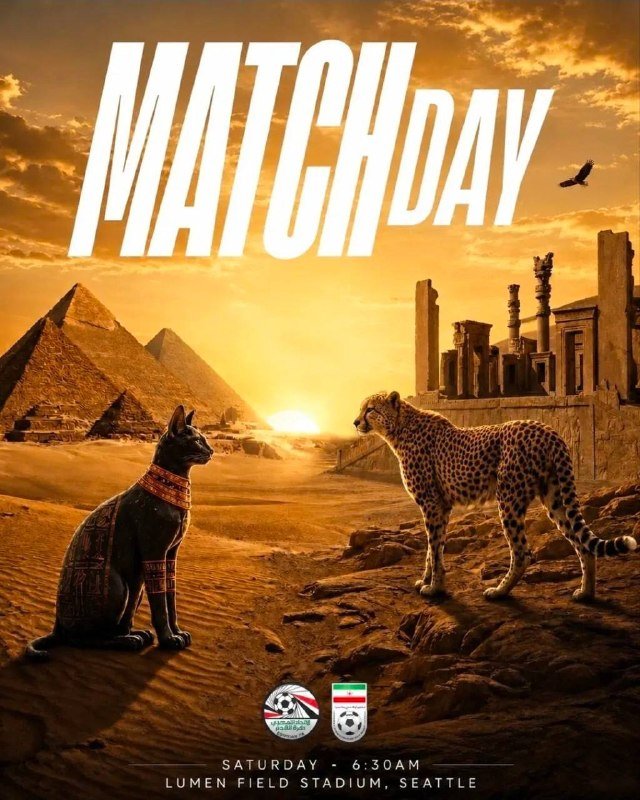
At 01:30 UTC on 25 June 2026, Brazilian television channel 3 is scheduled to broadcast a friendly that has been framed less as a fixture and more as a debut: Carlo Ancelotti's first match in charge of the Seleção, against Scotland, with a pre-match ceremony for Ronaldinho. The framing, circulated by Iran's Tasnim news agency in English on 24 June, is doing a lot of work. Pre-season internationals are routinely dismissed as low-stakes. This one is being packaged as a passing-of-the-torch moment, and the broadcast window is the audience the Brazilian Football Confederation is signalling it wants to reach.
The friendly is, on the surface, a curiosity: a five-time World Cup winner hosting a side that has not qualified for a World Cup since 1998. The subtext is more interesting. Ancelotti is a club-management figure stepping into a national-team job that consumes managers; Ronaldinho's appearance is a sentiment play aimed at a Brazilian diaspora that follows the Seleção through nostalgia as much as current form; and Neymar, restored to the bench, remains the most marketable asset the federation still controls. The match is theatre, but the optics are doing real work for the people selling Brazilian football.
A debut staged for television
Ancelotti's appointment was itself a signal of intent. He is the most decorated active coach in European club football, and his hiring reflects the confederation's bet that the Seleção's identity can be re-anchored to a manager who has won the Champions League across two decades and three domestic leagues. The pre-match farewell to Ronaldinho, a two-time FIFA World Player of the Year and 2002 World Cup winner, is the kind of ceremony television loves: it offers cutaway-ready nostalgia and lets the federation remind viewers, in a single visual, that the modern Seleção was built by players of a particular kind. Whether Ancelotti's first XI will resemble that lineage is a different question.
The broadcast slot — 01:30 UTC, Iran-time evening, Brazilian late-evening — is a clue. Iran's Tasnim, one of the wires that carried the promotion, is not a natural target for CBF marketing. The thread is that the friendly is being sold into any available global feed. Brazil has a World Cup to co-host in 2026, with the United States, Mexico and Canada, and the Seleção's commercial leverage in the run-up depends on exactly this kind of stadium-adjacent content: a famous foreign manager, an emotional ceremony, a global superstar on the bench, and a routable opponent.
Scotland as foil, not rival
Scotland's involvement is harder to read on its own terms. The Scots have spent two decades in international football's second tier — competitive, occasionally dangerous, rarely a headline act at tournament level. A fixture against Brazil in late June, scheduled days after a long domestic season, is the kind of game a national association accepts for ranking points and for the cultural signal of having been asked. The framing carried by TeleSUR English on 24 June — "Can Scotland stop Brazil?" — is honest about the odds. There is no serious analytical case for Scotland winning this match. The point of the fixture, for the Scottish Football Association, is that it happens at all.
This matters because it shapes how the result will be read. A comfortable Brazilian win will be absorbed as a debut success for Ancelotti. Anything short of a comfortable win — a draw, a narrow defeat, a goal conceded from open play — will be treated by the Brazilian press as a warning sign before the South American qualifiers and the 2026 World Cup itself. Scotland's role, in other words, is to function as a controlled environment in which Brazilian football's powerbrokers can test their new manager in front of a friendly crowd and a friendly press. The fact that it is being billed as a contest tells you who the contest is actually for.
The diaspora economy of the Seleção
Neymar's presence on the bench is the most commercially loaded detail in the broadcast notes. He is no longer the uncontested first name on the teamsheet he was a decade ago; his club career has meandered since Paris, and his 2026 fitness is a recurring question. But his brand value inside Brazil, and across the Lusophone and Brazilian-diaspora markets in the United States, remains unmatched. Putting him on the bench in a prime-time slot is a way of reminding CBF sponsors, and the federation's own commercial team, that the Neymar economy still has product on the shelf.
Ronaldinho's farewell, similarly, is not aimed at Hampden Park. It is aimed at the broadcast. The ceremony is short, the camera angles are pre-planned, and the cutaways will travel through every feed that picks the match up. Brazilian football understands, perhaps better than any other national federation in the world, that the Seleção is sold as a piece of continuous media — a stream of moments, faces and emotions — long before it is sold as a tactical project. Ancelotti is being introduced inside that logic, not against it.
Stakes, real and performed
The honest reading of 24 June 2026 is that this is a low-stakes match performing high-stakes theatre. Ancelotti will not be judged by the result against Scotland; he will be judged by what happens in the 2026 World Cup that Brazil is co-hosting, and by how he manages the Neymar generation's transition out of the team. Scotland will not be judged at all — a defeat to Brazil is a credential, not a liability, in the SFA's fixture negotiations. The only party for whom the optics carry real cost is the Brazilian federation, which has spent political capital on a managerial appointment that needs to read, from the first whistle, as a return to the front of the queue.
The sources do not specify the venue, the full broadcast list outside Iran and Brazil, or the official CBF announcement that would confirm Ancelotti's status as head coach rather than a guest-of-honour at the ceremony. The promotion carried by Tasnim, and the curiosity framing carried by TeleSUR, are the visible edges of a fixture whose real architecture — the coaching contract, the squad list, the broadcast rights — sits inside confederation and federation press offices that have not yet been cited on the record.
This publication is treating the match as a media and federation event first and a sporting contest second; the wires have largely run it the other way around.
Wire provenance
This editorial synthesis draws on the following public wire/social posts:
- https://t.me/tasnimnews_en
- https://t.me/tasnimnews_en