Crimea's grid takes another hit as Ukrainian drones hit Simferopol thermal plant
A pre-dawn Ukrainian drone strike set a thermal power plant in occupied Simferopol ablaze and cut power across the regional capital — the latest in a long campaign against Crimean energy assets.
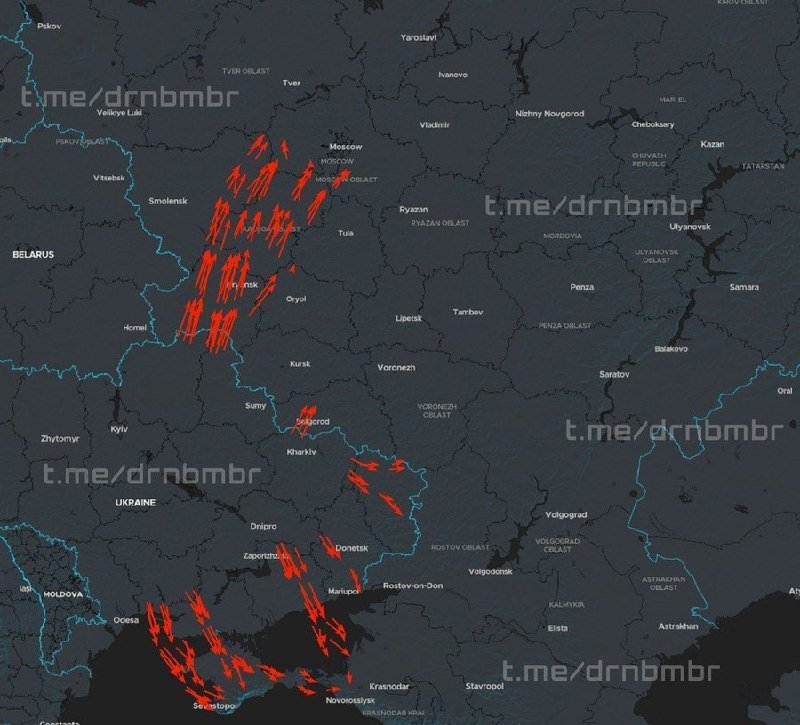
A pre-dawn swarm of Ukrainian drones struck the Simferopol thermal power plant in Russian-occupied Crimea on 24 June 2026, setting the facility on fire and triggering power outages across the regional capital, according to two independent Telegram channels monitoring the peninsula.
The two reports, filed within roughly ninety minutes of one another, give the clearest picture yet of the strike. Noel Reports, posting at 06:08 UTC, said Ukrainian drones attacked the Simferopol thermal power plant overnight, that a fire had broken out at the facility, and that outages were being reported in the city. AMK Mapping, posting at 04:36 UTC, offered a near-identical account: drones hit the plant, a fire followed, and Simferopol lost power. Neither outlet, both of which track the war from a Ukrainian-aware vantage point, gave a casualty count or a damage estimate.
The plant sits inside the city of Simferopol, the administrative centre of the Crimean peninsula Russia has occupied and claimed to have annexed since 2014. Strikes on Crimean energy infrastructure have become a recurring feature of the war in its fourth year, as Kyiv has reached deeper into the peninsula with domestically produced long-range drones while ground manoeuvre remains largely stalled.
The pattern, not the event
A single fire at a single plant is not a turning point. It is, however, the latest data point in a measurable trend. Thermal generation in occupied Crimea has been hit repeatedly since 2023, and the targeting logic is now familiar: degrade the electricity supply that feeds Russian military logistics on the peninsula, raise the cost of occupation for the civilian population Moscow administers, and stretch Russian air defence across a wider perimeter.
That last point is the one that matters most to planners in Kyiv. Every drone that reaches a thermal plant is a drone that was not spent on a Russian airbase, a warship, or a rail node further east. The campaign's cumulative effect on the peninsula's grid has been visible for months in rolling blackouts, repaired transformers and re-struck substations.
What the two reports agree on, and what they don't
The two Telegram accounts converging on the same core facts — overnight strike, fire at the Simferopol thermal power plant, outages in the city — is the most that can be said with confidence. Neither outlet is a wire service; both are independent channels with editorial leanings, and both are useful precisely because they triangulate. No Russian or Ukrainian official statement on the strike is included in the source material available to this publication. That absence is itself a fact worth flagging: in a war where information moves faster than ordnance, the first hours of a strike are usually the noisiest, and the cleanest claims come later.
Readers should treat the headline as confirmed and the specifics — extent of damage, duration of outage, whether generation capacity was knocked out or only a transformer yard — as provisional until either Ukrainian General Staff reporting or Russian occupation authorities speak on the record.
The structural frame
The deeper story is not the plant. It is the slow-motion rebalancing of a conflict in which one side has lost the ability to advance on the ground and has chosen, instead, to weaponise distance. Ukraine's drone industry, much of it built in the last 24 months with Western financing and decentralised production lines, has turned the country's defence from a positional war into a long-range industrial one. Crimea is the most visible theatre of that shift, but it is not the only one: oil refineries deep inside Russia, military airfields behind the Urals, and the Black Sea Fleet in port at Novorossiysk have all featured on the target lists.
The corollary is that Russia is being asked to defend a perimeter that is no longer a line. Static fortifications, minefields and trench networks matter on the contact line in Donetsk and Zaporizhzhia. They do not matter when the incoming munition is a cheap composite drone launched from a truck 200 kilometres away. Moscow's response — a denser net of short-range air defence, electronic warfare, and increasingly aggressive strikes on Ukrainian launch sites — is the predictable one, and the evidence so far suggests it is partial. The grid in Simferopol still burns.
Stakes
The stakes for Kyiv are existential in the narrow sense: a continued ability to impose costs on Russia from long range is one of the few leverage points a smaller country retains in a war of attrition. The stakes for Moscow are political. Occupied Crimea is not just territory; it is the symbolic core of a war that the Russian state has framed, at home, as a defensive operation. Repeated strikes on the peninsula's infrastructure make that framing harder to sustain, especially as winter approaches and the population Moscow claims to protect faces cold and dark on a familiar schedule.
The honest uncertainty is whether this campaign, sustained at its current tempo, changes the war's trajectory — or merely its texture. Strikes on a thermal plant hurt. They do not, on their own, move a front line. What they do is compound: a peninsula that is harder to live on, a defence budget that must stretch further, an occupying administration that must answer to a population growing used to candles. The arithmetic is slow, and the outcome is not predetermined.
How Monexus framed this: the wire leads with the strike; we led with the strike, then asked what the strike is part of. Two Telegram channels, both Ukrainian-aware, give the core facts. Official sourcing is absent; we said so.
Wire provenance
This editorial synthesis draws on the following public wire/social posts:
- https://t.me/noel_reports
- https://t.me/AMK_Mapping
Follow the event.
These dated source records provide context. They do not retrospectively verify this archive article.
A dated voting record is evidence of one decision. Use the original UN record before turning it into an alignment label.
Visual explainer · historical vote of 2022-03-02 →