Six-year-old Gaza child's cancer care collapses as IDF strikes rocket sites, in the same 24 hours
On 24 June 2026, two stories sat side by side in the Gaza wire: a six-year-old Palestinian child losing his fight with cancer because treatment does not exist locally, and the IDF announcing the destruction of four rocket launchers. The contradiction is not editorial; it is the structure of the strip.
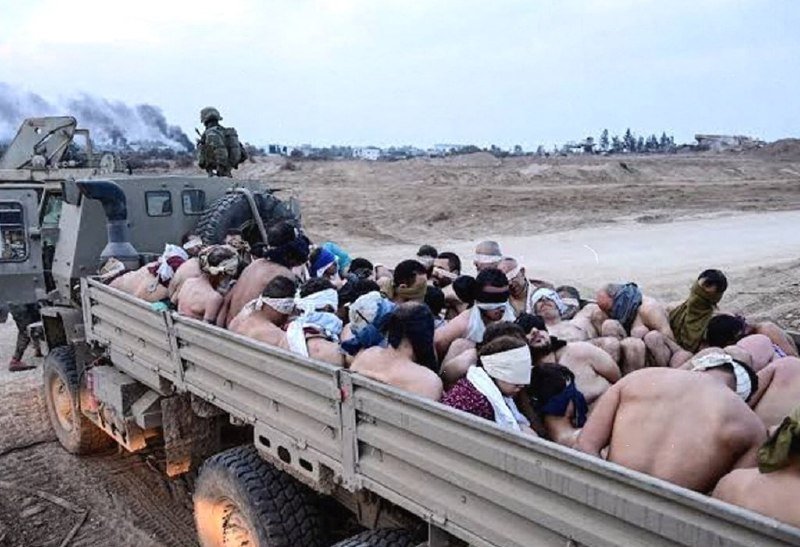
On the morning of 24 June 2026, two dispatches crossed the Middle East news wires within minutes of each other. The first, carried by Iran's Tasnim News Agency in English, named a six-year-old Palestinian child, Yamen Barood, as facing imminent death from untreated cancer after the development of multiple malignant masses in the Gaza Strip, where the specialised treatment he requires is unavailable. The second, distributed by AMK Mapping from an Israeli military statement, reported that the IDF had struck and destroyed four rocket launchers it said were recently set up by Palestinian armed groups inside Gaza. The gap between those two items — one sick child and four launchers, same strip, same day — is the frame.
The structural point is not that rockets and oncology are morally equivalent. One is an instrument of armed groups firing into Israeli civilian territory; the other is the slow collapse of paediatric cancer care in a population of roughly two million people. The point is that, in Gaza, both facts are simultaneously true and simultaneously unresolvable by either side. Reporting that treats either in isolation tells only half the picture. The wire cycle on 24 June 2026 delivered both halves, and an honest read holds them together.
The case of Yamen Barood
According to the Tasnim English report at 10:42 UTC on 24 June 2026, Yamen Barood is six years old, has developed multiple cancerous masses, and faces an increasing risk of death because the necessary specialised treatment is not available to him inside Gaza. Tasnim, an outlet affiliated with the Islamic Revolutionary Guard Corps, is not a neutral source on Israeli–Palestinian affairs, and any single piece of humanitarian reporting routed through a state-aligned channel deserves a second datapoint. None of the other items in this morning's thread directly corroborate the child's name or diagnosis; the only parallel version of the same story comes from the same family of Iranian state outlets via Mehr News, which frames the case in identical terms. The substance of the claim — that Gaza's paediatric oncology capacity has been gutted to the point where a treatable cancer becomes a death sentence — is, however, consistent with what mainstream aid agencies, the World Health Organization, and Western wire services have documented for the better part of two years: hospitals damaged, oncology imports blocked or delayed, and the only comprehensive cancer centre for children repeatedly forced out of service. The child is real even if the messenger is not disinterested.
What makes the 24 June 2026 dispatch notable is the specificity of the demand. The story is not framed as a systemic indictment; it is the face and the disease and the clock. A six-year-old. Several masses. No treatment. That is a story that will appear in Palestinian, Iranian, and regional outlets, will travel through diaspora networks, and will be cited for years afterwards as an example of what the war cost at the level of a single family. The longer arc — who is responsible for the medical collapse, whether a ceasefire could restore oncology services, whether the child's case is representative — is the harder story, and the wire cycle has not yet delivered it.
The launchers, and what the IDF's claim actually says
The IDF statement, transmitted by AMK Mapping at 10:42 UTC, asserts that Israeli forces struck and destroyed four rocket launchers recently set up by Palestinian armed groups in the Gaza Strip. The phrase "recently set up" is doing real work: it places the launchers in the active-emplacement category, which under Israeli targeting doctrine is treated as an imminent threat and which is the legal predicate the IDF cites for strikes on pre-launch infrastructure. The statement does not specify a precise location within the strip, does not name the armed group responsible for the emplacement, and does not provide before-and-after coordinates or video evidence in the dispatch as it appears in the morning's wire.
A skeptical read would note that Israeli military communiques on Gaza strikes have, at various points in the war, used the launcher-pre-emption framing for strikes whose effects on surrounding civilians proved out of proportion to the launcher count cited. A more sympathetic read would note that rocket fire from Gaza into Israeli territory has continued across the conflict, that launchers are mobile and easily re-emplaced, and that the small numbers — four launchers in a single wave — is consistent with the slower, fragmented posture of post-ceasefire Gaza rather than the massed barrages of the war's earlier phases. Both readings are plausible. Neither is fully resolved by the morning's wire alone.
The structural contradiction
The reason these two items, arriving within minutes of each other, matter together is the kind of architecture they expose. A six-year-old child cannot receive chemotherapy because the medical infrastructure required to administer it has been damaged, blocked, or rendered inaccessible. A rocket launcher can be emplaced, struck, and reported in real time because the military infrastructure required to do that is intact. The two infrastructures are not, in any formal sense, in competition — they are simply the two halves of a strip that has been administratively and physically partitioned into zones where armed action is possible and zones where ordinary life is not.
This is the pattern that reporting on Gaza has tended to elide. Western wires tend to lead on military action because it is verifiable in near-real time; Iranian and Arab outlets tend to lead on humanitarian collapse because it is the through-line of the war. A reader who only reads one stream gets a coherent but partial picture. A reader who reads both on the same morning, as the wire delivered them on 24 June 2026, gets the actual picture: the rocket launcher exists because the political conditions for armed resistance exist; the sick child exists because the political conditions for medical evacuation have not. Neither fact cancels the other. The frame is the coexistence.
Stakes and forward view
The short-term stakes are measured in lives and in launchers. Each side will count theirs. For Israeli communities within range of Gaza, every launcher that is struck before use is a launcher that does not fire; that arithmetic is the IDF's case for the targeting pattern. For Yamen Barood and the cohort of Palestinian children whose treatment depends on referrals outside Gaza, the closure of medical corridors is also a count, and the count is going the wrong way. The medium-term stakes are about whether the international system treats these two facts as the same news cycle or as two separate news cycles. When they are the same cycle, the policy conversation tends toward ceasefires, medical evacuations, and reconstruction. When they are separate cycles, the military action is debated in security forums and the humanitarian collapse is debated in aid forums, and the two conversations never meet.
What remains genuinely uncertain, as of the morning of 24 June 2026, is whether either side's framing will gain the upper hand for the rest of the week. The wire has not yet produced independent corroboration of Yamen Barood's diagnosis, nor independent geolocation of the four launcher strikes; the two stories sit in the same queue. Until they are corroborated or qualified, they function less as confirmed events and more as the day's representative claims — one from the humanitarian side, one from the security side, both delivered, neither resolved.
Desk note: Monexus publishes these two items together because the wire delivered them together. Where Iranian state outlets are the sole conduit for a humanitarian claim, the claim is reported with attribution and the corroboration gap is named. Where the IDF is the sole conduit for a strike claim, the same standard applies. Both halves of the contradiction are first-order facts on this desk.
Wire provenance
This editorial synthesis draws on the following public wire/social posts:
- https://t.me/AMK_Mapping
- https://t.me/tasnimnews_en
- https://t.me/mehrnews
Follow the event.
These dated source records provide context. They do not retrospectively verify this archive article.
Separate what the nuclear watchdog reported from what it could not determine after the June 2025 strikes.