Washington brokers a southern Lebanon handover — but the deconfliction cell is doing the heavy lifting
Israeli and Lebanese negotiators are negotiating a US-backed pilot project to hand parts of southern Lebanon to the Lebanese Armed Forces — while a parallel deconfliction architecture is reshaping who gets a seat at the table.
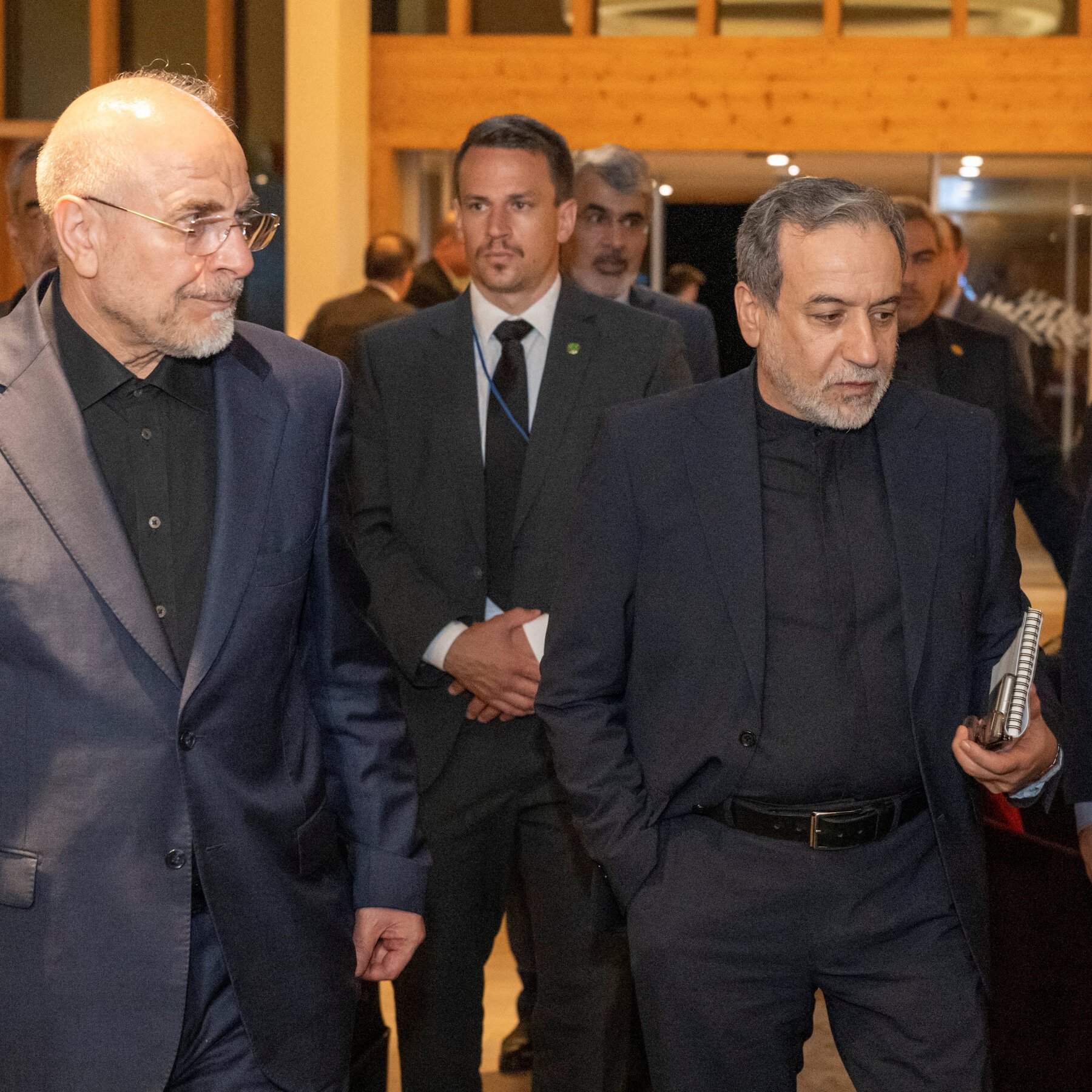
Negotiators from Israel and Lebanon sat down in Washington on 24 June 2026 to weigh a US-backed pilot project that would see Israeli troops hand back control over pockets of southern Lebanese territory to the Lebanese Armed Forces, according to reporting by France 24. The proposed arrangement, described by Clash Report as a structured handover of "parts of southern Lebanese territory captured during the war," is being framed in Washington as a confidence-building measure rather than a final-status deal. The talks are unfolding against a less visible but consequential shift: a parallel deconfliction cell, documented by The Cradle, is reorganising the diplomatic landscape and sidelining Israeli veto power over how southern Lebanon is administered.
The two tracks are not identical. The Washington handover is a territorial question with a chain-of-command answer. The deconfliction architecture is a procedural question about who gets to coordinate fire, movement, and reconstruction in a borderland that has been fought over for the better part of two years. Conflating them would obscure what is actually changing, which is the channel through which decisions about the south are now being routed.
What is being proposed
France 24's account is the most concrete. Israeli and Lebanese negotiators in Washington are discussing "a US-backed pilot project under which Israeli troops would hand back control over some territory in southern Lebanon to the Lebanese Armed Forces." The pilot framing matters: it allows both sides to claim that the transfer is provisional, reversible, and bounded by measurable benchmarks rather than a political settlement. That posture is consistent with how Washington has staged confidence-building measures in other theatres — limited scope, built-in review points, and an explicit hand-off to a local institutional actor that is itself a faction in Lebanese politics.
The Lebanese Armed Forces, the proposed recipient, is the country's only non-sectarian national military institution and the traditional Western-preferred interlocutor for border security. Israeli security concerns along the frontier are legitimate: rocket and drone fire into northern Israel, the presence of Iranian-aligned infrastructure, and the residual risk of cross-border attack all weigh in the calculus. The LAF is being positioned, in this construction, as the institution that can absorb those concerns by extending sovereign control over terrain vacated by Israeli forces.
What the deconfliction cell is actually doing
The Cradle's reporting on a "new deconfliction cell" that "shifts the diplomatic landscape and sidelines Israel" is the more consequential of the two threads, and it deserves to be read on its own terms. A deconfliction mechanism — the kind of back-channel coordination that prevents miscalculation between forces operating in close proximity — is normally a tactical instrument. Promoting it into a diplomatic venue is a different proposition. It treats day-to-day operational coordination as the substrate on which political arrangements are built, rather than as a footnote to negotiations conducted elsewhere.
For Israel, this is a quiet loss of agenda control. Tel Aviv has historically preferred to negotiate Lebanese files bilaterally with Washington as mediator, with Lebanese counterparts chosen from factions willing to deal outside the framework of any comprehensive settlement. A track that elevates deconfliction — and, by extension, the parties who participate in it — pulls the centre of gravity away from that bilateral format. The Cradle's framing is pointed: Washington is being watched "to see whether the US will ultimately restrain Israel in Lebanon." That is a structural question about the limits of US support, not a tactical one about the next village to be vacated.
Why the Lebanese Armed Forces is the pivot
The LAF is the only Lebanese institution that can plausibly absorb a transfer of southern territory without immediately producing a vacuum that would be filled by Hezbollah-aligned reconstruction networks or Iranian logistical infrastructure. That is precisely why the US has spent roughly two decades underwriting it. A pilot handover to the LAF is also a bet that the institution can be the credible interface between Israeli security demands and Lebanese sovereignty rhetoric — two positions that have been politically incompatible for most of the post-2005 period.
The structural risk is familiar from other contexts. The LAF has historically been under-resourced relative to its mandate and constrained by Lebanon's confessional political economy. A pilot project that hands it more territory than it can garrison, equip, or administer would not be a confidence-building measure; it would be a deferred confrontation. Conversely, an Israeli government that treats the LAF as a permanent substitute for negotiated terms risks converting a tactical handover into a strategic reversal when Lebanese domestic politics shift.
What is being negotiated away from the table
Both tracks share an absence that is worth naming. There is no public indication that the Washington pilot or the deconfliction channel addresses the political compact that would integrate any handover into a wider settlement: border demarcation, the status of the disputed points along the Blue Line, the disarmament questions that have anchored Lebanese politics since Taif, and the reconstruction financing that will determine whether the south rebuilds as a Hezbollah-aligned periphery or as a LAF-administered national territory. The pilot model is built precisely to defer those questions, and the deconfliction architecture is built precisely to operate while they remain open.
The plausible counter-reading is that this sequencing is the only one available. Lebanon's presidency and cabinet remain contested; Israel is in a transition period in which no government can bind its successor to a comprehensive deal; and the Trump-era architecture for Middle East negotiations, where it exists, prioritises interim arrangements. Under those constraints, a pilot plus a deconfliction cell is what realism looks like, not a betrayal of the larger project. The rival reading is that the same sequencing locks in a status quo in which the south is administered by a foreign-troop-plus-foreign-troop arrangement indefinitely, and the harder questions — sovereignty, reconstruction, disarmament — are pushed into a future that never quite arrives. Both readings have evidentiary support; the difference between them is whether one trusts that interim arrangements tend to mature or to ossify.
What remains contested
The sources diverge on what the deconfliction cell actually does. France 24 describes a Washington-anchored bilateral track with a territorial pilot at its centre. The Cradle's reporting describes a procedural mechanism that has effectively rearranged the diplomatic landscape around Israeli participation. Those two accounts are not mutually exclusive, but they are not the same story, and they imply different roles for Washington: honest broker versus guarantor of Israeli restraint. The reporting does not specify which read is closer to the operational reality. Until the cell's terms of reference are public, or a public incident tests them, that uncertainty is the story.
This article relies on Telegram-distributed reporting from The Cradle Media, France 24, and Clash Report, with no public readouts yet from the Israeli, Lebanese, or US negotiating teams. Monexus will update the wire as the picture sharpens.
Wire provenance
This editorial synthesis draws on the following public wire/social posts:
- https://t.me/TheCradleMedia
- https://t.me/thecradlemedia
- https://t.me/france24_en
- https://t.me/ClashReport