Qatar brokers Oman track for Iran–Gulf Hormuz talks as Trump floats toll-free transit
A Qatari prime-ministerial shuttle to Muscat lands on the same day the US president says Tehran has dropped plans for transit fees, putting Gulf states at the centre of a logistics corridor that carries a fifth of global seaborne oil.
Two parallel tracks on the Strait of Hormuz converged on 24 June 2026: a Qatari-led diplomatic shuttle into Muscat designed to clear a tanker backlog, and a US readout that says Iran has privately disowned any plan to levy transit tolls. Together they sketch an unusually quiet corridor negotiation, conducted largely outside the headlines that usually accompany the chokepoint — and one in which Gulf states, not Washington or Tehran, are doing the chairing.
For a waterway through which roughly a fifth of the world's seaborne oil normally passes, the traffic is unusually sensitive to who counts as a credible guarantor. That question is now the substance of the talks, and Qatar's prime-ministerial visit to Omani officials on 24 June is the first concrete attempt this month to put Gulf states in the guarantor seat.
The shuttle, and what is actually on the table
Reuters reported on 24 June 2026 that Qatar's prime minister travelled to Oman to "pave the way" for trilateral talks among Iran, the Gulf states and Iraq focused on management of the strait (13:50 UTC). The Cradle's Telegram feed described the same visit in more operational terms: Omani authorities have already established a temporary navigation corridor, intended to clear the shipping backlog that has built up in the strait over recent weeks (15:02 UTC). The distinction matters. A diplomatic "track" announces an aspiration; a navigation corridor already in use is a working arrangement, however provisional.
Two reading frames are live, and they imply different futures for the corridor. The first treats the Muscat meeting as a confidence-building measure on the way to a wider regional security settlement, of the kind the Gulf has intermittently sought since the 2019 tanker incidents. The second treats it as a logistics fix — a Muscat-administered traffic scheme that decouples day-to-day oil flows from the wider contest between Washington and Tehran. The Reuters wire leans toward the first frame; the operational language on Oman's temporary corridor leans toward the second.
The Trump read on Iranian tolls
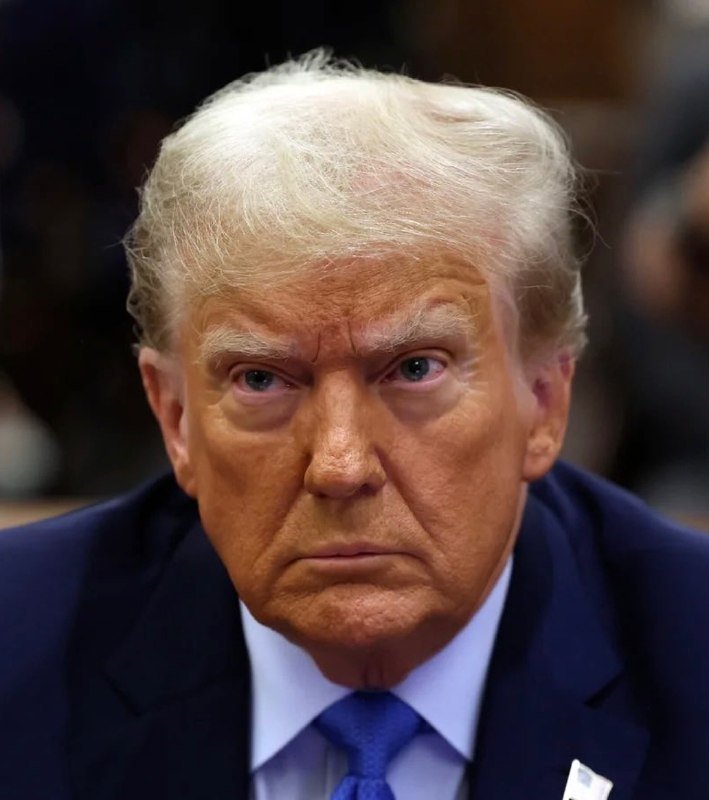
The second thread on 24 June is a single sentence from the US president, relayed by Reuters at 14:30 UTC and echoed by The Cradle at 14:20 UTC: Trump says Iran has told the United States that no transit tolls are being sought at the Strait of Hormuz. The claim is narrow. It is not a renunciation of Iranian regulatory authority in the strait; it is, on the face of it, a categorical denial that Tehran intends to monetise transit in the way some Western analysts had warned about in recent months.
Two reasons to hold the claim lightly. First, the readout is presidential, not a published Iranian directive or foreign-ministry statement — the kind of attribution that is easy to issue and hard to audit. Second, "no tolls" and "no restrictions" are not the same proposition. Iran retains the ability, exercised historically, to detain commercial vessels, redirect inspections, and signal displeasure through customs and coastguard action without ever sending anyone a bill. The Reuters line is therefore best read as a temperature reading on Iranian intent, not as the architecture of a new legal regime.
Why Gulf states, and why now
The Gulf states have a structural interest that the major powers do not. For Washington the strait is a freedom-of-navigation variable; for Tehran it is a sovereign asset and a leverage point; for Beijing and New Delhi it is a chokepoint on a critical import route. For Oman, the UAE and Qatar, it is also the front door of their own export economies. That is why the diplomatic infrastructure of the corridor talks is being built in Doha and Muscat rather than in Washington or Geneva — and why Iran's reported willingness to forgo tolls is being delivered through a Gulf channel rather than through direct US-Iran contact.
This is the part of the story that gets underplayed in Western coverage. The standard frame treats the strait as a bilateral US-Iran stress test, with European and Israeli reactions as supporting cast. The Reuters wire on the Qatari visit gives a different cast list — Iraqi, Omani, Qatari, Iranian officials meeting about a corridor that has immediate commercial effects on Gulf ports — and treats Iraqi inclusion as a notable feature, not an afterthought. The Iraq angle is non-trivial: Iraqi crude exports to Asia run through the strait, and Basra's export volumes are part of the price formation in any tanker queue.
Stakes, and what remains unverified
The stakes are concrete. If the Muscat corridor holds and the Iranian toll renunciation is honoured, the immediate effect is a normalisation of tanker scheduling — a modest but real de-escalation of the insurance and freight premia that have been baked into Gulf-origin crude pricing in recent months. If it does not hold, the corridor becomes another flashpoint in a year already heavy with them, and the traffic-management work that Omani authorities have begun by establishing a temporary channel will read retrospectively as preparation for a contested transit regime rather than a confidence-building measure.
What the available reporting does not yet establish: whether the Iranian assurances have been made in writing or only orally; whether the trilateral format Reuters describes (Iran, the Gulf states, Iraq) is a fixed geometry or a moving one; and what Oman's temporary navigation corridor consists of operationally — a designated lane, a pilot scheme, or an informal queuing arrangement. The Cradle's reporting names the corridor; the Reuters reporting names the meeting. Neither, on the evidence available on 24 June, names a signed document. Until one appears, the prudent reading is that a workable interim is taking shape in the Gulf, with Washington supplying political cover and Tehran supplying the gesture, while the actual logistics move through Muscat.
How Monexus framed this: the wire lines concentrate on the Trump–Iran readout and treat the Qatari visit as scenery. This piece treats the Gulf-led diplomatic infrastructure as the story, the toll renunciation as a contingent second beat, and flags the evidentiary thinness of both.
Wire provenance
This editorial synthesis draws on the following public wire/social posts:
- http://reut.rs/4uSHFpW
- http://reut.rs/4oMcDPj
- https://t.me/TheCradleMedia
- https://t.me/thecradlemedia