Rutte's White House Charm Offensive, and the $1.4bn Question America Isn't Asking
NATO's Mark Rutte spent 24 June inside the White House trying to convince Donald Trump that European allies helped during the Iran war. Hours later, the same administration asked Congress for $1.4bn to fight a widening Ebola outbreak. Both stories are about the same thing: a White House that wants credit and cash, and is no longer sure who owes it which.
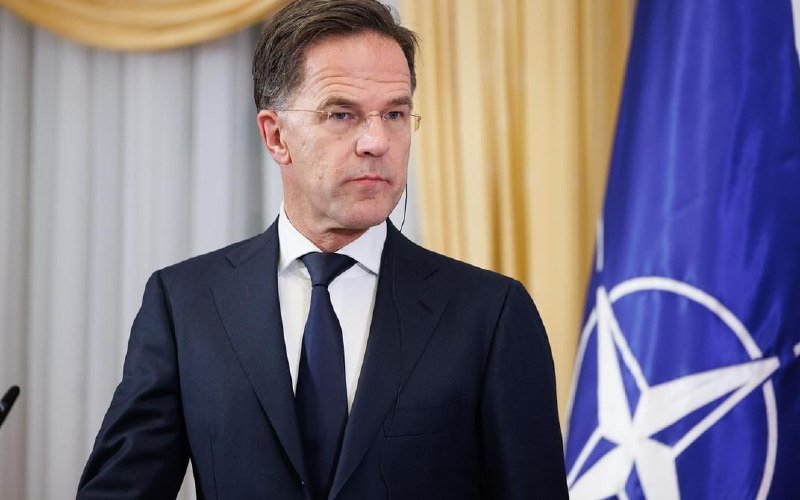
NATO Secretary General Mark Rutte walked into the White House on the afternoon of 24 June 2026 with a problem that is older than his tenure and bigger than his mandate. The alliance he runs, he needed to remind the man sitting across from him, actually showed up when the United States went to war. Rutte brought graphics. Rutte brought flattery. Rutte brought the specific line — reported by channels monitoring the visit — that the European allies "would have liked" to have helped, and were "let down" that they were not more visibly on the team. The performance was not subtle, and it was not designed to be. It was designed to land in front of one audience.
The audience was Donald Trump, and the script was calibrated to his grievance. According to the on-camera exchange captured by monitoring outlets, Trump told Rutte that the United States did not need NATO's help during the recent Iran war, that the alliance had been "let down" by the White House's reluctance to acknowledge Europe's contribution, and that it "would have been nice if they said, 'we would like to help.'" Rutte, for his part, was shown presenting the visual aids he has used in past White House meetings, and was described as "lavishing praise" on the president. The tableau — a sitting US president publicly noting NATO's absence, and the alliance's chief executive arriving in person to repackage that absence as European goodwill — captures, in a single afternoon, the transactional logic the second Trump administration has imposed on the Western security order.
The choreography of credit
What made the 24 June meeting worth watching was not the substance — there is no public record that a new NATO commitment, funding tranche, or Article 5 reinterpretation was signed. What made it worth watching was the choreography. Rutte was reported to have flown to Washington specifically to make the case that European allies materially assisted the United States during the Iran war, a conflict that until now has been framed in the administration's rhetoric as a unilateral American operation. The use of the presidential podium to air an alliance chief's visual aids in real time is, on its face, the inverse of how NATO press cycles usually run. Normally, the Secretary General flies home, briefs journalists off-camera, and the communique carries the load. The 24 June format instead converted the Oval Office into a NATO marketing channel, with the president as the audience being marketed to.
That is the point. The Trump-era template for multilateralism is not the consensus communique but the one-on-one performance. Coverage routinely defers to the language of the most senior person in the room; when that person is the US president, the deferral becomes the policy.
The $1.4bn question nobody at NATO was talking about
Four hours after the Rutte meeting, Reuters reported from Washington that the Trump administration is preparing to ask Congress for more than $1.4 billion in new funds to address a "widening" Ebola virus outbreak. The juxtaposition is not a coincidence. It is the same presidency, the same afternoon, the same operating logic: Washington is at once the indispensable patron of a Western security alliance and the indispensable first responder of a global health crisis, and it is openly, publicly miffed that neither role carries the symbolic deference it once did.
The European allies cannot write a $1.4bn Ebola cheque in lieu of an Iran-war honour guard. The two failures are different in kind. But the framing at the White House treats them as the same failure: an unwillingness by other wealthy democracies to perform loyalty on American terms. Read one way, Rutte's White House visit is alliance maintenance. Read another, it is the most powerful military alliance on earth sending its chief executive to perform a sales call in front of a customer who is also the alliance's guarantor.
What the sources do not say
It is worth flagging what the reporting does not establish. The available items do not specify which European capabilities were offered during the Iran war, which were accepted, and which were declined. They do not name a US official who, on the record, told NATO that European help was unwelcome. They do not quantify the $1.4bn Ebola request — whether it is supplemental appropriations, a reallocation within existing Department of Health and Human Services authority, or a drawdown from a contingency fund. Reuters attributes the figure to "a Trump administration official," which is the standard single-source formulation, not a confirmation across agencies. The Ebola outbreak's geographic footprint, case count, and case-fatality rate are not in the reporting available to this publication. The framing therefore rests on a narrower evidentiary base than the White House's confidence suggests.
Stakes: an alliance kept by performance
If the transactional model holds, the 24 June meeting is the template. NATO's continued relevance inside the second Trump administration will be measured not in Brussels communiques but in Oval Office optics. European allies will continue to send Rutte — or his successor — to Washington with graphics, flattery, and the specific grievance that they were not invited to help in a war they wanted in on. The American taxpayer, meanwhile, will continue to underwrite both the alliance and the next global health crisis that lands on the administration's desk, on terms set by the office that complains loudest about being asked to write the cheque. The structural read is plain: in a contest between great powers with no supranational arbiter, the rational move for the incumbent is to extract visible deference for every dollar of leadership. That is the model being normalised this week. It is also the model the next crisis will inherit.
This piece leaned on Telegram-channel traffic from Clash Report for the on-camera Trump–Rutte exchange and a Reuters wire item for the Ebola funding ask. The wire reported the figure on the single-source basis standard for administration pre-leaks; the framing here is Monexus's own, and treats the two stories as a single posture rather than as parallel news of the day.
Wire provenance
This editorial synthesis draws on the following public wire/social posts:
- https://t.me/ClashReport
- https://t.me/ClashReport
- https://t.me/ClashReport
- https://t.me/ClashReport
- https://t.me/ClashReport
Follow the event.
These dated source records provide context. They do not retrospectively verify this archive article.
Separate what the nuclear watchdog reported from what it could not determine after the June 2025 strikes.