Trump tells reporters Zelensky is 'doing pretty well' — a notable shift in tone, if not in policy
Asked at the White House whether the Ukrainian president is winning, Donald Trump offered an uncharacteristically generous read. The remarks land at a moment when the substance of US backing is under quiet renegotiation.
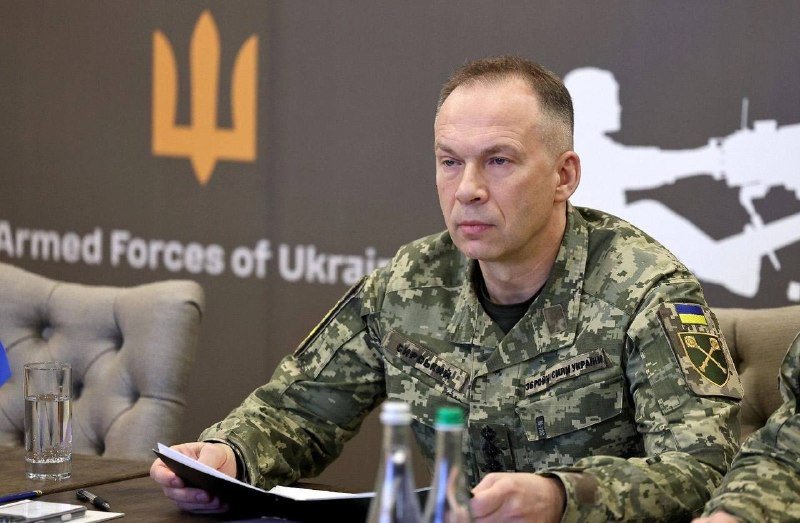
At roughly 20:38 UTC on 24 June 2026, Donald Trump stood at the White House podium and fielded a question he has spent more than three years trying to avoid answering in plain language: is Volodymyr Zelensky winning? His answer, captured on the pool feed and relayed through Telegram channels including Clash Report and AMK Mapping, was uncharacteristically generous. "Well, he's doing pretty well," Trump told a reporter. "Look, no matter how you look at it, he's doing pretty well. He's holding his own, at least — a lot of people are dying on both sides. But I think he's doing well. You gotta say he's courageous, he's got great equipment."
The remark matters less for what it says about Zelensky than for what it signals about Trump. In the same week that his administration has been quietly renegotiating the architecture of US military assistance to Kyiv, the US president chose a public setting to confer something close to legitimacy on a leader he has publicly humiliated, sidelined, and at one point accused of gambling with World War III. The words do not yet add up to a policy reversal. They do suggest that the political utility of open antagonism has, at least for one news cycle, fallen below the cost.
A different vocabulary, on the record
For most of the past eighteen months the dominant register out of the White House on Ukraine has been transactional — sometimes contemptuous. Trump returned to office in January 2025 promising to end the war in 24 hours; when that deadline passed in the way most observers expected, the administration's language hardened into a sequence of demands: territorial concessions, NATO membership deferred indefinitely, elections held before any security guarantee. Zelensky was cast as an obstacle, a man who "doesn't have the cards," in the phrase Trump used to applause in February 2025 at Mar-a-Lago, in a meeting later cut from public broadcast by the Ukrainian side but recorded by participants and circulated by American outlets.
Wednesday's exchange breaks that pattern in tone, if not yet in content. Asked specifically whether Zelensky is winning, Trump did not pivot to grievances about aid, NATO, or Zelensky's personal suitability for office. He answered the question. The framing of "a lot of people are dying on both sides" is itself a familiar Trump formulation, but it sat on Wednesday alongside explicit praise — "courageous," "great equipment" — that the Ukrainian president has not received from this White House in a televised exchange for some time. The shift is small. It is also observable.
What the read-out does not say
The restraint cuts two ways. Trump did not announce new aid tranches, did not reaffirm a security guarantee, and did not move his position on territorial questions. The administration is, separately, in the middle of a long-running review of US commitments to Kyiv that has produced few public milestones in recent weeks. Officials in Washington and European capitals have described the period since the spring as one of "quiet recalibration" rather than announced policy — a period in which the shape of future support is being negotiated with Congress, with European partners, and with Kyiv itself, without the kind of headline-grabbing announcements that have characterised previous inflection points.
A second caveat is that the remark was made in a pool spray, not a structured interview. Trump's answer to a shouted question is not the same instrument as a written statement, an executive order, or a National Security Council decision. Past precedent — the abrupt reversals on aid packages in spring 2025, the public threats to withhold weapons in the summer of that year — suggests that a press-conference courtesy is a thin reed on which to rest any forward inference about US policy. Kyiv has been here before.
Why the change, if it is one
The most plausible reading is domestic, not strategic. Trump's second-term coalition includes a meaningful faction that wants the war ended quickly and at low cost; a competing faction wants Ukraine to prevail. A president who speaks harshly of Zelensky satisfies the first group and antagonises the second. A president who calls him "courageous" and "doing well" satisfies the second and mildly irritates the first. The arithmetic of the moment — with mid-term preparation looming, with a more isolationist Congress in evidence, and with US public attention divided across several simultaneous military engagements — favours a posture that does not pick a fresh fight with a wartime ally the United States is still, in fact, supplying.
The second plausible reading is diplomatic. European leaders have spent much of the past year trying to position themselves as the indispensable backstop for Ukraine should US support waver. Wednesday's tone, read alongside the more forthcoming framing of late spring summits, softens the European case for a sovereign defence posture of its own. A more measured Trump is a Trump who is harder to mobilise against, and therefore harder to fund around. That is a useful outcome for an administration that would prefer its allies to remain enfeebled and dependent rather than to develop autonomous capacity.
The structural frame
What is being negotiated is not whether the United States supports Ukraine, which it still does materially, but on what terms that support is delivered, by whom, and to what end. Three years into a full-scale invasion that has cost both sides heavily, the question of Ukrainian sovereignty has been settled in international law and in the European political mainstream; Kyiv remains the invaded party, and the country that invaded it is not. The unresolved questions are about the architecture of the postwar settlement, the price Ukraine will be asked to pay for that settlement, and the residual American role in underwriting it. A president who says Zelensky is "doing pretty well" has not answered any of those questions. He has, however, signalled that he is no longer interested in making Zelensky's personal standing the vehicle for those answers — at least for the duration of this news cycle.
The most likely trajectory is continued drift: rhetorical warmth without institutional commitment, a willingness to praise the man while continuing to bargain against the position. That has been the working pattern of the second administration on this file for some months. Whether Wednesday's exchange marks the beginning of a more durable shift, or simply one more instance of an improvised posture, will be visible in the weeks ahead — in the aid announcements, in the NATO read-outs, and in the next occasion Trump is asked the same question.
Desk note: Monexus framed this around the gap between rhetoric and policy substance, and the structural question of who underwrites the postwar settlement — not as a personal story about either principal. The Ukrainian sources covering the exchange were treated as the primary read on Kyiv's reaction; Western wires carrying the pool feed were used to verify the wording.
Wire provenance
This editorial synthesis draws on the following public wire/social posts:
- https://t.me/ClashReport
- https://t.me/uniannet
- https://t.me/AMK_Mapping
Follow the event.
These dated source records provide context. They do not retrospectively verify this archive article.
A dated voting record is evidence of one decision. Use the original UN record before turning it into an alignment label.
Visual explainer · historical vote of 2022-03-02 →