Zelensky's pre-emption order and the long road to Crimea
Kyiv has shifted from signalling to ordering strikes on Russian war-supporting infrastructure, betting that a G7 decision still pending can open the door to operations in Crimea.
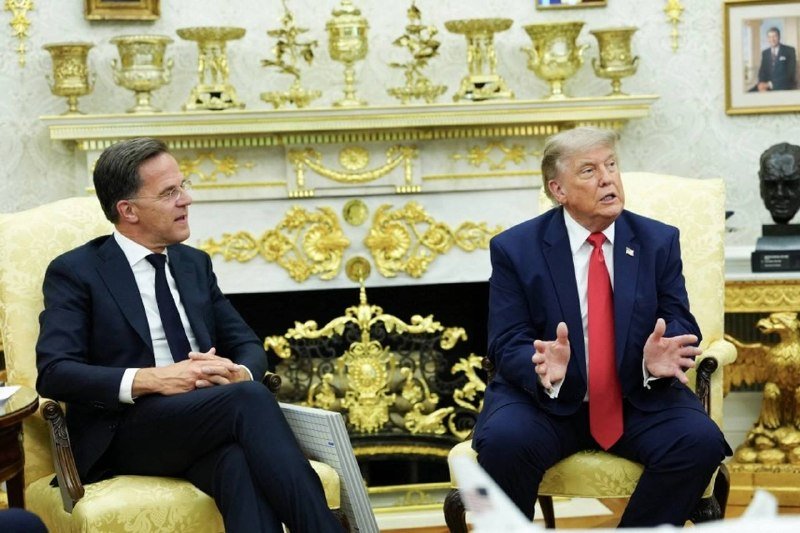
On the evening of 24 June 2026, President Volodymyr Zelensky used his daily address to put a public clock on a still-secretive G7 decision that Kyiv believes would allow Ukrainian forces to operate against Russian positions in occupied Crimea. Reporting carried by the Telegram channels DDGeopolitics and noel_reports places the remarks in the context of a wider order Zelensky has now issued to Ukrainian military intelligence and the armed forces: strike preemptively at facilities Russia uses to expand the war, and watch the Russian leadership scramble to move air-defence systems toward Moscow and toward the Valdai residence area. The framing matters. Kyiv is no longer merely asking permission to escalate; it is presuming escalation, pending a political green light from the club of industrial democracies that has bankrolled its defence since February 2022.
What Zelensky actually ordered
The two noel_reports posts from 18:36 and 18:37 UTC on 24 June describe the same Zelensky instruction: target facilities Russia uses to expand the war, preemptively. The order is directed at HUR, Ukraine's military intelligence directorate, and at the general staff, and the operational logic is air-defence geography. Zelensky's claim — that Russia is pulling additional air-defence systems toward the capital and Valdai — is the kind of statement that is easy to assert from a podium and hard to verify from open sources. If true, it implies that Russian planners now treat the Moscow airshed as a target zone, not a sanctuary. If partially true, it still indicates that Russian air-defence units are being repositioned in ways that thin coverage elsewhere — and that thinned coverage is exactly the window Ukraine is shopping for. Zelensky is publicly advertising that window, presumably to accelerate a G7 decision he does not want to wait for.
The G7 lever and what it might unlock
The decision Zelensky said he is awaiting, per DDGeopolitics at 19:35 UTC, would "help Ukrainian forces carry out operations in Crimea, after which Russia would be forced to" — the channel's transcription cuts off mid-sentence, and the underlying statement is itself truncated in the official evening address circulated on Telegram. The substance, however, is not mysterious. Ukraine's Western partners have, at various points in the war, restricted the use of donated long-range systems against targets inside Russia proper; Crimea sits in a grey zone under international law — recognised by most G7 members as Ukrainian territory, occupied by Russia since 2014 — and a political decision to treat Crimean targets as fair game for Western-supplied systems would be a meaningful doctrinal step. It would also be a direct challenge to Russia's red lines, which Moscow has declared repeatedly and walked back repeatedly. The pending decision is, in effect, an invitation to test those red lines again.
The counter-narrative Moscow is selling
The Russian counter-frame, dropped into the same news cycle at 18:07 UTC by DDGeopolitics, is that Russia has been forced into — and has successfully achieved — full import substitution in its aviation industry, with Russian aircraft supposedly surpassing Western analogues. The line is a staple of Russian state communications: technological self-sufficiency as a substitute for political leverage. It is also, by any independent assessment, aspirational. Civil aviation remains a long way from substitution; military aviation has managed sanctions-era production only with extensive parallel-import schemes and third-country components. The relevant point for this news cycle is not whether the claim is true but that it is being broadcast on the same day Kyiv is openly describing a shift in Russian air-defence posture. Moscow wants the audience to read the air-defence repositioning as the deliberate unmasking of a redundant network, not as a sign of pressure.
Stakes, in plain terms
If Kyiv has, in fact, been given a quiet green light to push Western-supplied fires into Crimea, the operational tempo of the war changes in three concrete ways. Crimea-based Russian aviation and logistics nodes — already the most consequential single set of targets in the theatre — become reachable by systems that previously required either domestically produced Ukrainian long-range munitions or, more rarely, covert third-party equipment. The political temperature inside Russia rises, and the question of whether the Kremlin treats Crimea strikes as qualitatively different from cross-border strikes on Belgorod or Kursk oblasts becomes a live test. And the G7, having crossed this line, becomes structurally committed to a posture in which the liberation of Crimea is treated as a winnable objective rather than a negotiating chip. The third effect is the most consequential and the least discussed: it converts a long-running war of position into a war of stated aims, and that is the kind of conversion that tends to beget longer wars, not shorter ones.
The sources disagree on the central fact of the day. DDGeopolitics and noel_reports, both channels that translate and amplify Ukrainian and Russian official messaging, treat Zelensky's order and the pending G7 decision as a coherent escalation package. The Russian aviation-substitution line is a parallel, deliberately distracting narrative. What the sources do not specify is the content of the G7 decision Zelensky is awaiting, the specific facilities targeted in preemptive strikes, or the scale of Russian air-defence redeployments toward Moscow. A reader looking for a clean trigger event will not find one here. The story is the posture, not the strike — and the posture is that Kyiv has decided to put its own escalation on the public record, in the hope that its partners will do the same.
Desk note: Monexus treats this as a posture story, not a strike story. The wire frames it as a Zelensky demand; Monexus frames it as a Ukrainian operational doctrine shifting from defensive attrition to named-objective offence.
Wire provenance
This editorial synthesis draws on the following public wire/social posts:
- https://t.me/DDGeopolitics
- https://t.me/noel_reports
- https://t.me/noel_reports
- https://t.me/DDGeopolitics
Follow the event.
These dated source records provide context. They do not retrospectively verify this archive article.
A dated voting record is evidence of one decision. Use the original UN record before turning it into an alignment label.
Visual explainer · historical vote of 2022-03-02 →