Beit Yahoun and the Friction Line: What a Hezbollah Clashing Sitrep Tells Us About Lebanon's New Phase
A single southern town produced five near-simultaneous dispatches on Wednesday night — and each framed the same firefight very differently. That is the story.
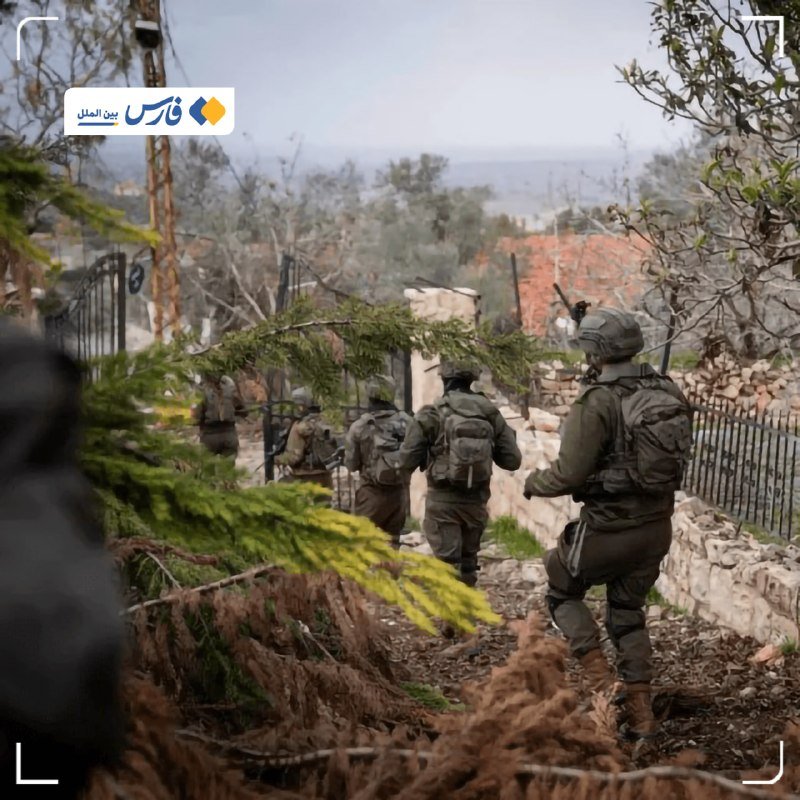
On the night of 25 June 2026, between roughly 20:17 and 20:39 UTC, five separate frontline channels sent near-simultaneous dispatches about one Lebanese border town. The town was Beit Yahoun, in southern Lebanon. The events, as the threads describe them, were small in geographic scope and large in interpretive scope. Israeli forces reportedly attempted to advance into the town; Hezbollah fighters confronted them; clashes broke out; Israeli airstrikes hit the surrounding area; Israeli jets reportedly withdrew from southern Lebanese airspace, then returned. Each of those data points comes from a different source with a different political vantage, and they do not tell the same story.
The point of reading them together is not to crown one version. It is to show that a single firefight can travel, in real time, through five distinct editorial machines — a Lebanese war-monitoring channel, an Iranian-aligned outlet, a pan-Arab channel with documented sympathies, an independent mapper, and an aggregator — and emerge as five different narratives about who is pressing, who is resisting, and what counts as escalation.
What the wires actually say
The earliest item in the cluster, timestamped 20:17 UTC and forwarded by the Middle East Spectator account, frames the incident as an Israeli ground probe that was stopped: "An Israeli force attempted to advance into the town of Beit Yahoun, southern Lebanon, but was confronted by a Hezbollah cell," with "casualties among the Israeli troops" reported. Eight minutes later, at 20:25 UTC, Al-Alam Arabic relayed settler-platform chatter describing "violent and ongoing clashes between occupation army soldiers and Hezbollah fighters." At 20:32 UTC, the Tasnim-affiliated account cited "Lebanese sources" for "fierce clashes." At 20:39 UTC, the wfwitness channel logged two items in the same minute — first an Israeli airstrike on Beit Yahoun, then a separate note that Israeli jets had "withdrawn from southern Lebanon." The mapping account AMK_Mapping, at 20:19 UTC, knitted the sequence together: jets violating southern airspace, an attempted Israeli infiltration, and direct clashes with Hezbollah fighters.
Reading the cluster as a single document, the operational spine is straightforward: an Israeli force moved toward Beit Yahoun, was engaged by Hezbollah, came under fire and reportedly took casualties, called in airstrikes, and the air component at least temporarily pulled back. None of the five items put a number on either side's losses. None identifies units. None cites the IDF Spokesperson, the Lebanese Army, or UNIFIL. The framing load — who advanced, who resisted, who escalated — is doing all the analytical work.
How the same fight gets re-told
The Middle East Spectator line is the most Hezbollah-favourable: an Israeli probe, a Hezbollah cell, Israeli casualties. Tasnim and Al-Alam, both with documented sympathies toward the Iran-aligned axis, reach for the word "occupation" and lean on "Lebanese sources." AMK_Mapping, an English-language mapper that aggregates open-source indicators, frames the encounter more procedurally — jets, infiltration attempt, clash — without endorsing a winner. wfwitness, which tracks Lebanese airspace violations as a near-daily product, foregrounds the air piece and the airstrike, with the withdrawal of jets as a discrete observable event.
The wire-services tell the story differently again. Reuters, the BBC and the IDF have not, in the items available to this publication at the time of writing, published a confirmation, denial, or casualty figure for the Beit Yahoun incident of 25 June 2026. The reader is therefore working entirely from channels with explicit alignment. That is the single most important fact about this incident: the only primary documents in circulation are partisan ones, and the editorial task is to read them as such, not to combine them into a clean line.
Why a border town is the story
Beit Yahoun sits in the Bint Jbeil district of Lebanon's South Governorate, in the belt of villages that absorbed the heaviest fighting during the 2023–2024 Israel–Hezbollah war and that has remained a friction line under the November 2024 ceasefire arrangement. The pattern in the cluster — a probe, an engagement, an airstrike, an air withdrawal, all within roughly twenty minutes — fits the template of the limited, calibrated, deniable exchanges that have characterised the post-ceasefire period rather than a return to full-scale cross-border war. That is a structural read of the evidence, not a forecast. The wires do not say this is over; they also do not say it is the start of something larger.
The larger frame is simpler than the dispatches make it sound. Each side has reasons to test the line and reasons not to break it. A successful Hezbollah engagement at Beit Yahoun, narrated through Tasnim and Al-Alam, serves Tehran-aligned media by demonstrating continued deterrence against Israeli ground movement. An Israeli probe, narrated through Western channels when they pick it up, serves Jerusalem by demonstrating that the IDF will not treat the ceasefire line as frozen. The firefight itself is tactical. The storytelling around it is strategic.
What this publication can and cannot verify
From the five items available, this publication can confirm the following with reasonable confidence: there was an armed engagement in or near Beit Yahoun on the evening of 25 June 2026; Israeli airstrikes hit the area; Israeli aircraft operated in southern Lebanese airspace during the window; and Hezbollah fighters participated in the clashes on the ground. We cannot confirm the casualty figure on either side, the size of the Israeli force, the operational objective, or whether the airstrike preceded or followed the ground engagement. We have no independent statement from the IDF, the Lebanese Army, or UNIFIL. We have no satellite or geolocated imagery in the cluster. The honest ledger is that the event is real and the narrative is contested, and the gap between those two statements is where readers should sit.
The temptation, when five partisan channels describe the same twenty minutes, is to average them into a single "balanced" account. That is the wrong move. The right move is to name what each channel is doing, to flag what is missing — confirmation from a non-aligned wire, a casualty figure, a unit identification — and to leave the picture partly unfilled rather than fill it with speculation. A border town's worth of gunfire deserves that discipline.
Desk note: Monexus treats this Beit Yahoun sitrep as a transparency case — five aligned sources, no independent confirmation, and a structural read of why the friction line keeps producing stories shaped the way it does.
Wire provenance
This editorial synthesis draws on the following public wire/social posts:
- https://t.me/wfwitness
- https://t.me/JahanTasnim
- https://t.me/alalamarabic
- https://t.me/AMK_Mapping
- https://t.me/Middle_East_Spectator