Haiti's World Cup exit rewrites a small, stubborn record: twice leading Morocco, and leaving with pride intact
A 4-2 loss to Morocco at FIFA World Cup 2026 ends Haiti's first men's World Cup appearance since 1974, but a side ranked outside the top 70 scored first against the 2022 semifinalists and led twice — a result that complicates the standard read of the Group of the Underdogs.
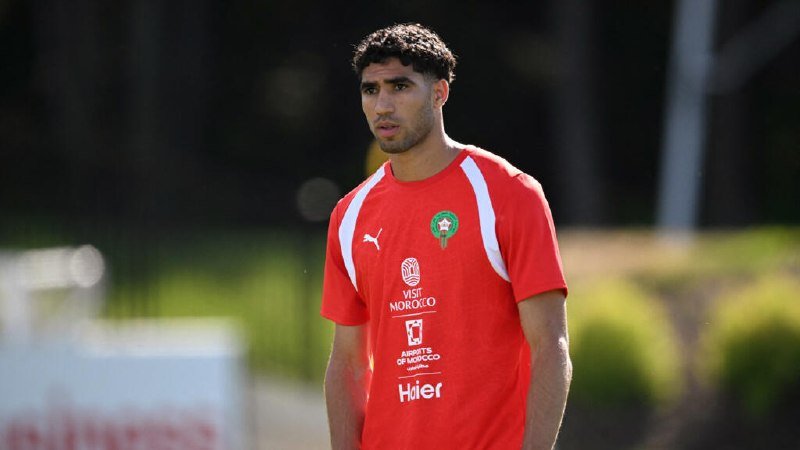
At full time in Group C on 25 June 2026, the scoreboard read Morocco 4, Haiti 2, and the Haitian bench had already begun the long walk to the touchline. The match, played in a stadium that Morocco's Atlas Lions had not lost in as a 2022 World Cup semifinalist, ended the way the betting markets had predicted. It did not end the way the game itself had played for its first hour. According to Al Jazeera's match report published 25 June 2026 at 00:53 UTC, Haiti — competing in their first men's World Cup since 1974 — twice held the lead against a Moroccan side that finished fourth in Qatar, the highest-ranked African team in the tournament and a flag-bearer for the continent's most ambitious football federation.
The result sends Morocco through to the round of 32 as runners-up in their group, and sends Haiti home without a point. Read narrowly, that is the headline: a win for the favoured side, an exit for the underdog. Read across the ninety minutes, the headline is more interesting, and harder to file away. A Caribbean team ranked in the mid-70s in FIFA's standings did not merely survive the kick-off; they scored first, conceded, scored again, and forced the semifinalists to play the last half-hour chasing a game that, on the balance of chances, was theirs.
A group that did what the bookmakers said it would, until it didn't
Haiti's path to this tournament was, in its own way, harder than Morocco's. The Atlas Lions qualified through CAF's five-and-a-half-slot allocation, with a confederation that has produced six of the last eight African champions and which can call on players from across Europe's top five leagues. Haiti's path ran through a Caribbean qualifying window defined less by talent pipelines than by logistical improvisation: a federation that, in the words of regional reporting, has spent the cycle fighting the structural headwinds familiar to small CONCACAF members — limited friendly windows, ageing domestic infrastructure, and a player pool that, by the time of the final qualifying window, was largely assembled in the French lower divisions, the Belgian Pro League, and Major League Soccer's reserve circuits.
That is the context behind what happened on 25 June 2026 at 00:53 UTC, per Al Jazeera's wire report. Morocco did not underestimate the opposition; if anything, the early tempo suggested the opposite. The match was decided in the spell after Haiti's second lead, when the Atlas Lions' individual quality — the kind of margin that turns a chaotic 2-2 into a controlled 4-2 — finally told. A side that had reached the last four in Qatar is not the same proposition as a side that has not appeared at a World Cup for half a century, no matter how bravely the second defends the lead. The scoreboard, in the end, reflected that.
The counter-narrative the wires did not put on the front page
The standard global read of a 4-2 loss is that the favourites won. The standard Caribbean read, increasingly, is more textured. A side that had not been at this tournament in 52 years did not park the bus; it took the game to the favourites and was, for stretches, the better team. The post-match framing will turn on whether you read the final score as a confirmation of the pre-tournament odds or as a slight against the Haitian performance.
Both reads are defensible. The 4-2 scoreline is, on the most basic accounting, a two-goal defeat to a side that has finished in the top four of a World Cup. The two-goal margin is not, however, a fair summary of the first 55 minutes, and the fact that Haiti led twice against a 2022 semifinalist is the kind of result that, in a tournament increasingly contested by confederations with deep talent depth, complicates the cleanest version of the favourites-underdogs frame. It is also a result that puts Haiti's cycle in sharper relief: a federation that arrived in 2026 having spent the previous four years building something durable from very little, and that exits having validated the project even in defeat.
A wider pattern: small nations, structural ceilings, and the tournament's expansion
The structural frame here is not unique to Haiti. World Cup 2026, the first edition of an expanded 48-team format, was designed in significant part to give smaller federations longer stays at the tournament. The trade-off is that longer stays also produce heavier defeats for the sides that do not break through the group. A 4-2 loss to a semifinalist is not, in the accounting of a 48-team World Cup, a moral failure; it is a sign that the format is doing some of the work it was designed to do, but not all of it.
What the format cannot do is solve the deeper problem that smaller federations face: that a tournament designed around confederation quotas, however generous those quotas have become, still produces first-round exits for the confederations that arrive with the least infrastructure. Haiti's exit is the latest in a long line that includes Curaçao, the Bahamas, and a dozen Caribbean and Pacific island sides that have, in past cycles, made single appearances and not returned for decades. The expansion gave Haiti the chance to be on this stage. It could not, in a single cycle, fix the underlying imbalance that will determine whether Haiti returns in 2030.
Stakes: what the result changes, and what it does not
For Morocco, the result does what it had to do: the Atlas Lions move on to the round of 32 with a winnable knockout bracket and with the confidence that, even on an off day, they can absorb two Haitian goals and still win by two. The 2022 semifinalist frame is, for now, intact. For Haiti, the stakes are more durable. A federation that spent the cycle building a competitive senior side returns home with no points and one goal difference, but with the kind of result — leading a semifinalist twice — that is, in the small-nation football economy, a recruiting argument. Players who were weighing a Haiti call-up against a more lucrative path with France or Canada have, after 25 June 2026, a stronger case in front of them.
The uncertainty is whether the federation can convert the result into the institutional continuity the next cycle will require. The Haitian Football Federation's record on that front is mixed. The structural headwinds — limited friendly windows, ageing domestic infrastructure, the gravitational pull of European federations on dual-national players — have not changed in the 48 hours since the final whistle. What has changed is the baseline expectation. A side that twice led a 2022 semifinalist cannot credibly be filed, in 2030 qualifying, as a routine first-round exit.
What the sources leave unresolved
The reporting available to this publication does not specify the identity of either Haitian goalscorer, the minute-by-minute sequence of the four Moroccan goals, or the manager's post-match remarks. Al Jazeera's wire and the regional reporting tracked by Telegram channels — including the 03:02 UTC summary on Tasnim's English feed and the 01:18 UTC match summary on the same channel — confirm the scoreline and the broader shape of the match, but do not contain the level of tactical detail that would let this publication characterise the second-half turning point with confidence. Readers looking for the granular reconstruction of the game should consult full match reports when they publish; the headline that holds across every source consulted is that the result was tighter than the scoreline, and that the side that did not advance was, for an hour of football, the better of the two.
This article was prepared by Monexus News using wire reporting from Al Jazeera and regional Telegram channels. Monexus's coverage of World Cup 2026 frames smaller-conference results through the structural lens of confederation quotas and federation capacity, rather than through the favourites-underdogs binary that dominates global wire copy.
Wire provenance
This editorial synthesis draws on the following public wire/social posts:
- https://t.me/tasnimnews_en
- https://t.me/tasnimnews_en
- https://t.me/alalamarabic