Hezbollah's 'Loyalty to the Resistance' reads the Lebanon ceasefire as an Iranian win — and wants Beirut to cash the cheque
A Hezbollah-aligned parliamentary bloc claims Tehran forced a ceasefire on Israel. The claim is rhetorical — but it tells us what the post-war political market in Beirut is going to look like.
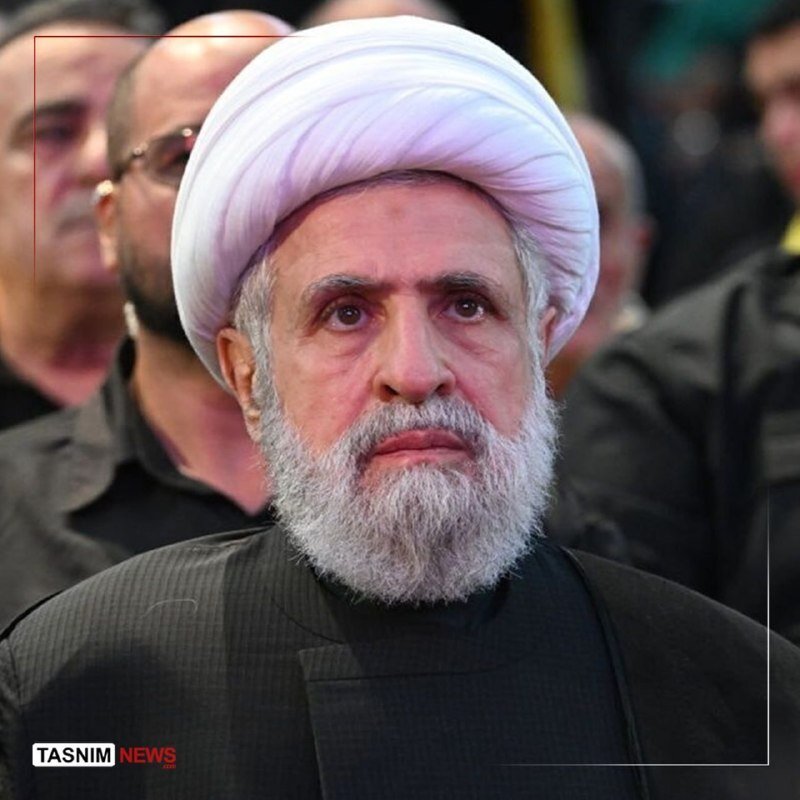
On the afternoon of 25 June 2026, the Lebanon-loyal parliamentary grouping that brands itself the "Loyalty to the Resistance" Bloc held a press reading of the war's outcome, and arrived at a single, tidy conclusion: the ceasefire now in effect between Israel and Hezbollah was not negotiated. It was imposed — by Tehran, on the United States and Israel, on behalf of Lebanon and Palestine. "The brave and loyal Iranian position has imposed on the Zionist aggressor and its American ally a ceasefire against Lebanon," the bloc declared in a statement carried by the Iran-aligned Al Alam Arabic channel at 13:38 UTC. Four minutes later, the same channel carried the bloc's argument in full: that the Iranian position had "formulated a new equation in the region as well as the world" and "restored balance to the entire regional scene."
Read literally, the statement is overreach. Read politically, it is the first move in the post-war argument over who captures the credit — and therefore the leverage — inside Lebanon's shattered coalition politics.
What the bloc is actually claiming
Strip the rhetoric and three concrete assertions sit underneath. First, that Iran is the principal guarantor of the present quiet, not the United States, France, or the Lebanese state itself. Second, that the cost of that quiet should be paid in Lebanese political currency — specifically, that the government in Beirut should "seize the opportunity" of Iranian backing by extending formal recognition to the resistance project's political wing. Third, that the regional balance of power has shifted enough that demands once treated as maximalist — formal disarmament debates postponed, Hezbollah's arsenal left formally unaddressed, reconstruction money routed through sympathetic channels — are now the new mainstream.
None of these claims is, on its own, a demand for renewed fighting. The whole architecture of the statement is about converting a military pause into a political settlement favourable to the axis. That is the prize the bloc is fighting for, and the framing it is offering the wider Lebanese public.
Why this framing travels
The statement is being carried by Al Alam, an Iranian state broadcaster operating in Arabic, and is targeted squarely at a Lebanese Shi'a audience already inclined to credit Tehran for the group's survival through the war. In a media environment where the official-state position in Beirut is fragmented, slow, and visibly dependent on external sponsors, a clean narrative — Iran protected us, now repay the favour — has obvious political utility. It does not need to be true in the strategic-studies sense to be useful. It needs only to be coherent, repeated, and delivered to the right audience at the right moment.
The implicit audience outside Lebanon is also worth naming. By inserting "and its American ally" into the formulation, the bloc is broadcasting to Tehran's wider negotiation partners — and to Gulf and Western diplomats who have spent two years trying to peel Hezbollah away from the Islamic Republic — that the leash, in the bloc's telling, runs the other way. Hezbollah is not an Iranian client being reined in. It is the regional delivery mechanism for an Iranian-imposed order.
The counter-read
The dominant Western and Israeli framing of the ceasefire is essentially the inverse: that the arrangement was driven by an Israeli campaign that degraded Hezbollah's senior cadre and rocket infrastructure to a point where the group had to accept terms, with US diplomacy translating the military reality into a political text, and with Iran as a constrained actor ratifying a deal it did not control. Israeli and US statements since the truce have emphasised the destruction wrought on the group's leadership, the verified relocation of assets north of the Litani, and the residual enforcement mechanism that keeps Israel free to strike on its own assessment of violations. Under that reading, the "Iranian equation" is real but defensive — Tehran protecting a weakened asset, not projecting new power.
A second counter-read, common in Lebanese centrist and Sunni-aligned commentary, is that the bloc's statement is best understood as a domestic political manoeuvre designed to pre-empt the looming argument over Hezbollah's post-war disarmament. By crediting Iran for the ceasefire, the bloc shifts the conversation away from what Hezbollah will now be required to give up and on to what it has earned the right to keep.
The structural shift — and what it does not change
The deeper story is the one the bloc is gesturing at without quite naming. Across the past eighteen months, a pattern has hardened in which regional ceasefires are brokered between capitals — Washington, Tehran, Doha, Riyadh, Ankara — and then delivered to local actors as faits accomplis. Lebanon in 2026 is the most recent case. The local sovereign is presented with a settlement, asked to implement it, and given a cover story about who to thank. Whether the cover story is "America saved us" or "Iran saved us" matters less than the underlying fact: Beirut is being governed, in security matters, by other people's negotiations.
That condition is not new in Lebanese history, but its explicitness is. And the Loyalty to the Resistance Bloc's statement is, among other things, an attempt to ensure that if Beirut is going to be told what to do, the voice in its ear doing the telling is the one that owes Tehran a hearing.
Stakes, and what is still genuinely uncertain
If the bloc's reading prevails inside Lebanese politics, the practical consequences are concrete: a slower or shallower disarmament track, reconstruction aid routed through institutions the axis controls, and a longer shelf life for the war's military infrastructure in the south. If the opposing reading prevails, the disarmament timetable that the ceasefire is meant to enable becomes enforceable, and the political premium on Iranian credit collapses.
What remains genuinely unsettled is the enforcement architecture. The sources available do not specify which side retains the unilateral right to interpret violations, how the disputed points along the Blue Line will be arbitrated, or what happens to the senior leadership questions that the fighting left open. Until those mechanics are visible, the credit-attribution argument is doing the political work the mechanics have not yet done. The bloc is betting that whoever owns the story of the war will own the terms of the peace. The next few weeks of Lebanese cabinet politics will test whether that bet is correct.
Desk note: The wire reading of this story is that a Hezbollah-aligned bloc praised Iran for a ceasefire. Monexus is reading it as the opening bid in a domestic political fight over who gets credit — and therefore who sets terms — for what comes next.
Wire provenance
This editorial synthesis draws on the following public wire/social posts:
- https://t.me/alalamarabic
- https://en.wikipedia.org/wiki/Loyalty_to_the_Resistance_Bloc
- https://en.wikipedia.org/wiki/Al_Alam
Follow the event.
These dated source records provide context. They do not retrospectively verify this archive article.
Separate what the nuclear watchdog reported from what it could not determine after the June 2025 strikes.