Israeli jets pound southern Lebanon as Geneva framework stalls, three reported killed
Israeli warplanes flew low over southern Lebanon on Wednesday while MTV Lebanon reported a pullback in the US-drafted framework, and Middle East Eye said three people were killed in a separate strike.
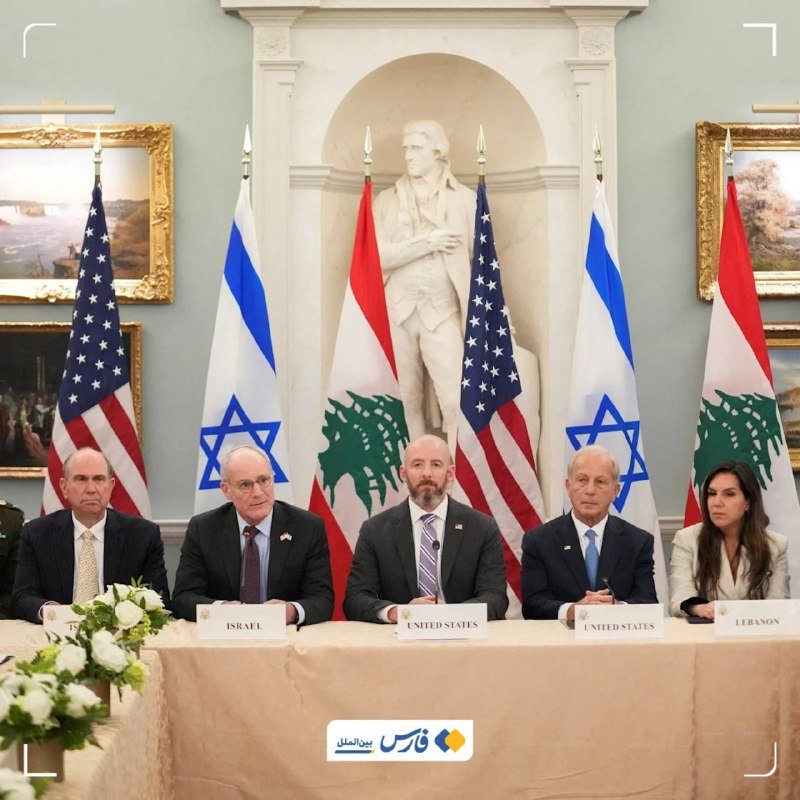
Israeli Air Force jets violated southern Lebanese airspace repeatedly on the evening of 25 June 2026, according to field-monitoring channels operating on the ground, while separate reporting from Middle East Eye said an Israeli strike earlier in the day killed three people in the same region. The flights came as MTV Lebanon, citing diplomatic sources, reported that talks mediated by Washington had stalled, with the Israeli side pulling back from a US-drafted joint framework.
What is unfolding is the familiar pairing of the past twenty-two months: an active air campaign across the Litani and its hinterland, and a parallel diplomatic track whose language keeps shifting faster than the bombs stop falling. The headline out of Geneva — where the United States and Iran were expected to sign a peace accord on Friday, per the same Middle East Eye live blog — is not a Lebanon breakthrough. It is a parallel file. The Lebanon track, by contrast, is in the kind of holding pattern that historically precedes an escalation rather than concludes one.
What the field monitors saw
Between approximately 19:53 UTC and 19:58 UTC on Wednesday, the Telegram channel @wfwitness — a southern-Lebanon field feed that has tracked Israeli overflights throughout the conflict — posted three near-identical alerts saying Israeli jets were "violating southern Lebanese airspace" and "flying over southern Lebanon." The channel @AMK_Mapping reposted the same alert at 19:58 UTC. The repetition matters: low-altitude overflights, when sustained, are typically a precursor to either a strike package or a demonstration of airspace denial ahead of one. The channel did not report accompanying strike sounds in the 19:53–19:58 window, which suggests a show-of-force posture rather than immediate kinetic action.
Earlier in the day, at 18:53 UTC, Middle East Eye's live coverage of the wider Middle East file carried a one-line flash: "Three killed in Israeli strike on southern Lebanon." The outlet's live blog framed the strike alongside the Geneva track, signalling that the southern front and the diplomatic track are being treated as one operational file by the mediators.
The diplomatic track is going backwards
The second piece of the picture is more consequential than the air activity. At 18:27 UTC on Wednesday, MTV Lebanon — a Beirut-based broadcaster with established sourcing inside the Lebanese negotiating team — reported that there was "no progress in the negotiations so far," and attributed the stall to a "retreat in the Israeli proposal regarding the model areas and the draft joint framework proposed by the U.S. to both."
The phrasing is technical, but the substance is not. The US-drafted framework, as described in regional reporting, was meant to settle the security architecture south of the Litani: the buffer zone, the monitoring mechanism, the disarmament sequence, and the role of international guarantors. A "retreat" on the Israeli side, in this context, typically means one of two things: either Jerusalem is hardening its preconditions in response to a domestic political shock, or it is using the negotiating pause to lock in operational gains on the ground while the diplomats talk. Neither reading is comforting for Beirut.
Why the two tracks are not really separate
A regional file in this part of the Eastern Mediterranean almost never moves on a single track. Air operations, diplomatic framing, and the public posture of the guarantors are managed as a portfolio. When an Israeli negotiating team withdraws from a US-drafted model area, the airspace above southern Lebanon is rarely quiet for long; the operational tempo tends to compensate for the diplomatic slack. The pattern has been visible since the ceasefire of November 2024, when reported violations ran into the thousands while the monitoring committee argued about definitions.
The structural question — what larger pattern this event sits inside — is straightforward: an active counter-insurgency campaign conducted in parallel with a managed diplomatic process, where each side uses the tempo of the other to recalibrate. The US, as the convening power, holds the pen on the framework. Jerusalem holds the flight plans. Beirut holds the casualties. Beirut also holds the only vote that matters at the UN, but that vote has not changed the operational calculus in twenty-two months.
Stakes and what to watch
The near-term stakes are local and immediate. Three reported dead in a single strike on a southern Lebanese town, on the day that the framework under negotiation was being walked back, is the kind of arithmetic that erodes whatever residual consent the Lebanese public extended to the US-mediated process. If Friday's Geneva signing proceeds as scheduled for the US-Iran track, the contrast will be stark: a headline accord on one front, an active bombing campaign on the other, with no shared enforcement architecture between them.
Three signals to watch over the next seventy-two hours. First, whether the MTV-sourced "retreat" on the model areas produces a written Israeli counter-proposal, or whether the negotiation slips into procedural limbo. Second, whether the 19:53–19:58 UTC overflight pattern repeats overnight, which would indicate a sustained demonstration of airspace denial rather than a one-off sortie. Third, whether Middle East Eye's reporting on casualties is matched by an IDF Spokesperson briefing acknowledging the strike with the standard language of "precise targeting" — silence on that front would be unusual and worth flagging.
What remains uncertain
The sources do not specify the exact town struck in the 18:53 UTC incident, nor the identities of the three reported killed. They do not disclose whether the Israeli jets observed over southern Lebanon in the 19:53–19:58 UTC window were strike-configured or reconnaissance-configured. MTV Lebanon's reporting on the stalled framework is consistent with what regional analysts have been saying for two weeks, but it remains a single-outlet sourcing line on the substance of the Israeli "retreat." The Geneva signing of the US-Iran file is reported as scheduled for Friday; whether it survives the next forty-eight hours of southern-Lebanon escalation is the open question.
Monexus framed the day's events as one operational file — air activity and the stalled US-mediated framework treated together — rather than separating the strike reporting from the diplomacy, which is how most wire outlets carried the items.
Wire provenance
This editorial synthesis draws on the following public wire/social posts:
- https://t.me/wfwitness
- https://t.me/AMK_Mapping
- https://x.com/middleeasteye/status/2069701471642255360
- https://t.me/wfwitness/18641