Rubio's Hormuz warning shot: Oman holds the line, Italy catches the glare
On 25 June 2026, the Secretary of State publicly rebuked Italy for foot-dragging on Iran while quietly accepting Oman's rejection of a Hormuz transit fee. The split reveals where Washington's leverage still works — and where it does not.
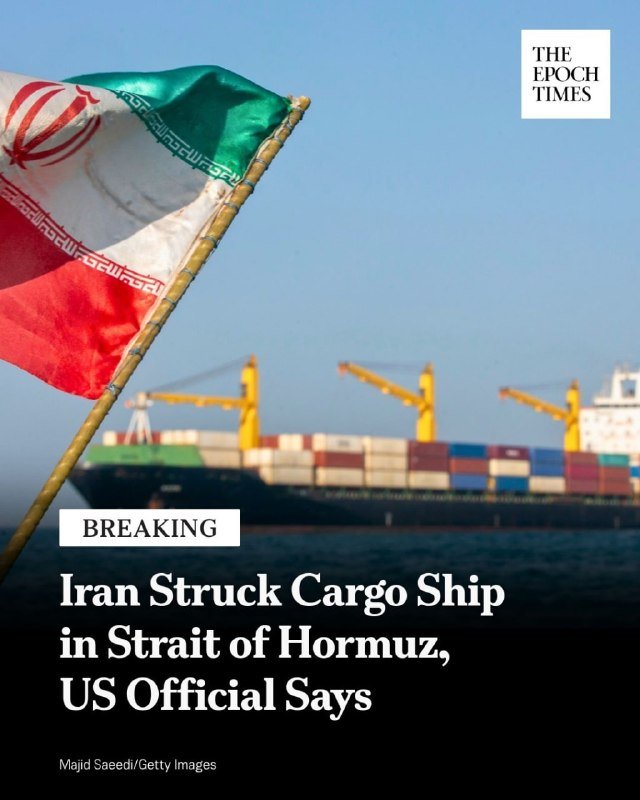
On 25 June 2026 at 11:41 UTC, Secretary of State Marco Rubio told reporters that President Donald Trump is "very upset" with Italy and other countries over their posture toward Iran, following a call the previous Friday with his Italian counterpart. Less than thirty minutes later, at 12:11 UTC, Rubio offered a markedly softer line on Oman: the relationship, he said, is "fine," even though Muscat had just declared it would not support a transit-fee, or "tolling," regime for the Strait of Hormuz. Two messages, two audiences, one chokepoint — and a useful map of where American pressure is still travelling, and where it is bouncing off.
The headline the wires will run is the Italy swipe: a NATO ally publicly dressed down for the sin of insufficient enthusiasm on Iran. The quieter, more consequential story is Oman. The Omani foreign minister has publicly stated that any future arrangement for the Strait of Hormuz will not include transit fees, according to a state news agency report circulated at 11:10 UTC on the same day. Rubio's response — a flat "the relationship is fine" — is the diplomatic equivalent of a shrug. It tells readers that Washington has decided not to fight Muscat on the question of who gets to charge whom for moving oil through one of the world's most vital maritime corridors.
What Oman actually said
Oman's position is narrower than the rhetoric suggests. The foreign minister did not reject cooperation on Strait security, did not rule out future discussions, and did not break with the Gulf consensus on containing Iran's nuclear programme. What he rejected was the specific idea — floated in various forms by analysts and former officials in Washington and Tel Aviv — of a user-pays tolling system for Hormuz transits, the kind of mechanism that would convert a natural geographic choke point into a regulated revenue stream. In a region where Saudi Arabia, the United Arab Emirates, Qatar and Iran all sit on or near the same waters, any tolling scheme is by definition a revenue-sharing fight. Oman, which controls the southern bank of the strait and the critical Musandam exclave, has no interest in being the country that opens that door.
Rubio's acceptance of that posture, even as he insisted "the relationship is fine," is the tell. The Trump administration wants Oman's goodwill intact precisely because the alternatives are worse. Muscat has historically been the Gulf's back-channel to Tehran — the venue where 2013's secret US-Iran talks ran, and 2025's Oman-mediated exchanges as well. Pushing Oman publicly on a transit fee would burn the very back channel the administration needs if it ever wants to revisit the nuclear file.
The Italy flare is not really about Hormuz
The 11:41 UTC rebuke of Italy lands harder precisely because it is unconnected to the tolling question. Rubio framed it as the result of a Friday call with his Italian counterpart in which the US side pressed for firmer alignment on Iran, and was unsatisfied with what came back. Rome has, in recent months, resisted framing Iran as the singular threat in the Mediterranean — partly over the fate of Italian business interests in Iran, partly because of European exhaustion with the maximum-pressure template, partly because the Italian left treats arms-length engagement as a domestic political brand.
What Rubio's comments do, structurally, is convert a policy disagreement into a personal one. By invoking Trump's anger, he raises the political cost inside Palazzo Chigi of saying no to Washington next time. This is how secondary sanctions do their quiet work even before they are imposed: a public scolding that tells every other NATO capital, and every third-tier European government, that the price of friendly rhetoric has gone up. The device is not new; the deployment is unusually public.
The structural frame
The deeper pattern is a US administration operating with fewer allies in the conventional sense and more transactional counterparties than the 2010s template allowed. Oman gets deference because it delivers a service — mediation — that no other Gulf state can. Italy gets pressed because its alignment is taken for granted inside NATO and therefore is treated as a free political resource to be harvested. The same logic is now being applied across the European file, where capitals are being sorted into those who can be leaned on publicly and those whose cooperation is fragile enough to require a softer touch. The Strait of Hormuz sits inside this sorting exercise as the single most expensive corridor where any mistake is immediately visible at the petrol pump.
The tolling question itself is best read as a probe, not a programme. It appears in think-tank reports, in op-eds by former US and Israeli officials, and in occasional congressional letters. It has never been formally proposed by any sitting administration as US policy. That Oman's foreign minister felt obliged to publicly rule it out tells you the probe is being taken seriously in the Gulf, even if Washington won't put it on a podium.
What remains contested
The sources do not specify whether the tolling idea has any traction inside the current US national-security council, or whether it is being floated externally to gauge reaction. Rubio's own characterisation — "they say they are not in favor" — paraphrases rather than quotes, leaving room for the kind of polite-minutes diplomacy that often conceals how far apart the two sides actually are. Likewise, the Italian side has not, on the record available here, responded to Rubio's 25 June framing of the Friday call. The shape of any Italian counter-message will tell us whether the public rebuke produced movement, or simply produced a second phone call.
The Oman file is the cleaner read: a small Gulf state has publicly drawn a line, and the United States has publicly accepted it. That is, in itself, the story.
Wire provenance
This editorial synthesis draws on the following public wire/social posts:
- https://t.me/s/osintlive
- https://t.me/s/ClashReport
- https://t.me/s/osintlive
- https://twitter.com/Osint613/status/2070095969786450