Washington reopens the Strait question — and finds no easy answer
Marco Rubio's insistence that the Strait of Hormuz belongs to no nation is the easy part. The hard part is what Washington is willing to do about the moment Tehran tests that proposition.
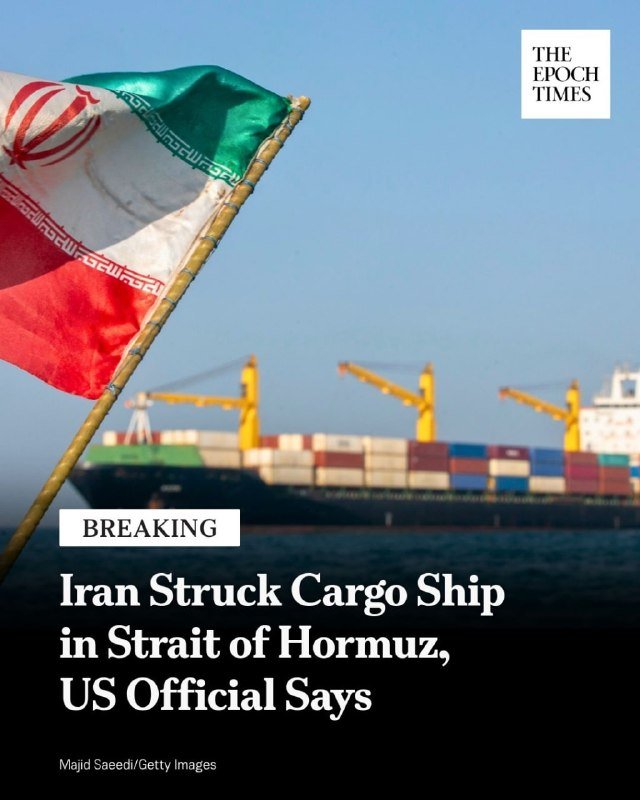
On the morning of 25 June 2026, US Secretary of State Marco Rubio returned to a foundational talking point in Washington’s standoff with Tehran: the Strait of Hormuz is international water, not Iranian territorial sea, and no state has the right to monetise the passage of global commerce through it. “You can call it a toll, you can call it a fee, whatever you want to call it — it’s a game of semantics,” Rubio said, per reporting carried by the Telegram channels Open Source Intel and Clash Report on 25 June 2026 at 08:09 UTC. “The reality of it is that no country on earth has a right” to treat a chokepoint as a toll booth.
That is the doctrine. It is also the opening move in a far messier game. By invoking the language of international waterways so publicly, the Secretary has drawn a line that the next Iranian provocation — a boarding, a detained tanker, a symbolic levy on passage — will force Washington to enforce, ignore, or finesse. Each option has a cost the White House has not yet priced.
The doctrine on the table
For more than four decades, US policy has rested on the proposition that the Strait of Hormuz, at its narrowest roughly 21 miles wide, is governed by the right of transit passage codified in Part III of the UN Convention on the Law of the Sea. Iran and Oman control the northern and southern shores respectively; the shipping lanes themselves are not sovereign territory. Rubio’s restatement on 25 June is therefore not new law — it is the same line every administration since Jimmy Carter’s 1980 Carter Doctrine has taken — but it is being delivered at a moment when the proposition is being actively contested.
In recent months, Iranian figures inside and adjacent to the government have floated schemes that would, in effect, impose a usage fee on foreign tankers transiting the Strait. Tehran denies any intent to close the waterway outright; what it threatens is something subtler and arguably more corrosive — a tiered regime of permissions, inspections and charges that erodes the international-waters principle without ever quite violating it on paper.
That is the move Rubio is naming. And his answer — that what Tehran calls a fee, Washington calls an illegal exaction on global commons — is the legal frame any US naval response will hang on.
The counter-narrative from Tehran
Iranian state media and Tehran-aligned commentators have a structurally different reading. The Strait, in their framing, is not a neutral channel but the seaward approach to an Iranian coastline under existential pressure from US sanctions and the periodic presence of Western carrier strike groups in the Gulf. A transit fee, in this telling, is sovereign resistance, not extortion; a recognition that the country doing the policing of the chokepoint should be compensated for the security it provides.
The argument is not frivolous. Roughly a fifth of the world’s seaborne oil moves through the Strait. The naval architecture that keeps it open — the US Fifth Fleet, Royal Navy frigates, French and Indian deployments — is not a free public good; it is sustained by the defence budgets of the very states that complain when Iran points out the asymmetry. Tehran’s claim, stripped to its essentials, is that the existing arrangement is itself a kind of toll, levied in dollars rather than rials.
A serious policy debate has to engage with that point. It does not have to accept it.
What “international waters” actually buys Washington
The legal architecture is on Washington’s side, and Rubio is right to lean on it. Transit passage through international straits is a customary and codified right; vessels of all flags may move through continuously and expeditiously without coastal-state interference. A flat transit levy is a textbook violation. If Tehran moves to impose one, the US Navy is doctrinally authorised — arguably obligated — to escort commercial traffic through.
The trouble is that escort operations are not free. They require hulls forward, rules of engagement drafted in advance, and a domestic political consensus that has been visibly fraying. The 2024 Houthi campaign in the Red Sea, and the spate of attacks on commercial shipping that preceded it, demonstrated what sustained low-intensity maritime coercion looks like — and how quickly it can stretch a navy not designed for constant convoy duty. Multiply that by a chokepoint with Iranian Revolutionary Guard Corps fast-boat and anti-ship missile coverage on both shores, and the gap between “the Strait is international” and “the Strait behaves as international” becomes the operational problem of the decade.
There is also the question of who else will enforce the doctrine. Japan, South Korea, India and the Gulf monarchies are the largest consumers and producers transiting Hormuz. None of them has been asked, on the record, what they would do if Washington drew a red line and Tehran crossed it. The empty space around that question is the diplomatic work Rubio’s statement is implicitly requesting.
The Venezuela footnote
It is worth noting that the same morning, Rubio used a separate appearance to announce that the State Department was “immediately deploying search and rescue” assistance to Venezuela — a signal that the administration’s attention is being pulled in two hemispheres at once. A maritime contest in the Persian Gulf and a humanitarian crisis on the Caribbean coast are not the same file, but they compete for the same finite pool of naval and political capital. Observers who treat the Strait remarks as standalone should keep the other one in peripheral vision.
Stakes, in plain terms
If Rubio’s restatement is backed by a credible escort posture and a coalition of flag-of-convenience states willing to transit under naval cover, the doctrine holds and Tehran’s fee scheme dies stillborn. If it is rhetorical cover for business as usual, Iran’s incremental moves will accumulate into a de facto toll regime that the world adapts to because it has no choice — and the international-waters principle joins a long list of norms that survived on paper while being hollowed out at sea.
What remains genuinely uncertain is whether Washington has decided which of those two outcomes it is prepared to live with. The 25 June remarks settle the legal question. They do not settle the operational one. The next test is not a speech. It is a tanker.
This publication framed Rubio’s 25 June remarks as the opening of an operational question, not the closing of a doctrinal one; the wire coverage treated them primarily as a restatement of long-standing US position.
Wire provenance
This editorial synthesis draws on the following public wire/social posts:
- https://t.me/osintlive
- https://t.me/ClashReport
- https://t.me/osintlive
- https://t.me/osintlive