Beirut's streets reject a deal Lebanon's government could not sell
Pro-Hezbollah crowds besieged government buildings in Beirut within hours of a US-mediated framework being signed. The Lebanese Army is now deployed in Dahiyeh — and the deal's political cost is suddenly visible.
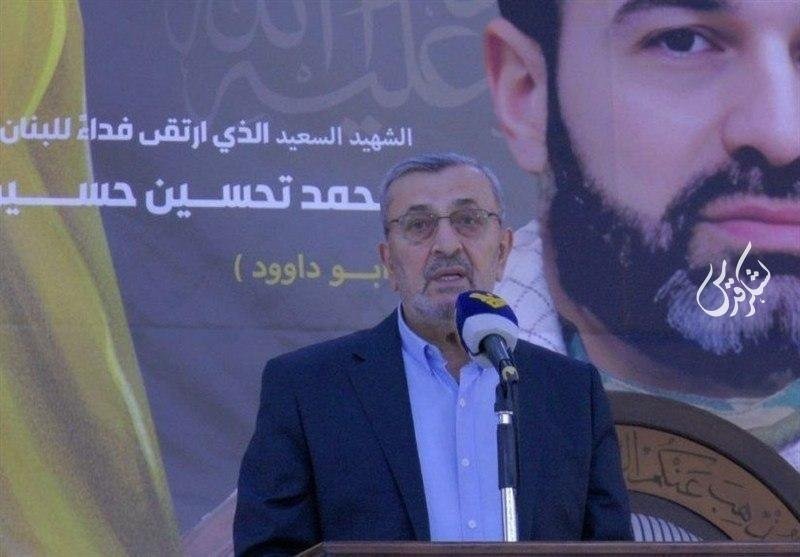
Within hours of Lebanon's leadership signing a US-mediated framework with Israel, the streets around Beirut's government quarter filled with pro-Hezbollah protesters. By 22:32 UTC on 26 June 2026, the Lebanese Army had been deployed to disperse crowds, with initial reports of clashes in Dahiyeh, the southern suburb that functions as Hezbollah's political and organisational heartland. The tempo of the response — and the geography of the unrest — tells its own story about who read the deal as a concession and who read it as a victory.
The framework, announced earlier the same day, ties Lebanese acquiescence to a sequenced Israeli pullback, but conditions the sequencing on Hezbollah's disarmament going first. That order-of-operations clause is the detonator. By making the Shia armed group's weapons the price of admission rather than the last item on the agenda, the agreement asks a constituency that has spent four decades arming itself to stand down before it sees any reciprocal Israeli step. The crowd that descended on central Beirut understood that bargain faster than the cabinet that signed it.
A government signing against its own street
The reporting from 26 June sketches a state apparatus outpaced by its own capital. Crowds surrounded the government building in Beirut hours after the framework was initialed; the Lebanese Army moved onto the airport road to keep access open, and units were then redirected into Dahiyeh itself once the protests spilled south. The pattern is familiar from earlier Lebanese episodes — 2005, 2019, 2020 — but the trigger this time is diplomatic rather than confessional. The street is objecting not to a domestic cabinet decision but to a sovereign-to-sovereign text that binds Lebanon's next moves to an external power's good faith.
Hezbollah's organisational capacity is the obvious variable. The movement retains the disciplined base, the media apparatus, and the neighbourhood command structure to project a crowd into central Beirut on short notice. Yet the protests also appear to draw a wider Shia current, including figures and families whose grievance is less ideological than material: they have lived with the assumption that Hezbollah's arsenal is what kept Israeli airstrikes from becoming a ground operation, and the framework tells them that assumption has been retired on their behalf.
The clause that detonated
Disarmament has been on the Lebanese negotiating table in some form since the ceasefire of late 2024, but the framework's sequencing — Hezbollah's weapons first, Israeli withdrawal after — inverts the political logic that has kept the consensus together. Previous Lebanese positions, including those advanced by the post-2024 cabinet, paired any weapons discussion with a parallel Israeli withdrawal track and an international monitoring mechanism. The new text reportedly front-loads the most domestically toxic item and defers the most internationally valuable one.
That choice is not irrational from Washington's vantage. A US mediator maximises the chance of Israeli compliance if the verifiable, photographic, inspector-friendly concession comes out of Beirut first. But the same sequencing gives every Hezbollah-aligned politician, cleric and mayor a ready-made accusation: that the government signed away a deterrent in exchange for a promise, and that the promise has no enforcement teeth the Lebanese side can trigger.
What the framework is — and is not
Reading across the Telegram traffic on 26 June, three structural facts stand out. First, the text is described as a framework, not a final accord; the operative obligations, timelines, and verification regimes remain to be negotiated. Second, it is US-mediated, not US-guaranteed in any treaty sense — Washington has facilitated the text, but the security backstop is the same one that has frayed since late 2023. Third, the framework binds the Lebanese state on disarmament while binding Israel only on conditional sequencing; this asymmetry is the feature most likely to be litigated inside Lebanese politics for the next several months.
There is a plausible counter-read. The same sequencing that looks reckless from Beirut looks like the only deal Washington could have sold to Jerusalem: any Israeli step that is not contingent on a verifiable Hezbollah drawdown would have collapsed inside the Israeli cabinet. The framework, on this reading, is not naive about the Lebanese street — it is indifferent to it. The street's response is then a feature, not a bug, of the negotiating strategy: pressure on Beirut to enforce what its own negotiators have signed.
Stakes, and what remains unresolved
If the protests remain concentrated in Dahiyeh and Shia-majority southern suburbs, the cabinet can probably absorb the shock and continue implementation. If they spread to mixed or Sunni-majority neighbourhoods, or if the army's posture visibly fractures between units deployed in Shia areas and those deployed elsewhere, the framework's political viability collapses before any disarmament timetable begins. The next 72 hours will be diagnostic.
What the reporting on 26 June does not yet establish is the framework's exact text, the named Israeli and American signatories beyond the US mediation channel, or the casualty count from the Dahiyeh clashes described as "initial." Those gaps matter; the same Telegram traffic that gave the protest geography has not yet carried a verified casualty figure, and the framework's specific disarmament triggers — what counts as a first step, who verifies it, on what clock — remain undisclosed in the public reporting this publication has read. Until those details surface, the street's verdict in Beirut is the only ratified text on offer.
This piece relies on Telegram wire traffic from 26 June 2026. Monexus treated the framework's signing as reported and read the street response as the day's primary empirical fact; the framework's full text is not yet in the public record at time of writing.
Wire provenance
This editorial synthesis draws on the following public wire/social posts:
- https://t.me/rnintel
- https://t.me/intelslava
- https://t.me/DDGeopolitics