Beirut's Dahiyeh erupts: how a US-brokered Lebanon–Israel framework is being read as a surrender in the Shia south
Within hours of a US-mediated Lebanon–Israel framework being signed, large pro-Hezbollah crowds poured into Beirut and Dahiyeh. The Lebanese Army deployed to the airport road. The dispute is no longer about the deal's text — it is about who has the authority to disarm a movement that is also a political community.
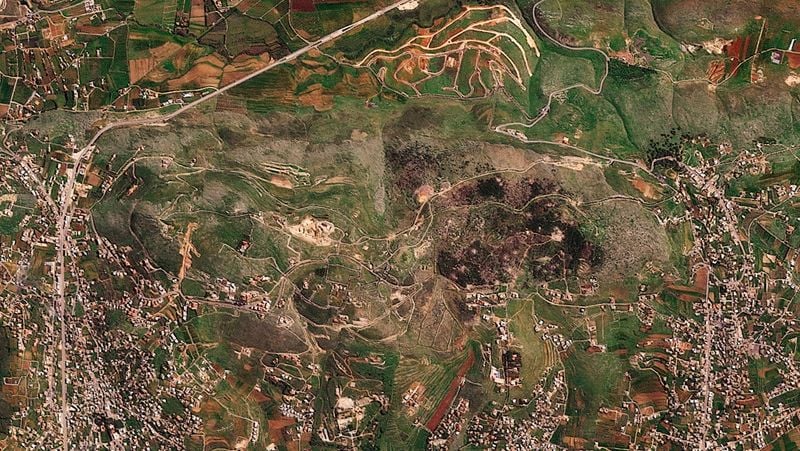
By 22:32 UTC on 26 June 2026, the Lebanese Army was on the airport road, columns of demonstrators were pressing toward government buildings in central Beirut, and initial reports of clashes were coming out of Dahiyeh — the dense Shia southern suburb that Hezbollah has governed as its own polity-within-a-polity for four decades. The trigger was not a border incident and not a strike from the air. It was a piece of paper: a US-mediated Lebanon–Israel framework, signed earlier the same day, that ties Lebanese sovereign decisions on disarmament to a sequencing dictated from Tel Aviv and Washington.
What is happening on the streets of Beirut is, on its face, a protest. Structurally, it is the first open collision between two competing claims of sovereignty inside the Lebanese state — the cabinet's, and Hezbollah's — over a question that every previous round of diplomacy has tried to evade: who decides when, and whether, the party's arsenal is rolled up.
What the framework appears to do
The text circulating in the first hours after signing is consistent across the Telegram threads following the announcement: the disarmament of Hezbollah is sequenced to come first, with reciprocal Israeli steps scheduled to follow. The reading in Dahiyeh, articulated in the protest chants captured by DDGeopolitics on 26 June, is straightforward — Beirut has accepted a script in which the Lebanese state disarms a Lebanese constituency before Israel does anything material in return. In the framing pushed by Russian-aligned and Iran-aligned channels tracking the deal, the framework is portrayed less as a confidence-building measure than as a managed capitulation.
The order matters. In every previous Lebanon–Israel understanding since Taif, sequencing has been the substance: who moves first, who verifies, what counts as compliance, what happens when one party judges the other non-compliant. A framework that puts Hezbollah's weapons on the front of the queue, with Israeli withdrawals or other measures trailing, does not merely reflect the balance of forces. It encodes that balance — and writes it into the architecture of the Lebanese state.
For the demonstrators on the airport road, that distinction is the whole point. They are not contesting a clause. They are contesting the authority of the signatories.
Why the street reads it as a surrender
The geography of the protest is itself a statement. Dahiyeh was rebuilt by Hezbollah after the 2006 war and rebuilt again, after Israeli operations in late 2024, on a model of autonomy that bypasses — and in many domains supplants — the formal Lebanese state. Schools, hospitals, welfare networks, reconstruction funds: the party's institutional footprint runs deepest precisely where the Lebanese state's footprint runs thinnest. A framework that requires this constituency to disarm first asks it to trust a state apparatus it has, for generations, treated as both inadequate and hostile.
The credibility problem is not abstract. The Lebanese Army deployed on 26 June to disperse pro-Hezbollah crowds — an image that, regardless of who gave the order, will travel. It confirms, for the party's base, the suspicion that the cabinet in Beirut will, when pressed, use the army as the instrument of disarmament rather than as the mediator of a political settlement. That suspicion did not begin on 26 June 2026. But the framework has now given it a date and a document.
The protests are also a domestic Lebanese political event, not only a Shia one. Lebanon's confessional system gives the speaker of parliament, the prime minister and the president to the Maronite, Sunni and Shia communities respectively. Any deal that touches the Shia community's primary security actor without the prior assent of that community's political leadership collides with the unwritten rules of the system that have kept the state together — such as it is — since 1989.
The American hand, and what it changes
The framework is US-mediated, and that is not a procedural detail. Washington has spent the better part of two decades trying to convert Lebanon's relationship with Hezbollah from a regional security problem into a bilateral Lebanese-Israeli problem it can manage. Each iteration — UNSC 1701, the 2024 cessation of hostilities, the various special-envoy tracks — has moved incrementally in that direction. The 26 June framework, if its early readings hold up, is the most ambitious of those moves: it tries to bind the Lebanese state, by its own signature, to a disarmament timeline that does not require an Israeli withdrawal to begin.
That is the part the street does not believe. The Israeli government's stated position for months has been that Hezbollah's military reconstruction south of the Litani must be reversed before any further Israeli concession. A framework that asks Beirut to begin work on that reversal first — and that lets Washington argue, in parallel, that Israel is meeting its side of the deal because it is not currently striking — looks from Dahiyeh like an arrangement in which Lebanon does the hard part and gets a paper commitment in return.
There is a counter-reading, and it deserves air. The framework could also be read as the first credible mechanism in years that puts Israeli non-escalation on a verifiable clock rather than on a unilateral Israeli decision. From the vantage point of a Lebanese government that has absorbed the cost of every previous Israeli campaign, a binding constraint on Israeli action is not nothing. The question is whether the constraint is real, and whether the cost of obtaining it — a domestic confrontation in the Shia south — is one the state can survive.
What the regional balance is now reading
Outside Lebanon, the framework is being processed in three rooms at once.
In Tehran, the framing across state-aligned channels on 26 June is that the agreement strips an axis-of-resistance member of its deterrent shield while leaving its rivals intact. That framing is partial, but it is not invented. The framework as described is asymmetrical in sequencing, and Iran has spent four decades investing in a deterrent posture whose credibility depends, in part, on Hezbollah's independent capability.
In Washington, the framework is being sold, in initial readouts carried by regional Telegram trackers, as the first deliverable of a Middle East track that ties Lebanon, Israel and a wider normalisation agenda together. The political logic is that a Lebanon–Israel file that does not blow up makes every other file easier — Syria reconstruction, the Gulf normalisation pipeline, the still-dormant Saudi track.
In Tel Aviv, the framework is being read against the backdrop of an ongoing debate within the Israeli security cabinet about whether disarmament of the northern front is best achieved by agreement or by further military action. The framework, if it holds, offers agreement. If it does not hold, the same political forces that supported it will have a documented Lebanese signature to point to as justification for the alternative path.
Stakes, in plain terms
If the framework holds and the disarmament sequence begins, the Lebanese state will have to govern — visibly, in Dahiyeh — a process that its largest non-state armed actor regards as a breach of the post-Taif compact. The Lebanese Army, deployed on the airport road on the night of 26 June, will be the face of that process. The army's institutional cohesion is itself a variable; it has held together a fractured polity for decades, but it has not previously been asked to enforce, against a domestic constituency, a deal signed by a government that constituency does not recognise as a legitimate representative.
If the framework collapses under the weight of the street, the collapse will not be quiet. The alternative path — Israeli action, a wider regional escalation, a fresh round in which the Lebanese state's capacity to absorb the shock is the binding constraint — has been rehearsed twice in the past two years. The argument of the demonstrators on the night of 26 June is that the cost of the first path is being downloaded onto them, and that the second path is being held in reserve.
The narrow window is whether the Lebanese cabinet can, in the days ahead, reopen the sequencing — putting Israeli verifiable steps on the front of the queue, attaching domestic political cover to the process, and rebuilding the cross-confessional coalition that any durable deal will require. Nothing in the sources available on the night of 26 June suggests that sequencing is about to change. Nothing in those sources suggests it cannot.
What remains uncertain
The reporting on the night of 26 June is fragmentary and moves fast. The full text of the framework has not been published by any of the parties. The Telegram channels tracking the protests — DDGeopolitics, intelslava, rnintel — are explicit in their framing; they are not equivalent to primary sources on the document's contents. The Lebanese government's formal readout is not yet on the public record as of the time of writing. The casualty and arrest figures from the Dahiyeh clashes described in the first dispatches are described as "initial" and have not been corroborated by an independent wire. The Israeli government's official position on the framework, as distinct from the regional chatter, has not been confirmed in the materials available to this publication.
What is clear is the political shape of the moment. A signature has been obtained. A constituency has refused to accept it. The state apparatus that signed is now being asked, on a Beirut street, to enforce what was agreed in a foreign capital. The next forty-eight hours will determine whether this is a crisis or a process.
Desk note: Wire coverage of the 26 June framework is still consolidating. This article was built from Telegram-channel dispatches inside the first 90 minutes after the signing; it foregrounds the Lebanese domestic read and the regional framing in Tehran, Tel Aviv and Washington, while flagging the limits of what can be verified on a fast-moving night. As primary text and official readouts become available, Monexus will revise the assessment rather than treat the first draft as final.
Wire provenance
This editorial synthesis draws on the following public wire/social posts:
- https://t.me/rnintel
- https://t.me/intelslava
- https://t.me/intelslava
- https://t.me/DDGeopolitics