Beirut streets reject the deal: Lebanon signs, protesters march on the Prime Minister's office
Hours after the Lebanese government signed an initial agreement with Israel, demonstrators converged on downtown Beirut to denounce the terms, exposing the political cost Nawaf Salam now carries at home.
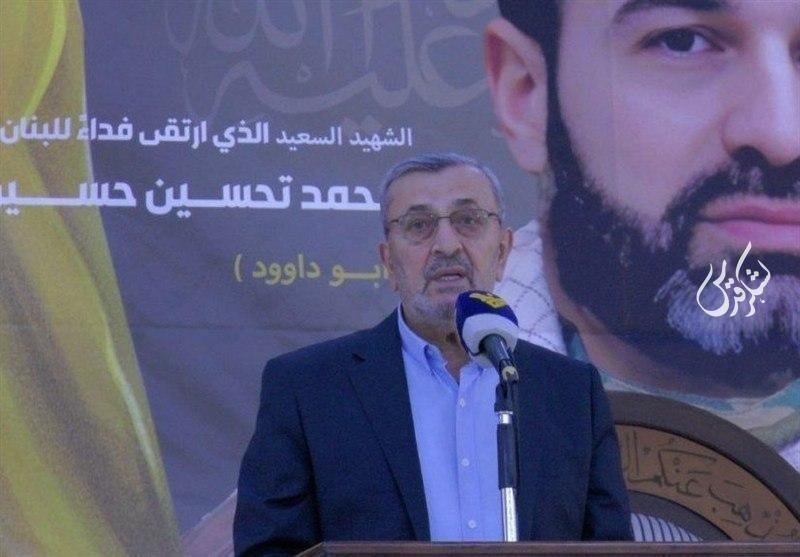
Demonstrators moved on the Prime Minister's office in central Beirut late on the evening of 26 June 2026, hours after the Lebanese government signed an initial agreement with Israel that Prime Minister Nawaf Salam publicly defended. Iranian-aligned outlet Tasnim reported the protest movement toward the downtown government district at 21:40 UTC; an earlier Tasnim dispatch, at 21:03 UTC, described night protests erupting across the capital in direct response to the signing. The same framing was carried in parallel by Tasnim's English service and its Jahan Tasnim sister feed, both timestamped inside the same 21:00–21:40 UTC window. The choreography is familiar to anyone who has watched Lebanese politics since 2019: a compromise struck in a foreign capital is ratified in Beirut, and the street answers the same evening. This time, the answer was loud, distributed across multiple entry points, and pointed squarely at Salam's seat.
The Lebanese state's decision to initial a bilateral understanding with Israel — over an active war on its southern border, in a country where large segments of the public still read the conflict as existential — is the kind of move that defines a government. It also defines the opposition. The protests are not a fringe reaction. They are the first read on the domestic political cost of the deal, and that cost is being absorbed by Salam personally rather than diffused across the cabinet.
What Salam signed, and what he said
The thread context does not include the text of the agreement, the counter-signatories on the Israeli side, or the specific clauses Salam's government initialed. The sources are uniform on one point: Salam endorsed the deal. Tasnim's English feed and its Jahan Tasnim counterpart, in items timestamped between 21:02 and 21:03 UTC, both reported that the Lebanese Prime Minister backed what they described as the agreement with "the Zionist regime." The phrasing is editorial, not analytic; Tasnim is an outlet structurally aligned with the Iranian state and uses "Zionist regime" as a standing descriptor for Israel. That descriptor does not by itself tell readers what Salam conceded or what Israel conceded in return. It tells readers how the deal is being read by the regional press that considers itself hostile to the deal's very premise.
That is a real signal, and it cuts two ways. It explains why the protests are concentrated and well-organised, drawing on a mobilisation infrastructure that has spent two years rehearsing for exactly this moment. It also explains why the domestic pushback, even where sincere, will struggle to be heard by Western wire services that have already filed the deal under "Lebanon-Israel normalisation" — a category that flattens the human and territorial reality of the war Hezbollah opened on 8 October 2023 and the Israeli campaign that followed.
Why the street answered the same evening
Lebanon does not need a long cooling-off period between a foreign-policy signature and a domestic reaction. The country's political system is confessional, its public sphere is dense, and its protest infrastructure is permanently half-mobilised. A prime minister who signs a bilateral document with Israel — even one framed as a cessation-of-hostilities understanding rather than a peace treaty — is signing over a share of national sovereignty that a wide cross-section of Lebanese voters believes was never his to sign. The geography of the protests matters: the demonstrators are heading toward the Prime Minister's office in downtown Beirut, the seat of the executive, not the presidency in Baabda and not the parliament building in Nejmeh. They are telling Salam that they understand whose name is on the document.
The targeting is also diagnostic. Salam came to office as the candidate of a Western-aligned bloc, with strong backing from Gulf Arab capitals, France, and the United States. The Iranian-aligned outlets covering the protests are, in effect, broadcasting the message of a constituency that views that alignment as the deal's central vice. The structural story is older than this government: when a Lebanese prime minister signs with Israel under external sponsorship, the Iranian-aligned axis in Lebanese politics — Hezbollah above all, but also its Christian and secular allies — treats the signature as a violation of national consensus and moves accordingly.
The framing contest
Two readings of the same event will circulate over the next 48 hours, and a serious reader needs both.
The first, broadly Western and Gulf-aligned, treats the deal as a rational de-escalation: a war on the southern border is producing dead civilians in both countries, displacing populations in northern Israel and south Lebanon, and diverting Lebanese state capacity from its post-2019 financial collapse. On this reading, Salam is doing what statesmen are paid to do — accepting an unfavourable peace to stop the dying. Israeli security concerns along the border are real, and the agreement presumably addresses them in some form, even if the public text has not been disclosed.
The second, broadly Iranian-aligned and dominant in the protesting crowd, treats the deal as a surrender: a government that does not represent the resistance axis has signed away Lebanese rights in exchange for the political survival of its own cabinet, with terms that will entrench Israeli control over southern territory. On this reading, the absence of a clear public text is not a diplomatic nicety but a tell — the deal is being initialed in private precisely because its public form would be indefensible in the street.
This publication reads the second framing as the better predictor of what happens next in Beirut, but takes the first seriously as a description of the strategic pressure on Salam. A prime minister does not sign a deal of this kind without believing the alternative is worse. The question is whether the alternative he was avoiding is in fact the one Lebanese voters will hold him to.
The structural frame
Lebanon sits at the intersection of three overlapping contests: the Iran–United States confrontation, the Israel–Hezbollah war that has been running on and off since 8 October 2023, and a Lebanese domestic political order that has not produced a functioning state since the 2019 thawra. A bilateral signed under those conditions is not a normal diplomatic event. It is the visible output of a hegemonic negotiation: Washington wants the northern front quiet so that it can manage Gaza, the Gulf states want a Lebanon that is not a Hezbollah forward operating base, and Israel wants a border it can defend without a permanent ground presence inside Lebanon. The Lebanese government is the convener, not the principal. That asymmetry is the structural reason the deal was signed fast, with limited public text, and is now being contested in the street.
It is also the reason the protests are heading for the Prime Minister's office and not the foreign ministry. The street is not contesting the technical contents of the document, which have not been published. It is contesting the right of a foreign-sponsored prime minister to sign it.
What the next 72 hours look like
Three things to watch. First, the text. If the agreement is published in full, the protest movement has something concrete to organise against, and Salam has something to defend on the merits. If it is not, the vacuum will be filled by whichever side is louder, and right now that is the street. Second, Hezbollah's response. The sources do not include a direct statement from Hezbollah, but the protest geography and timing are consistent with movement coordination. Whether that is rhetorical alignment or operational instruction will become clearer when the party speaks, or when it does not. Third, the cabinet. A vote of confidence, or the threat of one, is the standard Lebanese mechanism for resolving this kind of crisis. The thread context does not indicate whether Salam has the votes. The protesters are betting he does not.
The reasonable uncertainty in the reporting is worth flagging. The thread sources are uniformly Iranian-aligned and use "Zionist regime" as a standing editorial term; that gives a strong directional read on who is in the street and what they think, but it does not give a count, a casualty figure, or the actual content of the agreement. Western wire reporting on the deal itself — the text, the concessions, the security architecture — is not in the present sourcing and is required before any of the structural claims above can be hardened. The shape of the story is clear. The contents of the document are not.
Desk note: Monexus ran this on the Iranian-aligned wire first because that is where the protest movement is being read most clearly. Western wires are likely to lead with the deal as de-escalation; the street is leading with the deal as surrender. Both frames are in this piece, and the judgment is flagged accordingly.
Wire provenance
This editorial synthesis draws on the following public wire/social posts:
- https://t.me/tasnimplus
- https://t.me/tasnimnews_en
- https://t.me/JahanTasnim
- https://t.me/JahanTasnim
Follow the event.
These dated source records provide context. They do not retrospectively verify this archive article.
Separate what the nuclear watchdog reported from what it could not determine after the June 2025 strikes.