FIFA's 2026 scoreline is a marketing artefact, not a footballing one
A 48-team, 104-match tournament will of course produce more goals. Pretending the record means anything about the quality of the football is the FIFA version of moving the goalposts — literally and figuratively.
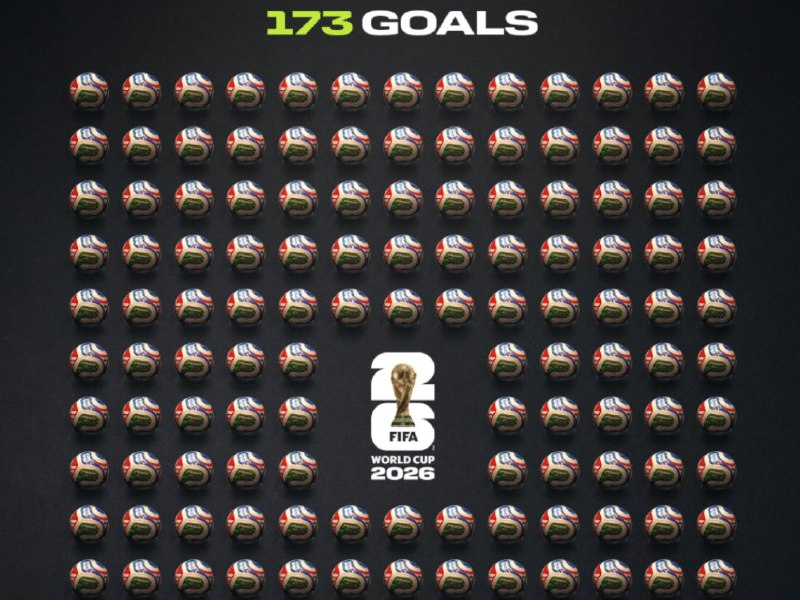
The headline dropped in the small hours of 26 June 2026 and was dutifully repeated by sports desks from Lagos to London: the 2026 World Cup, expanded to 48 teams and 104 matches, has become the highest-scoring edition in the tournament's history, with 173 goals registered so far, on pace to obliterate the previous benchmark. Hours later, FIFA announced a parallel superlative — the highest spectator turnout in World Cup history — and the press release machinery did what press release machinery does. The numbers, in isolation, are real. The inference being drawn from them is not.
This publication finds that the most interesting thing about FIFA's twin records is not that they fell, but that they were designed to fall. A tournament restructured to admit more teams, schedule more fixtures and stretch across more host cities will mechanically generate more goals, more ticket sales, more broadcast minutes, more sponsorship surfaces. To report the totals as evidence of attacking football, or of fan appetite, is to mistake the menu for the meal.
The arithmetic of expansion
The old World Cup format — 32 teams, 64 matches — was already a scoring engine by historical standards. The 2026 edition is a 48-team, 104-match event staged across the United States, Canada and Mexico. The group stage alone now produces 72 fixtures instead of 48. Each additional match is, in expectation, an additional 2.6 to 2.8 goals; the maths is unforgiving. The Canary's wire summary of 26 June frames the 173-goal milestone as a sporting achievement; it is, more honestly, a multiplication table.
There is a second, quieter arithmetic at work. Expanded squads mean more late-game scenarios in which trailing sides throw players forward, more added-time set pieces, more transitions. These are conditions in which the defending side is structurally disadvantaged. The product is not necessarily better football. It is more football, and more football is what FIFA is selling.
What the attendance record actually measures
The companion figure — a record aggregate crowd — is similarly engineered. The Canary's second bulletin of the morning of 26 June reports that FIFA has announced the highest spectator turnout in the tournament's history, framed as fans "defying heat and travel disruptions." The image is stirring; the metric is volume, not density. Stadiums of 70,000 and 80,000, multiplied by a longer fixture list, multiplied by host-city distribution across three countries, will produce a higher cumulative figure than any prior edition. That this requires the word "defying" to be persuasive — that heat and travel friction had to be acknowledged in the same breath — tells you something the headline does not.
The honest question is not whether fans turned up. They did, in large numbers, often at personal cost. The honest question is what record-attendance language obscures. It obscures the ticketing tier structure that pushed many supporters onto secondary markets. It obscures the visa and transit friction that determined who could actually reach the venues. It obscures the difference between a fan in the stand and a sponsor logo in the broadcast frame, which is, increasingly, where the audience is.
The framing FIFA prefers
FIFA's communications apparatus has spent two decades learning to convert structural decisions into feel-good stories. Expansion is sold as "more nations represented." It is, in fact, more dilution of the qualifying bar — a lower probability that any given talented mid-table side reaches the finals, and a higher probability that established footballing economies face opponents they would previously have beaten by four. The scoreline record is the friendly face of that dilution.
The structural pattern is familiar. Governing bodies that depend on broadcast-renewal narratives tend to optimise for countable milestones, not competitive integrity. The UEFA Champions League's persistent tinkering with the group phase, the IPL's expansion windows, the NFL's regular-season extension — each produces its own "record" that the press dutifully transmits. The press is not wrong to report the numbers. It is wrong to treat the framing as neutral.
What remains uncertain
The 173-goal figure cited in The Canary's 26 June wire is a snapshot, not a final tally. With knockout rounds still ahead, the record will move; whether it moves by a margin large enough to make the expansion argument embarrassing, or small enough to be absorbed into a marketing line, is a question the next two weeks will answer. The attendance figure is similarly provisional — FIFA's cumulative numbers are typically adjusted downward in the months after a tournament as reconciliations catch up with reality.
What can be said without hedging: a tournament designed to produce more of everything has produced more of everything, and the governing body is claiming the credit. That is the story. The football is somewhere inside it.
Desk note: where the wire reported the records as fact and moved on, Monexus read the same numbers as the predictable output of a format change — and asked what the framing is selling.
Wire provenance
This editorial synthesis draws on the following public wire/social posts:
- https://t.me/TheCanaryUK
- https://t.me/TheCanaryUK
- https://t.me/TSN_ua