Iran's foreign minister heads to Baghdad: what an Iraq stop tells us about Tehran's regional calculus
Iranian Foreign Minister Abbas Araghchi travels to Baghdad on 28 June 2026 with a delegation. The visit reads less as routine and more as a careful piece of regional positioning.
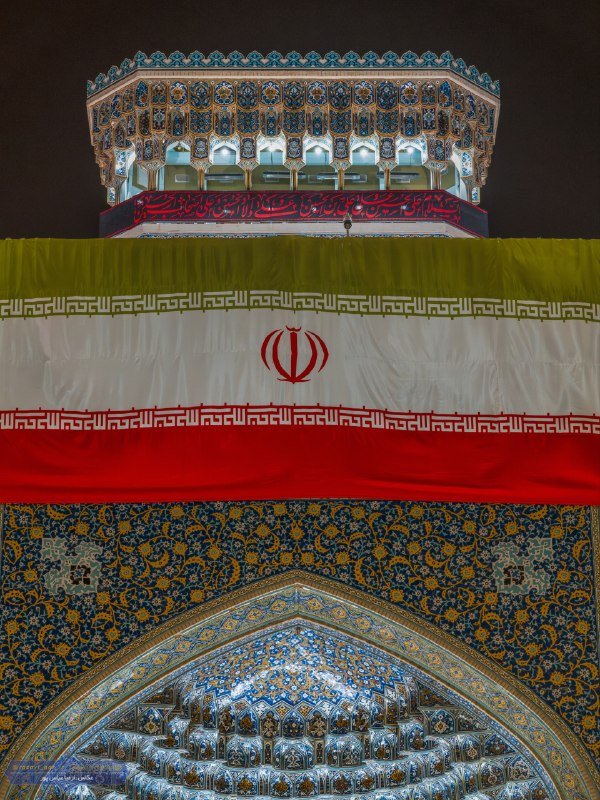
Iranian Foreign Minister Seyyed Abbas Araghchi will land in Baghdad on Sunday 28 June 2026 at the head of a diplomatic delegation, Iranian state media confirmed on Friday evening. According to Press TV, the foreign minister will hold consultations with senior Iraqi officials during the trip; Tasnim News Agency, citing the foreign ministry spokesperson, framed the visit as a working visit led by Araghchi and a delegation of diplomats. Reporting across the three Iranian outlets is consistent on the timing and the cast of participants.
What a working visit actually signals
Foreign-ministerial travel in the Middle East is rarely decorative. Baghdad sits inside a lattice of overlapping files that matter directly to Tehran: the residual presence of US and coalition forces in Iraq and the pace of any drawdown, the status of Iranian-aligned paramilitary factions whose political wing has repeatedly shaped Iraqi coalition arithmetic, the routing of energy exports through Iraqi territory, and the Shia shrines of Najaf and Karbala, which carry weight beyond the purely religious. A foreign minister in town for "talks and consultations" will, in practice, be working at least two of those files at once.
The framing matters. Iranian state media has chosen the language of routine diplomacy rather than crisis management. That choice is itself a signal: Tehran wants the visit read as steady-state coordination with a neighbour it relies on, not as an emergency mission born of a specific rupture.
The counter-read: nothing routine about it
A more sceptical reading takes the opposite view. Iraq has spent the past two years trying to balance a US troop-presence agreement, a tense internal standoff between federal authority and Kurdish institutions in the north, and a domestic political class that includes factions openly aligned with Tehran. Against that backdrop, any Iranian foreign-ministerial visit lands inside a domestic Iraqi debate about sovereignty. Baghdad cannot afford to appear too compliant, and Tehran cannot afford to appear to be dictating terms in a country where it already carries outsized influence.
The counterpoint to the "steady-state" framing, then, is that this is precisely the kind of trip that requires careful choreography — and that the choreography itself is the news. What the three Iranian outlets do not disclose is the substantive agenda: which Iraqi counterparts Araghchi will meet, whether the trip includes a stop in the Kurdish north, and whether any joint communiqué will follow. Until those details surface, the visit is best read as a positioning move, not a deliverable.
The structural picture, in plain prose
Iran's regional diplomacy has, for the better part of two decades, treated Iraq as the indispensable neighbour — the one Arab state where Tehran's political, economic, security and religious influence is dense enough to be load-bearing. That density is not a conspiracy; it is the product of shared borders, deep sectarian ties, intertwined energy markets, and a US military footprint that both sides manage. A foreign-ministerial visit is the lowest-key instrument in that toolkit, but also the most flexible: low enough to be deniable as routine, substantive enough to recalibrate.
What makes the current moment worth watching is the surrounding pressure. Tehran is navigating sanctions architecture, periodic confrontation with Israel and the United States, and a regional order in which the old Arab-state consensus has fragmented. Baghdad, for its part, is balancing an American security partnership with deepening economic dependence on Iranian gas and electricity imports. Every senior visit between the two capitals is, in effect, a small maintenance job on a relationship that does not have the luxury of drifting.
Stakes and what to watch next
If the dominant framing holds, the visit will produce a joint readout emphasising "brotherly" ties and continued cooperation on security and trade — the standard register of Iran-Iraq diplomacy. The Iraqi side, mindful of domestic politics, will likely foreground Iraqi sovereignty and balanced regional relations in any public statement, while private consultations will cover the operational files. The plausible alternative read is that the trip is preparatory groundwork for a more consequential engagement later in the year — possibly a meeting of the two countries' heads of government, possibly a new framework around energy or border security.
The honest uncertainty here is genuine. Press TV, Tasnim and Jahan Tasnim agree on dates and the foreign minister's name; they do not disclose the delegation's composition beyond a general reference to a diplomatic team, nor do they name Iraqi counterparts. The reporting is also uniformly one-sided, since Iranian state outlets are the only sources currently on the wire. Western and Arab coverage, when it lands, will determine whether this trip gets read as routine maintenance or as the opening move of something larger.
For now, the prudent posture is to treat 28 June as a positioning exercise — visible, on the record, and consequential in the way that regular senior engagement between two such deeply connected states always is, without overstating what we do not yet know.
— Desk note: this piece runs on three Iranian state-aligned sources that are consistent in their core facts but limited in disclosure; we have flagged the gaps explicitly rather than inferred an agenda the sources do not name.
Wire provenance
This editorial synthesis draws on the following public wire/social posts:
- https://t.me/presstv
- https://t.me/tasnimnews_en
- https://t.me/JahanTasnim